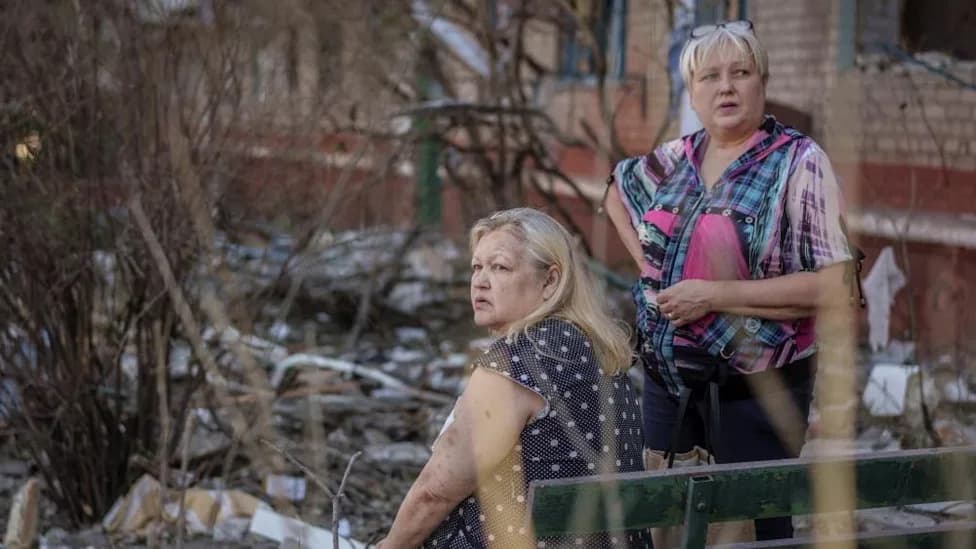
Russian and Ukrainian officials offered conflicting accounts of frontline progress while U.S.-brokered talks remain paused as attention turns to the Iran conflict. Russian glide bombs struck Sloviansk, killing four and wounding several, and overnight drone attacks injured at least 17 people. Ukraine says it has reclaimed more than 400 sq km in Dnipropetrovsk during a recent counteroffensive, and analysts warn those gains may affect Russia's 2026 plans. Both sides are seeking diplomatic leverage amid ongoing fighting.
Frontline Claims Clash As U.S.-Brokered Talks Stall — Sloviansk Bombed, Ukraine Says It Retook Territory
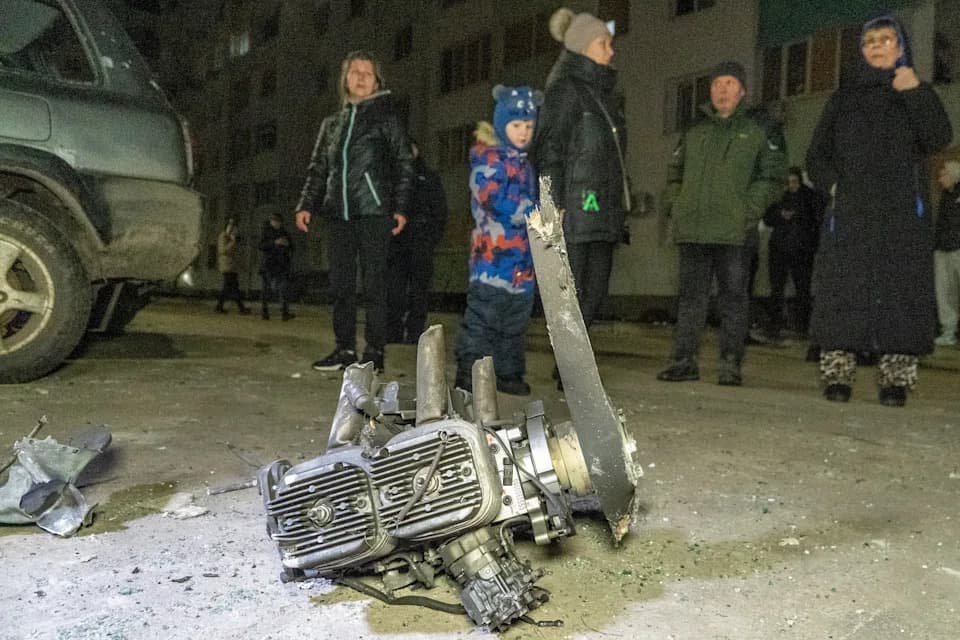
People look at fragments of a Russian drone that hit residential neighbourhood during air attack in Kharkiv, Ukraine, late Monday, March 9, 2026. (AP Photo/Andrii Marienko)(ASSOCIATED PRESS)
KYIV, Ukraine — Russian and Ukrainian officials offered sharply different accounts of recent battlefield developments in the four-year war, while diplomatic efforts brokered by the United States remain on hold as global attention shifts to the Iran conflict.
Near-daily Russian aerial and drone strikes continued to strike civilian areas. Three powerful glide bombs hit the center of Sloviansk in eastern Ukraine, killing four people and wounding at least 16 others, including a 14-year-old girl, Donetsk regional military administration head Vadym Filashkin said Tuesday.
Emergency services reported that overnight drone attacks on three other Ukrainian cities injured at least 17 people, including two children. Ukraine's air force said it shot down 122 of the 137 drones launched during the night, highlighting Kyiv's strained but active air-defense response.
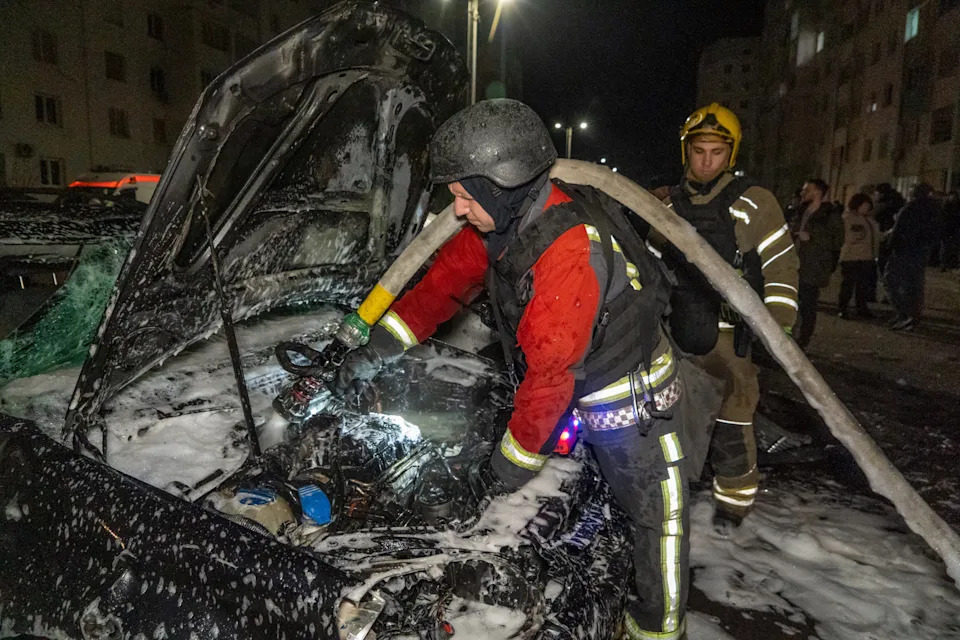
Rescuers put out the fire at a residential neighborhood following Russia's drone attack in Kharkiv, Ukraine, late Monday, March 9, 2026. (AP Photo/Andrii Marienko)(ASSOCIATED PRESS)
U.S.-brokered talks between Moscow and Kyiv are on hold as Washington's focus has been drawn to the conflict in Iran, diverting international attention and political bandwidth from Ukraine's struggle to hold back a larger Russian military.
Maj. Gen. Oleksandr Komarenko told local media outlet RBC-Ukraine that Ukrainian forces, despite personnel shortages, recently reclaimed nearly all territory in the southeastern Dnipropetrovsk industrial region during a counteroffensive, expelling Russian units from more than 400 square kilometers (about 150 square miles). He described the overall frontline as difficult but under control, with the fiercest fighting near Pokrovsk in the east and near Oleksandrivka in the south. There was no independent verification of his assessment.
“Recent Ukrainian counterattacks are generating tactical, operational and strategic effects that may disrupt Russia’s spring–summer 2026 offensive campaign plan,”
said the Institute for the Study of War (ISW), a Washington-based think tank, underscoring that local gains may have broader implications for Moscow’s planned operations.
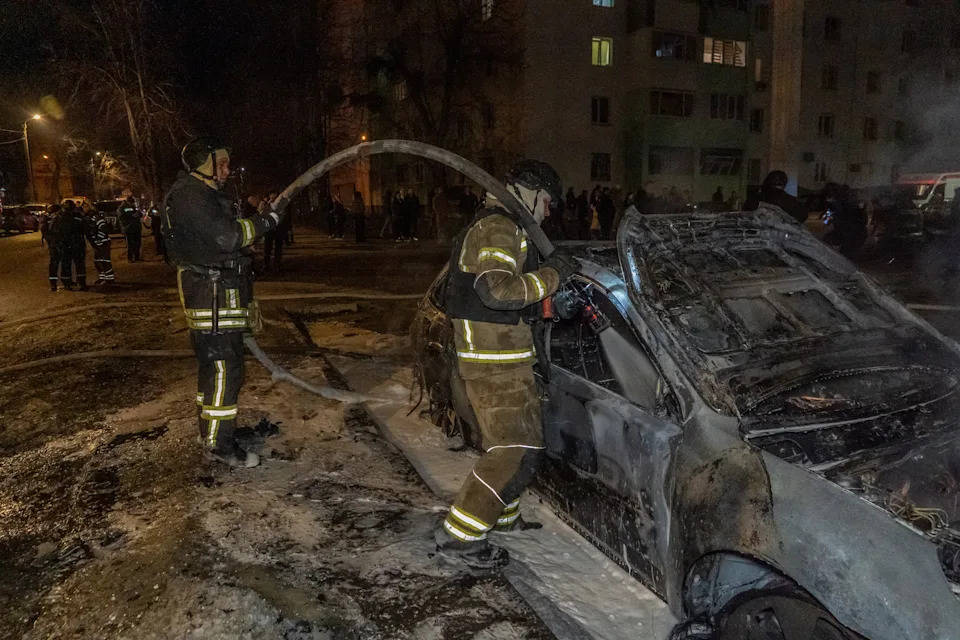
Rescuers put out the fire at a residential neighbourhood following Russia's drone attack in Kharkiv, Ukraine, late Monday, March 9, 2026. (AP Photo/Andrii Marienko)(ASSOCIATED PRESS)
Separately, Kremlin aide Yuri Ushakov told reporters that President Vladimir Putin told U.S. President Donald Trump that Russian forces are “advancing rather successfully” in Ukraine, and suggested that such progress should encourage Kyiv to seek a negotiated settlement. Ukrainian President Volodymyr Zelenskyy has repeatedly said Kyiv will only agree to a lasting peace that secures Ukraine's sovereignty, and European officials accuse the Kremlin of feigning interest in talks while continuing military pressure.
The Kremlin appears to be calculating that fallout from the Iran conflict — including rising oil prices, a global distraction, and potential depletion of Western arms stocks — could yield financial and strategic benefits and reduce allied military support for Kyiv. Ukraine, for its part, is attempting to convert battlefield-tested drone technology into diplomatic leverage by sharing it with U.S. and Gulf partners, while pressing for reciprocal deliveries of advanced U.S.-made air-defense missiles.
The situation on the ground remains fluid and difficult to verify independently. Civilians continue to bear the brunt of attacks, and both sides are maneuvering militarily and diplomatically as broader geopolitical events reshape international attention.
Help us improve.