Illinois’ Democratic primary has exploded into a crowded contest after a wave of retirements opened six House and Senate seats, drawing nearly 60 candidates. Several Chicago-area districts feature large fields—forcing debate organizers to change formats and producing a surge in campaign mail and advertising. With many districts safely Democratic, the March 17 primary is likely to decide several November outcomes, and early-ballot activity in Chicago is up substantially versus recent midterms.
Illinois Primary Turns Into a Candidate Frenzy After Wave of Congressional Retirements
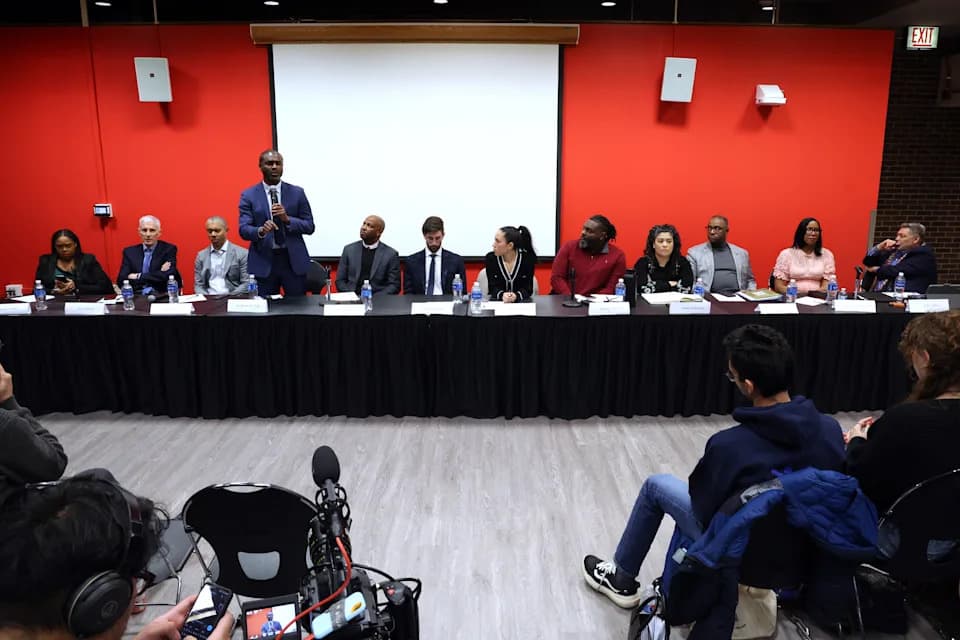
Candidates for the Illinois 7th Congressional District seat, from left, Kina Collins, David Ehrlich, Dr. Thomas Fisher, La Shawn K. Ford, Rory Hoskins, Reed Showalter, Anabel Mendoza, Anthony Driver Jr., Jazmin J. Robinson, Richard Boykin, Melissa Conyears-Ervin and Felix Tello attend a public forum at the University of Illinois Chicago Friday, Feb 20, 2026, in Chicago. (Terrence Antonio James/Chicago Tribune via AP)(ASSOCIATED PRESS)
Chicago is experiencing an unusually intense primary season: campaign printers are running nonstop, debate organizers are limiting stage participation because of huge candidate fields, and television and social feeds are saturated with political ads.
Open Seats and Crowded Primaries
The bustle reflects how deeply a wave of congressional retirements is hitting Illinois. The reliably Democratic state has seen senior lawmakers step away, leaving six House and Senate seats open and prompting nearly 60 contenders to enter Democratic primaries. With the March 17 primary approaching, voters face a crowded ballot and a lot of homework.
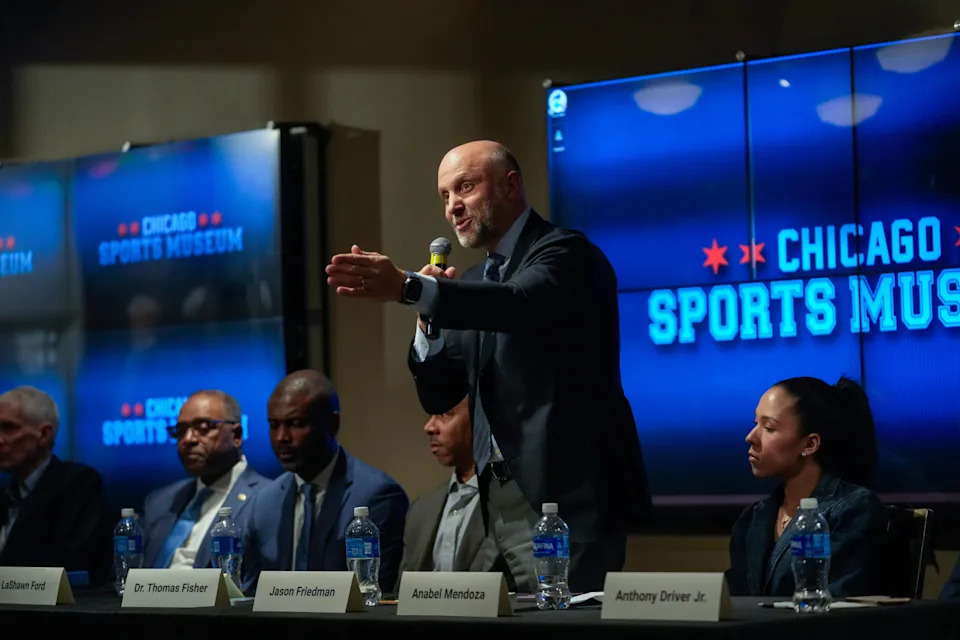
Candidate for Illinois' 7th Congressional District Jason Friedman participates in a forum Wednesday, Feb. 25, 2026, in Chicago. (AP Photo/Erin Hooley)(ASSOCIATED PRESS)
Why This Matters
Illinois accounts for a disproportionate share of this year’s retirements: an Associated Press analysis found the state represents roughly one-quarter of House Democratic retirements (five of 21) and about 10% of all House retirements nationwide. By one measure, Illinois has its largest number of open House seats in at least 70 years. Currently, five of the state’s 17 congressional districts—about 29%—have no incumbent running.
“Illinois is undergoing tremendous change, and you can kind of feel it,” said the 84-year-old Rep. Danny Davis, first elected in 1996. “It opens up opportunities for a new generation of leadership.”
Large Fields, New Voices
The Chicago-area races feature a mix of 20-something newcomers, local officials, lawyers and a few former members seeking comebacks. Jan Schakowsky’s district drew the most Democratic hopefuls—15 candidates, including Evanston Mayor Daniel Biss, digital creator Kat Abughazaleh and several state lawmakers. In the district being vacated by Davis, 13 Democrats are running.
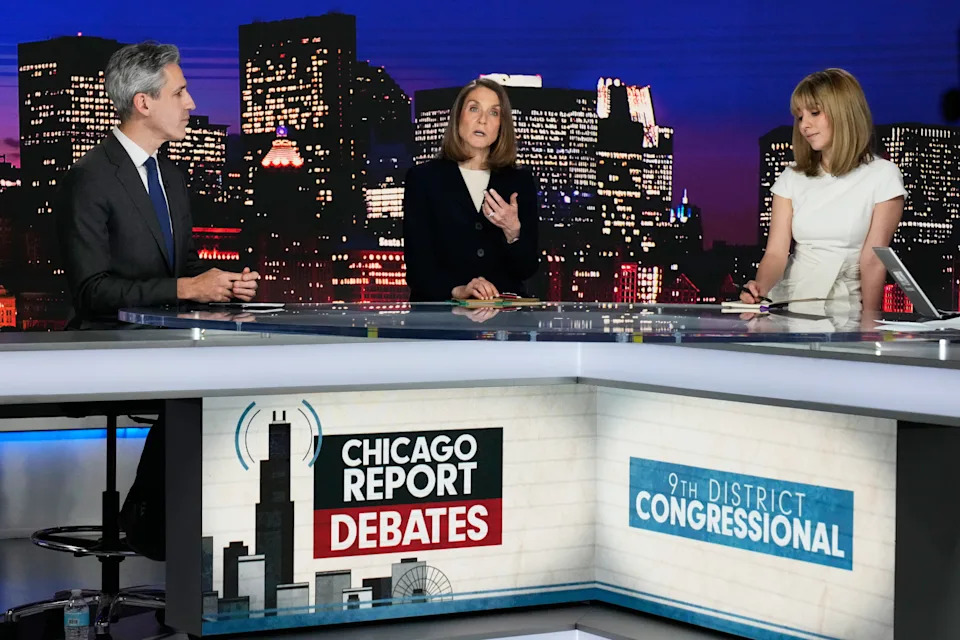
Democratic candidates for Congress, State Sen. Laura Fine, center, speaks as Evanston Mayor Daniel Biss, left, and Kat Abughazaleh listen to her during U.S. House 9th District primary debate, in Chicago, Wednesday, Feb. 25, 2026. (AP Photo/Nam Y. Huh)(ASSOCIATED PRESS)
Candidates have clashed over funding tied to Israel and the controversy around aggressive immigration enforcement in cities such as Chicago. In other contests, Rep. Robin Kelly is running for the Senate seat being vacated by Sen. Dick Durbin, with 10 Democrats competing in that House district’s primary—including former Rep. Jesse Jackson Jr. Rep. Raja Krishnamoorthi is also in the Senate race, which has left eight Democrats vying for his congressional seat, among them former Rep. Melissa Bean. Rep. Jesus “Chuy” Garcia’s departure produced another vacancy; his political maneuvering resulted in his chief of staff appearing on the Democratic primary ballot unopposed.
Debates, Mailers and Voter Interest
Organizers are struggling to accommodate the volume of candidates. The League of Women Voters of Illinois reports it is sponsoring more than twice the usual number of candidate forums, and groups have had to alter formats—holding debates over multiple days or splitting candidates into cohorts. At one University of Illinois Chicago forum, organizers provided one microphone for every three candidates; each participant had 45 seconds to answer and one brief rebuttal during a two-hour event.
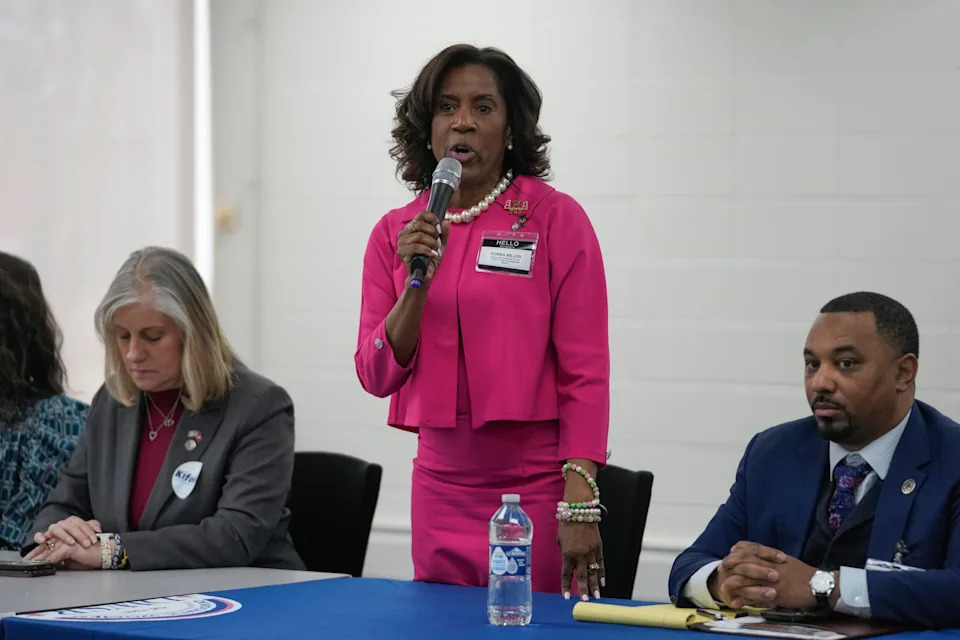
Cook County Commissioner and candidate for Illinois' 2nd Congressional District Donna Miller attends a forum hosted by the Democratic Women of the Southland Region, Saturday, Feb. 28, 2026, in Chicago Heights, Ill. (AP Photo/Erin Hooley)(ASSOCIATED PRESS)
“You have to get really good at answering questions in barely no time,” said Anabel Mendoza, a 28-year-old immigrant-rights organizer and candidate. For voters, the torrent of campaign clips and mailers can be disorienting. Richard Lewandowski, who runs a family-owned Chicago printing press, said employees are working seven days a week for up to 12 hours a day to produce campaign mail.
Turnout Signals
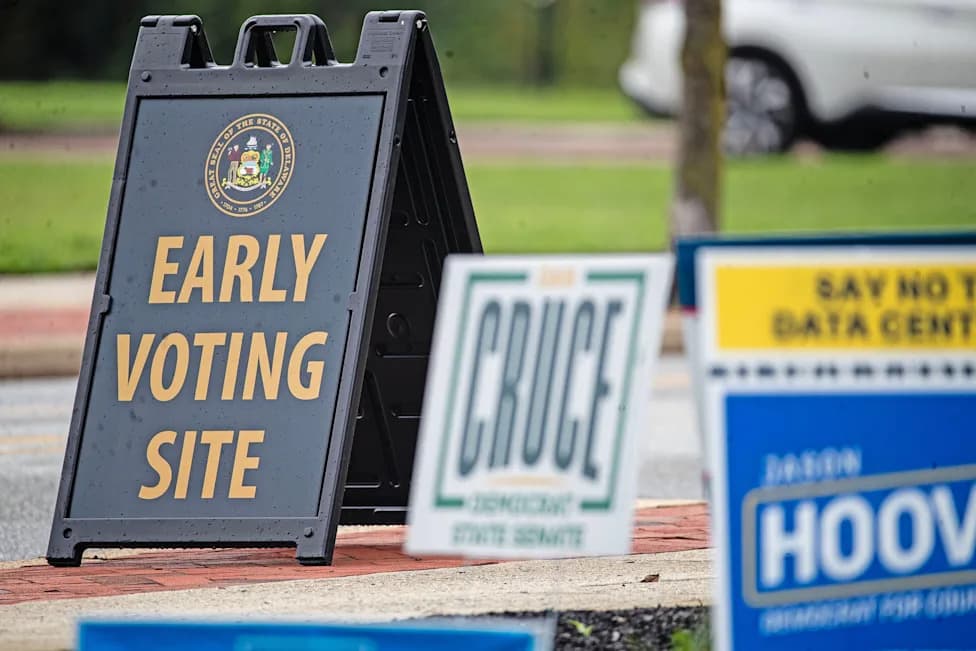
Because many Illinois districts are safely Democratic, the primary is likely to determine the eventual November winners in several races, raising stakes for March 17. Election officials say there are encouraging signs of a turnout rebound after 2024’s primary turnout fell to 19% statewide—the lowest in more than 50 years. In Chicago, more than 43,000 early ballots had been cast by mail and in person with roughly two weeks remaining before the primary—about double the number at the same point in 2022 and roughly four times the 2018 figure.
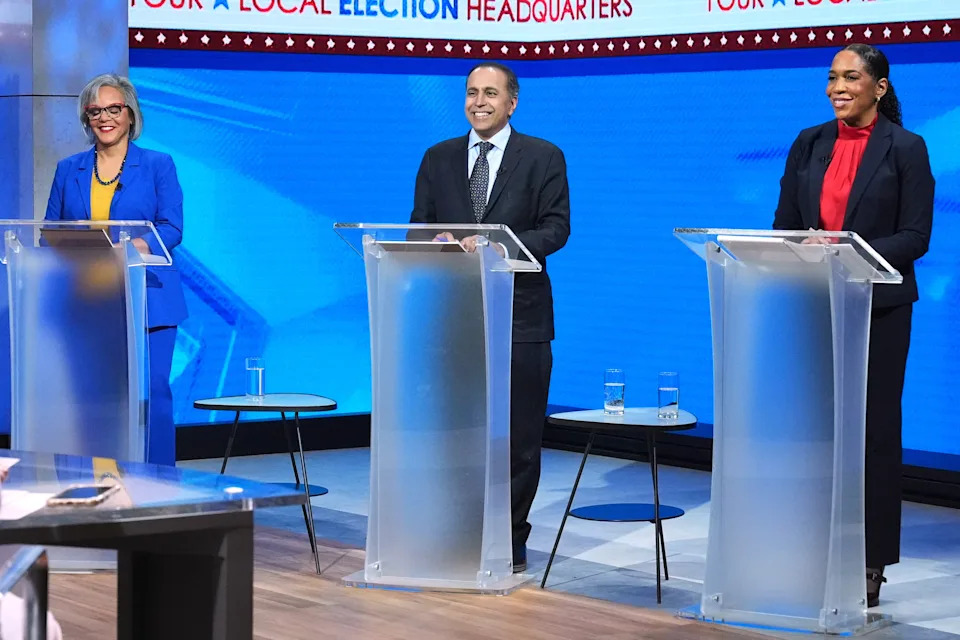
U.S. Rep. Robin Kelly (D-Ill.), left, U.S. Rep. Raja Krishnamoorthi (D-Ill.), center, and Illinois Lt. Gov. Juliana Stratton (D), smile as they wait for U.S. senate Democratic Primary Debate in Chicago, Thursday, Feb. 19, 2026. (AP Photo/Nam Y. Huh)(ASSOCIATED PRESS)
“When districts are competitive it does bring additional people to the polls,” said Max Bever, spokesman for the Chicago Board of Elections.
Associated Press reporter Maya Sweedler contributed from Washington.
Help us improve.