U.S. officials said the campaign against Iran is shifting to target the country’s ballistic missile production. Defense Secretary Pete Hegseth and CENTCOM commander Adm. Brad Cooper said U.S. forces have struck nearly 200 targets in 72 hours and are carrying out a campaign to "raze or level" missile factories and infrastructure. The U.S. also reported sinking an Iranian warship by torpedo and destroying some 30 Iranian vessels, while six U.S. Army Reserve members were killed in a separate strike in Kuwait.
U.S. Says It Will "Raze Or Level" Iran's Ballistic Missile Industry, CENTCOM Commander Says
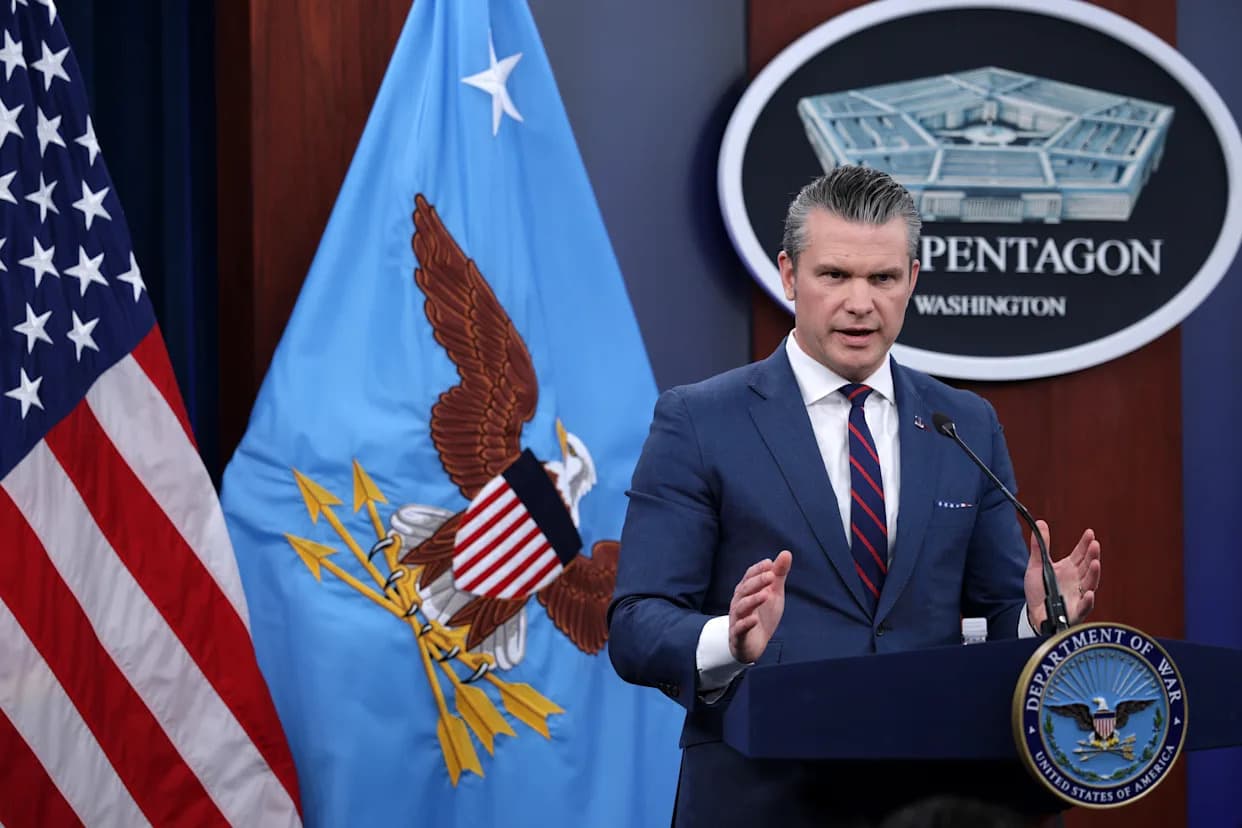
U.S. seeking to "raze or level" Iran's ballistic missile industry, Adm. Cooper says
Defense Secretary Pete Hegseth said Thursday the United States can "sustain the fight for as long as it takes" as the conflict with Iran entered its sixth day. At a Tampa press briefing alongside Admiral Brad Cooper, commander of U.S. Central Command, senior U.S. officials outlined a shift in the campaign toward degrading Iran's ballistic missile production.
What Officials Announced
Hegseth reiterated U.S. control over the campaign timetable:
"Our timeline is ours and ours alone to control."He said the United States has "no shortage of munitions," even as a CBS News report warned that some Gulf Arab partners are running low on interceptors to defend against retaliatory strikes.
Focus On Iran's Missile Industry
Admiral Cooper said the next phase will aim to "systemically dismantle Iran's missile production capability for the future." Cooper described a mission to "raze or level" Iran's missile industry that is already underway but cautioned it "will take some time."
"We're not just hitting what they have. We're destroying their ability to rebuild," he said.
Operations And Strikes
Cooper said U.S. bomber forces struck nearly 200 targets deep inside Iran over the past 72 hours, including sites around Tehran. On Thursday, B-2 stealth bombers reportedly dropped "dozens of 2,000-pound penetrators" aimed at deeply buried ballistic missile launchers.
U.S. forces also reported sinking an Iranian warship with a torpedo — the first such torpedo sinking of a warship by the U.S. Navy since World War II — and destroying roughly 30 Iranian vessels, including what Cooper described as a drone carrier approximately the size of a World War II aircraft carrier.
Deployment And Damage Assessment
Cooper said the campaign has struck nearly 2,000 targets using more than 2,000 munitions. The U.S. deployment in the theater includes over 50,000 troops, about 200 fighter aircraft, two carrier strike groups and bomber forces — described by U.S. officials as the largest U.S. buildup in the Middle East in a generation.
Casualties And Response
Hegseth confirmed six U.S. Army Reserve members were killed when an incoming munition struck a tactical operations center in Kuwait. He said the military will "remember and honor" the fallen by rededicating itself to the mission. Former national security adviser H.R. McMaster, commenting after the briefing, said U.S. strikes on Iranian air defenses have made the skies more permissive for allied aircraft.
Context: These remarks came as U.S. leaders described an escalating campaign named Operation Epic Fury. Officials emphasized a multi-phased effort to both degrade existing Iranian capabilities and prevent future reconstitution of missile production.
Help us improve.