
Brig. Gen. Ahmad Vahidi has been named commander of Iran’s Islamic Revolutionary Guard Corps amid a devastating joint US‑Israeli campaign that has killed more than 1,000 people and claimed much of Iran’s senior military leadership. A veteran IRGC officer who led the Quds Force from 1988–1997, Vahidi later served as defence and interior minister. His appointment combines ideological commitment with bureaucratic experience, but his record includes an Interpol red notice tied to the 1994 AMIA bombing and sanctions over the 2022 post‑Amini crackdown. Analysts say his broad institutional ties make him well placed to coordinate a decentralised IRGC during wartime, even as controversies persist.
Ahmad Vahidi: Iran’s New IRGC Commander Takes Charge Amid Full‑Scale War
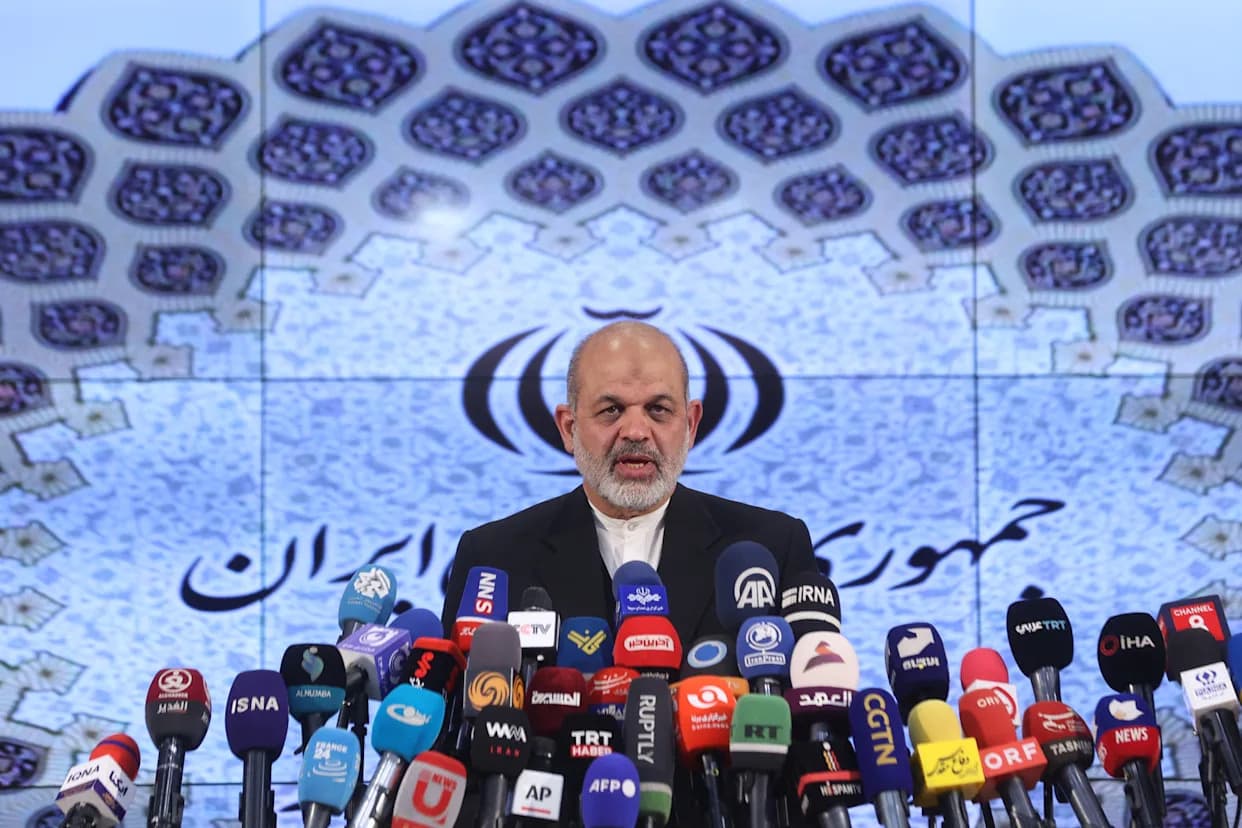
Ahmad Vahidi speaks during a news conference after the parliamentary elections in Tehran, in March 2024 [File: Majid Asgaripour/West Asia News Agency via Reuters]
Brigadier General Ahmad Vahidi has assumed command of Iran’s Islamic Revolutionary Guard Corps (IRGC) at a perilous moment — as a joint US‑Israeli campaign has killed more than 1,000 people, struck Iranian cities and removed much of the country’s senior military leadership.
The post he now holds is one of the most powerful and dangerous in Iran. The rapid succession of leaders — including the 2020 killing of Quds Force commander Qassem Soleimani and the recent deaths of IRGC chiefs Mohammad Pakpour and Hossein Salami during major strikes — underscores the lethal risks at the top of Iran’s security establishment.
Career and Rise
Vahidi is a longtime IRGC figure, active since the force’s early years in the late 1970s. He rose through the ranks during the 1980s in intelligence and military roles and is reported to have led the IRGC’s Quds Force from 1988 to 1997 before handing command to Qassem Soleimani. In December, the late Supreme Leader Ali Khamenei named him deputy commander of the IRGC; he has also served as deputy chief of Iran’s regular army.
Unlike some recent commanders, Vahidi combines military experience with senior political office: he served as defence minister under President Mahmoud Ahmadinejad and later as interior minister under President Ebrahim Raisi, leaving that post in 2024. Analysts say this mix of security and bureaucratic experience strengthens his capacity to coordinate across Iran’s institutions in wartime.
Ideology and Pragmatism
Vahidi has publicly affirmed his commitment to the principles of the 1979 Islamic Revolution. Upon his appointment as IRGC deputy he said,
"Guarding the Islamic Revolution is one of the greatest virtues in the world"and has described the revolution as a defining moment that reshaped the region.
At the same time, analysts note a pragmatic streak. Reports link him to covert contacts in the mid‑1980s between Iranian intermediaries and figures connected to the Reagan administration, contacts associated with the broader Iran‑Contra context. Experts say that history gives him familiarity with both the United States and Israel.
Controversies and Sanctions
Vahidi’s record carries enduring controversies. In the late 2000s Interpol issued a red notice at Argentina’s request over an alleged role in the 1994 AMIA bombing in Buenos Aires, which killed 85 people; Iran denies involvement and its foreign ministry dismissed the notice as baseless. He has also been sanctioned by the United States and the European Union for his alleged role in the 2022 crackdown that followed the death of Mahsa Amini.
Wartime Role and Challenges
Observers say Vahidi inherits an IRGC shaped for resilience: past leaders deliberately decentralised the organisation so it could survive decapitation and continue operating even if Tehran were threatened. That structure gives Vahidi both a challenge and an asset — he must coordinate semi‑autonomous units and sustain morale while replacing many lost senior commanders.
Analysts quoted in reporting describe him as a "capable bureaucrat" who combines institutional knowledge with political reach — qualities that could help maintain continuity during an existential crisis for the Islamic Republic. Critics, however, warn of his hardline record and stress the human-rights and legal allegations that shadow his career.
Outlook
With Iran in open conflict and its senior leadership disrupted, Vahidi’s effectiveness will hinge on his ability to unite fractured command lines, leverage veteran IRGC networks and balance ideological loyalty with pragmatic strategy. The stakes are high: the IRGC’s performance will be central to the regime’s capacity to endure and respond to sustained external pressure.
Help us improve.





















