Summary: Iran has been left diplomatically isolated amid sustained U.S. pressure and a widening cycle of strikes that have extended beyond the Middle East. Missile and drone attacks have disrupted energy infrastructure and shipping through the Strait of Hormuz, driving price spikes and market volatility. Moscow and Beijing have limited their responses to diplomacy, driven by competing strategic priorities — notably Russia’s war in Ukraine and China’s dependence on Gulf trade and energy. Both powers are hedging and positioning as mediators while preserving flexibility.
Iran Left Largely Isolated as Russia and China Hold Back — Energy Markets and Shipping Hit
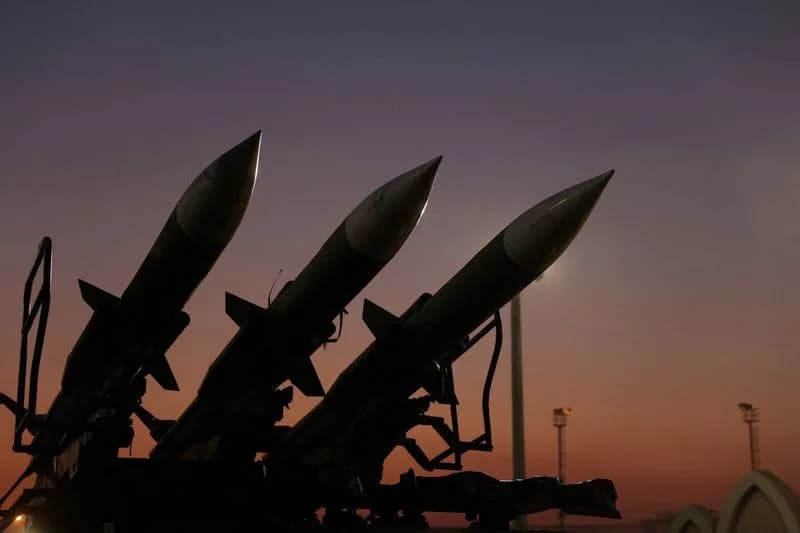
FILE PHOTO: Iranian missiles are displayed at the Islamic Revolutionary Guard Corps(IRGC) Aerospace Force Museum in Tehran, Iran, November 12, 2025. Majid Asgaripour/WANA (West Asia News Agency) via REUTERS
DUBAI, March 5 (Reuters) - After sustained U.S. pressure and a series of tit‑for‑tat strikes, Iran now finds itself largely isolated on the international stage. Longstanding partners Russia and China have limited their responses to diplomatic statements and calls for dialogue rather than direct military or material intervention.
Tehran has broadened the theatre of confrontation beyond the immediate Middle East, launching missiles and drones that reached targets as far afield as Cyprus, Azerbaijan, Turkey and Gulf states. Those strikes have hit energy infrastructure, commercial facilities and some U.S. bases, disrupting crude and natural gas flows and rattling global markets.
Impact on Energy and Shipping
Attacks in and around the Strait of Hormuz — a chokepoint that handles roughly 20% of global oil shipments — have intermittently hampered shipping and pushed energy prices higher. The volatility underscores how regional conflict can send swift ripples through global supply chains, forcing major economies to take emergency steps to secure energy supplies.
Why Russia and China Are Restrained
Analysts attribute Beijing and Moscow’s measured responses to pragmatic calculations. Directly supporting Iran against the United States and Israel would carry substantial political, economic and military costs with uncertain gains.
“Putin has other priorities, and chief among them is Ukraine,” said Anna Borshchevskaya of the Washington Institute. “It would be foolish for Russia to go into a direct military confrontation with the United States.”
Both powers have previously helped Tehran develop defensive and deterrent capabilities — including missiles, air‑defence systems and dual‑use technologies — but that assistance appears now to be capped by broader strategic concerns. China’s deep trade ties and heavy dependence on Gulf energy flows, and Russia’s military and economic commitments in Ukraine, limit how far either will go to shield Iran.
China’s Calculus
Beijing prioritises trade, investment and arms sales over binding security commitments far from its core interests. With roughly 45% of its oil imports transiting the Strait of Hormuz, China has hedging tools such as strategic petroleum reserves and volumes of Iranian crude held in storage or tankers, but it stops short of military entanglement.
Russia’s Calculus
For Moscow, higher oil prices and a U.S. focus on the Middle East can be advantageous for Russia’s war economy and geopolitical positioning. Yet the Kremlin appears intent on preserving flexibility — maintaining ties with Iran while avoiding direct confrontation with Washington and protecting relations with Gulf states.
Mediation, Hedging and Strategic Outcomes
From the sidelines, both Beijing and Moscow are positioning themselves as potential mediators. Chinese Foreign Minister Wang Yi has engaged European and Arab counterparts to press for dialogue, and President Vladimir Putin has been in contact with Gulf leaders and Iranian officials. These diplomatic moves allow both powers to preserve influence without committing to high‑risk interventions.
Ultimately, the situation presents a stark paradox: Iran remains strategically useful to Moscow and Beijing, but not valuable enough to prompt either to risk a direct confrontation with the United States. The current moment therefore favours cautious hedging, diplomatic positioning and continued volatility in energy markets until a durable de‑escalation emerges.
(Additional reporting by Guy Faulconbridge in Moscow and Liz Lee in Hong Kong; original reporting and writing by Samia Nakhoul; editing by Sharon Singleton)
Help us improve.