
GAFCON, a conservative Anglican coalition predominantly from Africa and Asia, announced the formation of a Global Anglican Council to steer the Communion, directly challenging Archbishop Sarah Mullally ahead of her March 25 enthronement. The council — chaired by Archbishop Laurent Mbanda and composed of bishops, priests and lay members with voting rights — seeks to reorganise Anglican leadership around Biblical authority rather than break away. The move heightens tensions over women’s ordination and LGBTQ+ inclusion and confronts ongoing consultations known as the Nairobi-Cairo Proposals on shared leadership.
Conservative Anglicans Create Rival Global Council, Challenging Archbishop of Canterbury Ahead of Enthronement
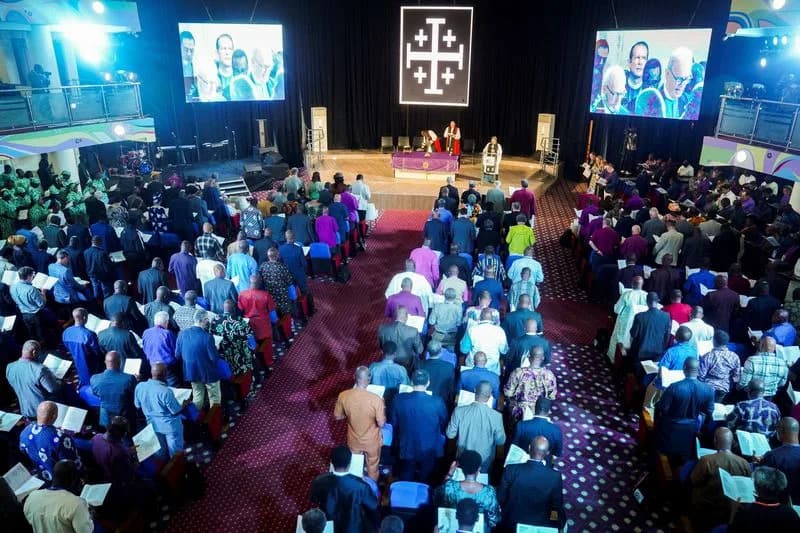
Members of the Anglican Communion attend a session of the Global Anglican Future Conference (GAFCON) in Abuja, Nigeria, March 4, 2026. REUTERS/Marvellous Durowaiye
ABUJA, March 5 — A leading coalition of conservative Anglican provinces announced on Thursday the creation of a new Global Anglican Council to guide the worldwide Communion, directly challenging the authority of the Archbishop of Canterbury as she prepares for formal enthronement.
What GAFCON Announced
The Global Anglican Future Conference (GAFCON), a network of conservative churches largely from Africa and Asia that says it represents a majority of Anglicans globally, said the new council will include bishops, priests and lay members — each with voting rights. Bishop Paul Donison, secretary-general of the council, told delegates in Abuja that "believing the current instruments of communion no longer meet the needs of the majority of Anglicans around the world, the global Anglican Communion is to be led by a conciliar structure."
"The future has arrived, no turning back," Archbishop Laurent Mbanda told the conference after being elected chairman of the new body.
GAFCON said Mbanda — a Rwandan-born archbishop who later studied in the United States — will serve as chairman but not as "primus inter pares" (first among equals); the council is described as a shared leadership structure rather than a single new metropolitan.
How This Challenges Canterbury
The declaration represents a direct challenge to Sarah Mullally, the Church of England's first female Archbishop of Canterbury, who was confirmed in her appointment at St Paul's Cathedral on January 5 and is due to be enthroned on March 25 as the symbolic spiritual leader of some 85 million Anglicans across 165 countries.
When asked whether GAFCON still recognised the Archbishop of Canterbury, a GAFCON spokesman said: "The Global Anglican Council recognises Archbishop Laurent Mbanda as its leader." That stance indicates a parallel leadership model intended to give conservative provinces greater influence over communion-wide decisions.
Official Response and Context
A spokesperson for the Anglican Communion Office in London criticised GAFCON's move for overlooking years of consultations on "Anglican identity, structures and leadership," including the Nairobi-Cairo Proposals, which explore more collegial and diverse approaches to shared leadership in a post-colonial Communion.
The office urged member churches and groups to engage with those proposals as the appropriate forum for discussion.
Background: Why the Rift
The Church of England has undergone significant reforms over the past three decades, allowing women to be ordained as priests and later as bishops. Debates over same-sex relationships and other social issues have deepened divides between provinces in Western countries and those in Africa and Asia, where the Church has seen the fastest growth and where many leaders reject progressive changes.
GAFCON, founded in 2008 as a conservative response to what its members describe as departures from scriptural authority, says it is not leaving the Anglican Communion but seeks to "reorganise and realign" it around Biblical authority. One proposal to avoid a full schism would reduce the Archbishop of Canterbury's organisational role in favor of a rotating international figurehead responsible for some administrative duties while leaving pastoral responsibilities to the Archbishop.
What Comes Next
The announcement is likely to deepen already heated debates within global Anglicanism. Key questions remain about whether GAFCON's council will attract formal recognition from national provinces, how the Anglican Communion Office will respond institutionally, and whether the Nairobi-Cairo consultation process can produce compromises acceptable to both conservative and progressive provinces.
Reporting from Abuja, Lagos and Johannesburg suggests the move will prompt further negotiation and possibly legal and ecclesiastical challenges as both sides seek to define authority and identity in a Communion that spans very different cultural and theological contexts.
Help us improve.





















