
Fighting between Israel and Hezbollah flared again along the Israel–Lebanon frontier, but daily life in Kiryat Shmona looked almost normal with shops open and people on café terraces. Sirens force residents into shelters within seconds, while Israel moves tanks, D9 bulldozers and troops north to establish a buffer zone. The military has not ordered mass evacuations this time, though over 80 villages in south Lebanon were urged to evacuate and some border towns remain damaged or deserted.
Border Tension Spikes: Kiryat Shmona Holds On As Fighting With Hezbollah Flares
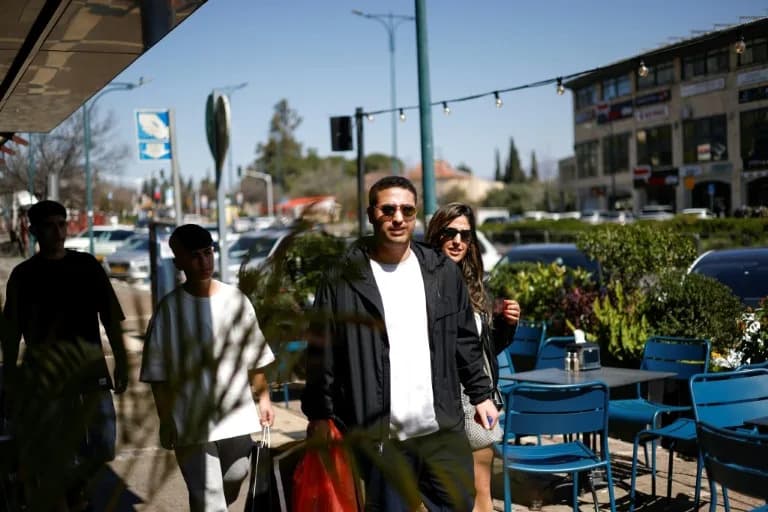
Israeli troops and Hezbollah are once again engaged in a war that erupted since Israel and US jointly launched a military operation against Iran (Jalaa MAREY)(Jalaa MAREY/AFP/AFP)
Despite a fresh round of exchanges between Israeli forces and the Lebanese group Hezbollah just across the frontier, life along Kiryat Shmona's main street on Thursday appeared almost routine. Shops remained open and customers sat on café terraces, yet every siren instantly breaks that calm as residents scramble for shelters with only seconds to spare.
Short Warning Time, High Anxiety
Communities along Israel's northern border have a matter of seconds to seek cover before rockets hit, a stark contrast with other parts of the country where alerts sometimes warn of long-range missiles that take minutes to arrive. The tense normality was summed up by local resident Israel Raziel, a 64-year-old retired taxi driver who said:
"Everyone is tense. But there's nothing else to do."
Raziel, who lived through the 1982 Lebanon war and decades of alerts, said he hoped this confrontation would finally end. Many locals echoed that weary wish for an end to the cycle of strikes and counterstrikes.
Troops, Tanks And Bulldozers Move North
After Hezbollah fired new rockets—saying the strikes were retaliation for recent US‑Israeli operations and attacks that targeted Iran‑linked figures—Israel responded with airstrikes and troop movements aimed at creating a buffer zone inside Lebanon. Flatbed trucks hauling tanks and heavily armoured D9 bulldozers moved through the Upper Galilee toward the border, and soldiers gathered at road junctions and gas stations as they awaited orders.
In the Houla Valley, home to Kiryat Shmona, the rumble of Israeli artillery and the pops of intercepted rockets echoed above orchards of peaches and cherries. Residents reported loud interception booms and small white clouds over nearby high ground such as Margaliot.
Different Responses Across The North
Unlike during the large‑scale evacuations of the 2024 conflict, the Israeli military has not ordered mass departures from the north this time. Many locals said staying felt preferable to relocating to population centres seen as potential targets, while some businesses kept operating—serving soldiers and residents—despite the risks.
Still, the mood varies by location. Metula, a town right on the border, was largely deserted, its silence punctured by artillery and reported clashes near the Lebanese village of Khiam. Several Lebanese villages, including Marjayoun and Kfar Kila, remain empty or damaged after previous fighting, and Israeli authorities urged residents of more than 80 southern Lebanese villages to evacuate this week.
Personal Resolve Amid Ongoing Risk
Some locals expressed firm determination to stay. Toni Maloul, 69, a retired teacher who was evacuated in 2024, said she still sleeps in the shelter beneath her house but will not leave her hometown again: "I was born here, no one will tell me to get out of Kiryat Shmona." Behind her, convoys carrying cement fortifications continued northward.
Reporting by AFP. Names and ages provided by residents and local officials.
Help us improve.





















