Summary: Media reports say the US recently carried out operations that removed Venezuela’s Nicolás Maduro and Iran’s Supreme Leader Ali Khamenei. China publicly condemned the actions but offered limited practical support, instead prioritizing stable ties with the United States, energy security and regional balance. Iran’s oil flows to China (estimated at ~13% of seaborne intake) and China’s large stockpiles mitigate short-term shocks, but prolonged regional conflict — especially around the Strait of Hormuz — would pose real risks. Analysts say Beijing’s cautious stance preserves flexibility but raises questions about its reliability as a security partner.
Why Beijing Responded Cautiously After Reports of US Strikes on Two Pro-China Leaders
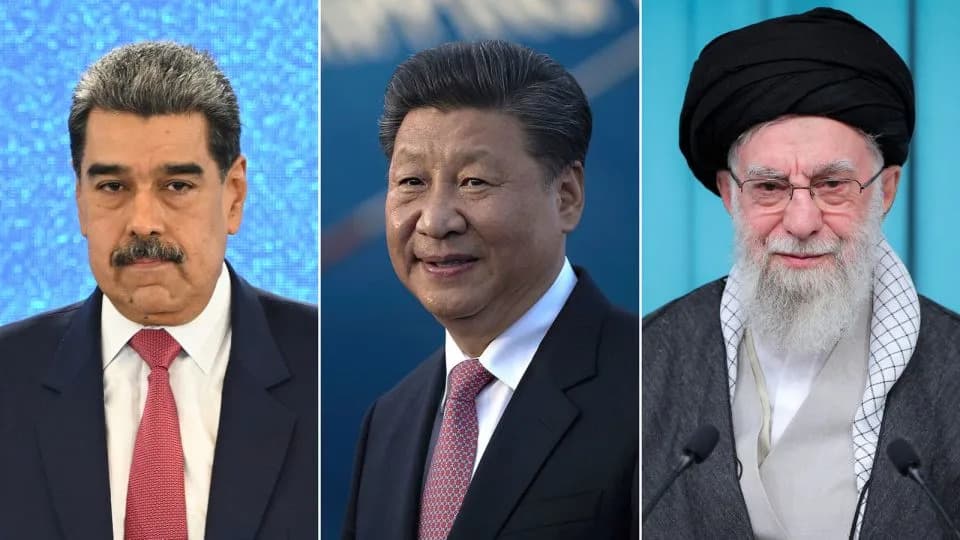
Nicolas Maduro, Xi Jinping and Ali Khamenei. - AP/Getty Images/Reuters
Note: The following article summarizes media reports and analysis. Some claims about the events described remain unverified; readers should treat them as reported accounts pending independent confirmation.
In rapid succession, media outlets reported that the United States conducted high-profile operations that removed two leaders long viewed as friendly to Beijing: Venezuela’s Nicolás Maduro and Iran’s Supreme Leader Ali Khamenei. According to those reports, Maduro was detained after a special operations raid in Caracas and Khamenei was killed in a daylight bombing in Tehran linked to a joint US–Israeli mission. The allegations provoked sharp public condemnation from China but, beyond rhetoric and diplomatic outreach, Beijing has so far appeared to limit its practical response.
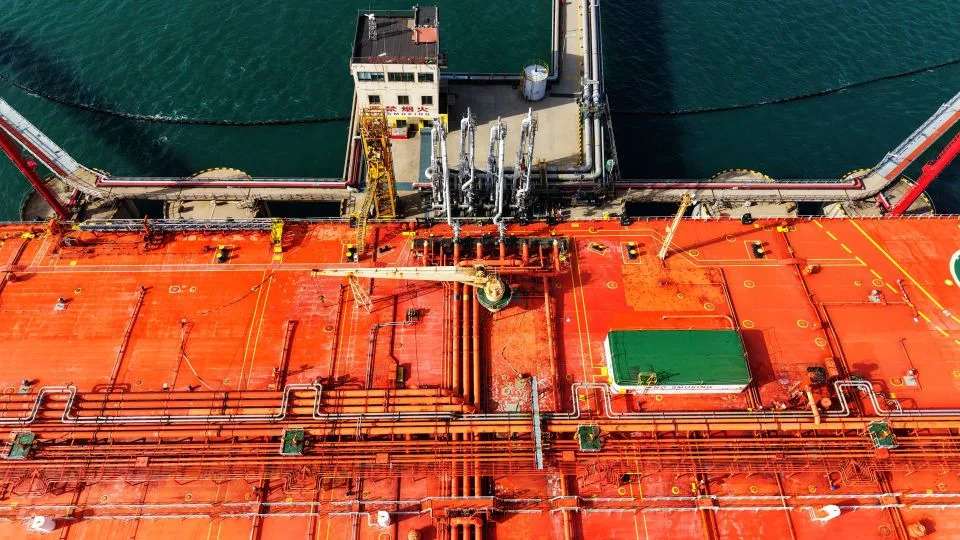
A tanker berthed and unloaded imported crude oil at the Qingdao Port crude oil terminal in Qingdao, China, on November 28, 2025. - CFOTO/Future Publishing/Getty Images
Pragmatism Over Provocation
For President Xi Jinping, restraint reflects a pragmatic calculation. China appears to prioritize preserving economic and diplomatic stability with the United States — particularly ahead of any high-level meetings — while avoiding military entanglements far from its borders. Some analysts note that the diversion of US military focus to the Middle East could be strategically useful to Beijing if it reduces Washington’s attention on the Indo-Pacific.
“China is a fair-weather friend — long on words, short on risk,” said Craig Singleton, senior director for China at the Foundation for Defense of Democracies. “Beijing will speak up at the United Nations but steer clear of providing any significant support to Tehran.”
Limits of the China–Iran Partnership
While China has been a major buyer of Iranian oil and a source of diplomatic backing, the depth of strategic and military cooperation has limits. Trade and investment connections with Gulf states often exceed those with Tehran as Beijing seeks to maintain balanced relationships across the Middle East. Chinese firms have been reported to supply materials linked to Iran’s missile and surveillance programs; Beijing says its trade complies with international law.
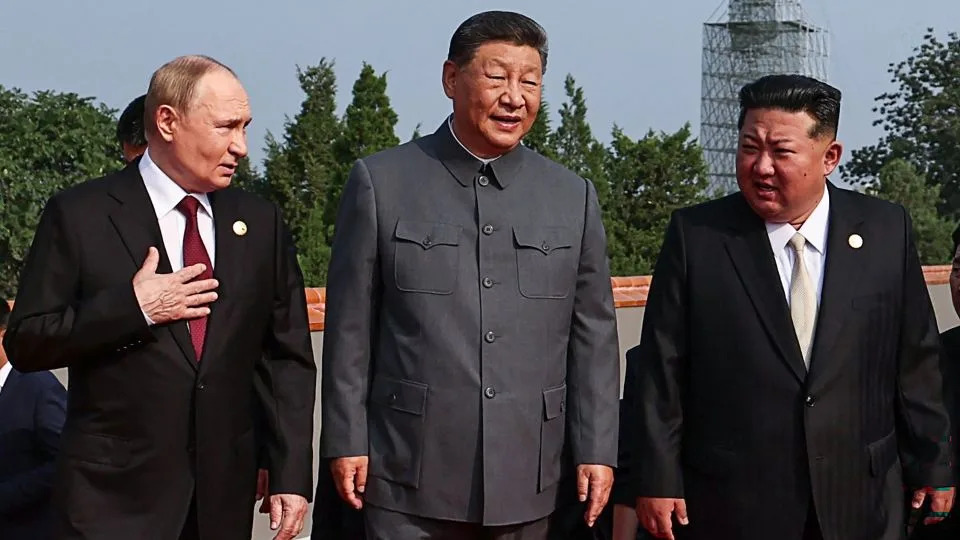
China's Xi Jinping with his guests, Russia's President Vladimir Putin with and North Korea's Kim Jong Un, before a military parade in Beijing's Tiananmen Square on September 3, 2025. - Alexander Kazakov/AFP/Getty Images
Analysts stress that China has historically avoided acting as a security guarantor for distant partners, preferring economic leverage and diplomatic cover to direct military involvement. That posture was evident during recent Israel–Iran confrontations, when China offered mostly rhetorical support.
Energy Exposure and Strategic Calculus
Energy ties matter: data firm Kpler has estimated that Iranian crude accounted for roughly 13% of China’s seaborne crude intake at the time of those reports. China also holds large onshore reserves — reported at about 1.2 billion barrels, or roughly 115 days of seaborne imports — which help cushion short-term disruptions.
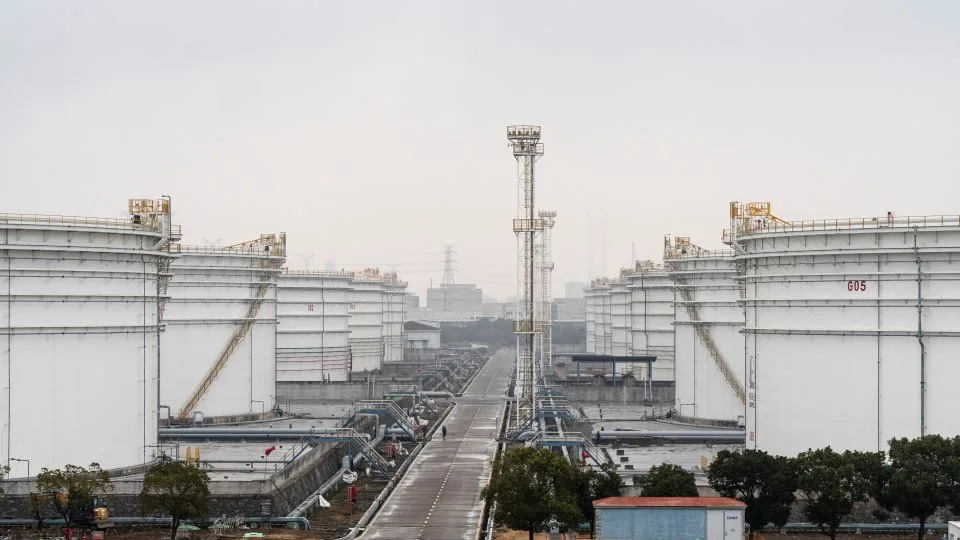
Oil storage tanks at a China Petroleum & Chemical Corp. (Sinopec) facility near Ningbo, China, on January 5, 2026. - Qilai Shen/Bloomberg/Getty Images
China’s Iran energy trade often uses private coastal refineries and a network of intermediary shipping arrangements, which can reduce direct exposure of state-owned refineries to sanctions. Still, sustained regional conflict — especially any instability in the Strait of Hormuz — would pose broader risks for Chinese energy supplies and global markets.
Geopolitical Opportunities and Constraints
Observers note Beijing could use US involvement in prolonged Middle East conflict to frame Washington as an interventionist hegemon while promoting China’s image as a defender of non-interference. At the same time, Beijing’s reluctance to offer security guarantees reduces its ability to shape hard security outcomes, raising questions about its reliability as a partner in high-intensity crises.
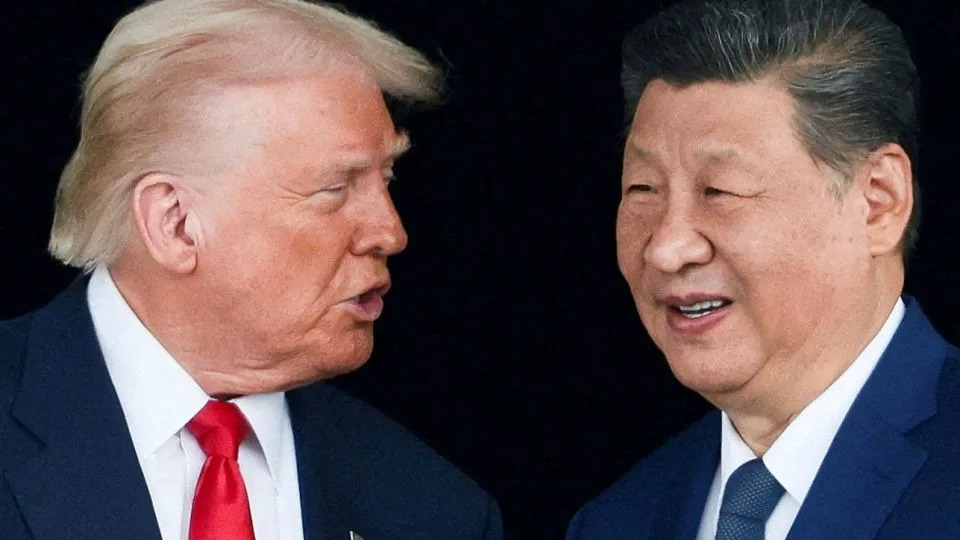
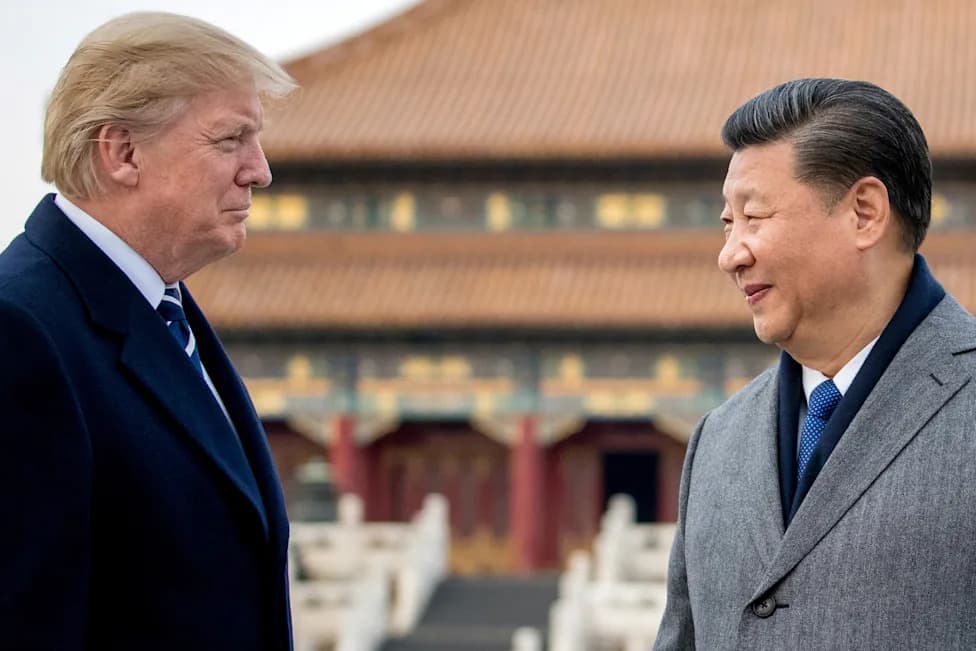
US President Donald Trump and Chinese leader Xi Jinping met on the sidelines of the Asia-Pacific Economic Cooperation (APEC) summit, in Busan, South Korea, on October 30, 2025. - Evelyn Hockstein/Reuters
Regardless of the immediate diplomatic theatre, most analysts expect Tehran — whatever its leadership — to preserve strong economic ties with China because of Beijing’s market size and investment capacity. Yet the recent episodes, whether fully verified or not, illustrate the trade-offs Beijing faces between economic priorities, regional balance, and strategic signaling.
Sources: Media reports and expert commentary; data references to Kpler and public statements by Chinese officials and analysts.
Help us improve.