
The Middle East conflict intensified on its fifth day as Iran's Revolutionary Guards claimed "complete control" of the strategic Strait of Hormuz and Israel launched new strikes on Tehran and Lebanese targets. An Iranian frigate reportedly sank off Sri Lanka after an explosion, with dozens rescued and search efforts ongoing. Global markets plunged and world leaders questioned the legality and escalation of the strikes, while Iran announced a three-day state funeral for Supreme Leader Ayatollah Ali Khamenei.
Iran Claims 'Complete Control' Of Strait Of Hormuz As Regional War Escalates
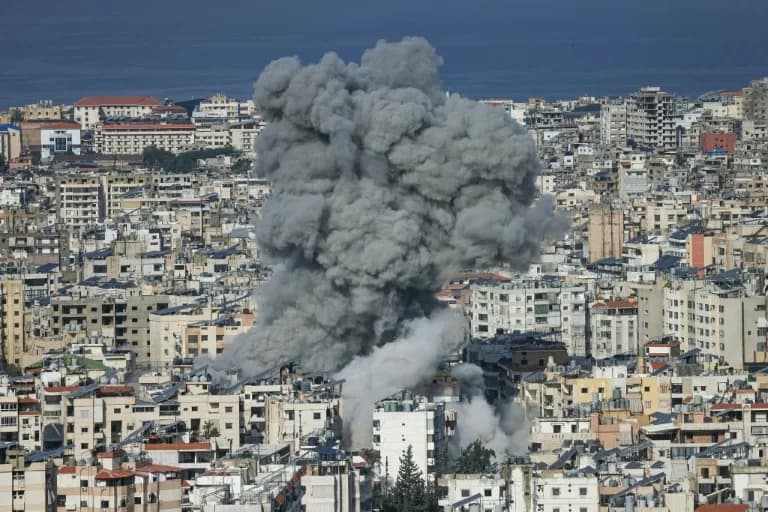
Smoke rises from the site of an Israeli air strike in the southern suburbs of Beirut (IBRAHIM AMRO)(IBRAHIM AMRO/AFP/AFP)
Iran's Islamic Revolutionary Guard Corps (IRGC) on Wednesday said it has "complete control" of the Strait of Hormuz, while Israel launched fresh strikes on targets in Iran and Lebanon as the regional conflict entered its fifth day. State media also announced a three-day state funeral for Supreme Leader Ayatollah Ali Khamenei, whom Iranian outlets reported was killed in earlier strikes.
New Strikes and Explosions
The Israeli military said it initiated a new wave of attacks on Tehran on Wednesday; an AFP journalist reported an explosion in the northeastern part of the capital. Israel said it struck "dozens" of targets, including security command centres in Tehran.
Iranian Warship Sinks Near Sri Lanka
Sri Lankan authorities reported that an Iranian navy frigate, the IRIS Dena, sank just outside the country's territorial waters after an explosion. The vessel reportedly had about 180 crew aboard. Sri Lanka's foreign minister said 32 sailors described as "critically wounded" were rescued after a dawn distress call, and search operations for remaining crew members were ongoing. No immediate cause for the blast was reported.
Maritime Risks and International Response
The IRGC warned that it now controls the Strait of Hormuz — a crucial artery for global oil and gas shipments — and cautioned that vessels attempting to transit could be at risk from missiles or stray drones. U.S. officials said the U.S. Navy was prepared to escort oil tankers through the route.
Canada's government publicly questioned the legality of the U.S.-Israeli strikes, saying they may be inconsistent with international law. In parallel, Admiral Brad Cooper, commander of U.S. forces in the Middle East, said in a video message that nearly 2,000 targets had been struck in Iran.
Regional Attacks and Security Incidents
Explosions and air strikes were reported in and around Beirut, including an attack on Hezbollah's southern Beirut stronghold. Lebanon's health ministry said strikes on two southern towns killed six people and wounded eight; additional reports said strikes hit a hotel in the Hazmieh suburb and a four-storey building in Baalbek, with multiple fatalities reported.
In the Gulf, Qatar said it had dismantled two spy cells allegedly linked to the IRGC, arresting 10 suspects. A drone strike sparked a fire at the U.S. consulate in Dubai. The United States authorised non-emergency departures for some staff at missions in Saudi Arabia, Cyprus and Oman and ordered non-essential consular staff in Lahore and Karachi to leave over safety concerns.
Markets and Civilian Impact
Markets reacted sharply: the Dubai and Abu Dhabi exchanges reopened sharply lower after a two-day suspension — the Dubai bourse fell about 4.7% and Abu Dhabi's ADX around 3.5% shortly after trading resumed. Asian markets were also hit, with Seoul's market plunging amid global panic selling. Oil prices rose on heightened supply-risk concerns.
Air-raid sirens sounded across large parts of Israel, including Jerusalem and Tel Aviv, after missiles were reportedly launched from Iran. There were no immediate, confirmed reports of widespread casualties, though media reported shrapnel-started fires near Jerusalem.
Help us improve.





















