
The US and Israel have conducted major strikes on Iran after Tehran broadened missile and drone attacks across the Gulf, with the Pentagon saying nearly 2,000 targets were hit. The violence has spread to Lebanon and other Gulf states, causing casualties, displacements and disruptions to airports and shipping routes. Global energy markets reacted and Western governments urged de-escalation while organizing evacuations of diplomatic staff and citizens.
US and Israel Strike Iran; Pentagon Says Nearly 2,000 Targets Hit as Violence Spreads Across the Gulf
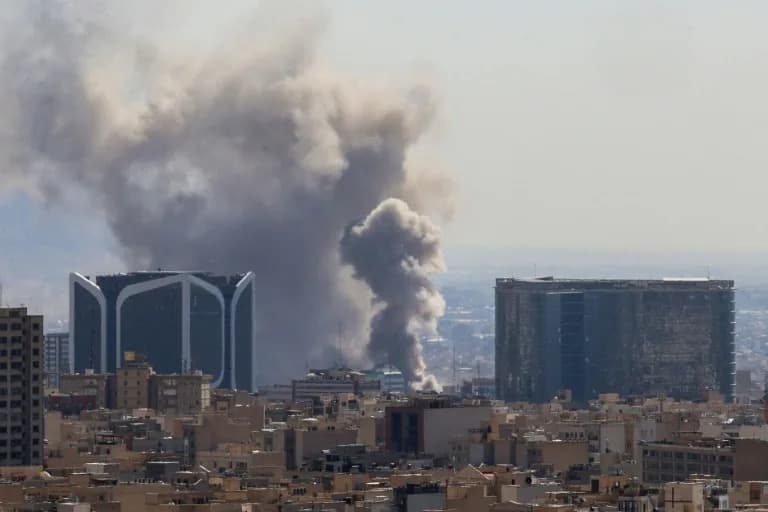
Tehran was pounded by US-Israeli strikes for the fourth day (ATTA KENARE)(ATTA KENARE/AFP/AFP)
The United States and Israel have launched sustained strikes on targets inside Iran after Tehran expanded a missile-and-drone campaign across the Gulf, officials said. The US military reported it had struck nearly 2,000 targets as the broader confrontation spread to Lebanon and other Gulf states, disrupting travel and sparking evacuations.
US and Israeli Operations
Admiral Brad Cooper, commander of US Central Command, said US strikes have focused on ballistic missile systems and "all the things that can shoot at us," describing the buildup of forces as the largest US deployment in the region in a generation. He characterized the opening day's bombardment as larger than the 2003 "shock and awe" campaign in Iraq.
Israel's military said it launched a "broad wave of strikes" after midnight in several locations across Iran. Earlier in the day, Iran had reportedly launched three missile barrages at Israel, causing only minor injuries, including to a woman in Tel Aviv.
Casualties, Claims and Verification
Iranian authorities and the Iranian Red Crescent reported hundreds of deaths inside Iran; the Red Crescent's toll of 787 casualties has not been independently verified. The US and Israeli militaries have not released matching casualty figures. Several incidents — including strikes reported on the committee office in Qom responsible for choosing a new supreme leader and an underground facility on Tehran's outskirts alleged to be linked to a nuclear programme — were reported by Iranian and Israeli media and officials but remain difficult to verify from open sources.
Regional Spillover
The conflict has already spread beyond Iran and Israel. Hezbollah in Lebanon launched rockets and drones toward Israel, prompting Israeli strikes in Lebanese territory; Israel reported at least 52 fatalities in Lebanon, while the United Nations said more than 30,000 people have been displaced there. Gulf states reported multiple incidents: drones struck near the US consulate in Dubai (starting a small fire), missiles and drones targeted bases in Qatar, Bahrain and other locations, and some airports and ports experienced disruptions.
Diplomacy, Evacuations and Energy Risks
With global oil prices rising amid the fighting, President Donald Trump said the US Navy stood ready to escort commercial tankers through the Strait of Hormuz. The State Department ordered non-essential US personnel out of many regional missions and urged American citizens to leave if commercial flights were available; roughly 9,000 Americans have been repatriated, officials said.
President Trump also pushed back on the prospect of renewed diplomacy with Tehran, saying it was "too late" for talks. He walked back comments attributed to Senator Marco Rubio about the timing of the strikes, saying he may have influenced Israel's decisions.
Life Under Fire
In Tehran, many residents remain sheltering at home and parts of the capital appear unusually quiet. Local reports said a strike on a school in Minab killed more than 150 people; AFP and other international outlets have not been able to independently confirm those reports. The US military has begun naming service members killed in the fighting, and Israel has reported civilian deaths from incoming strikes.
International Reaction
Western governments have largely urged de-escalation, limiting direct involvement to logistical support for Gulf partners and citizen evacuations. Canadian Prime Minister Mark Carney called for "rapid de-escalation," reflecting broader global concern about the conflict's expansion and the risks to regional stability and global energy supplies.
Note: Many casualty and damage claims are being reported by parties to the conflict and local media; independent verification is limited amid ongoing hostilities.
Help us improve.





















