
The war in the Middle East has spread across nearly the entire region, triggering missile strikes, casualties, embassy closures and widespread airspace restrictions. Iran reports the highest death toll and satellite imagery shows damage at nuclear sites, while countries from Lebanon to the UAE have sustained strikes. Shipping routes including the Strait of Hormuz and the Suez Canal are disrupted, prompting evacuations and major flight cancellations.
Country-by-Country: How the War in the Middle East Is Reverberating Across the Region
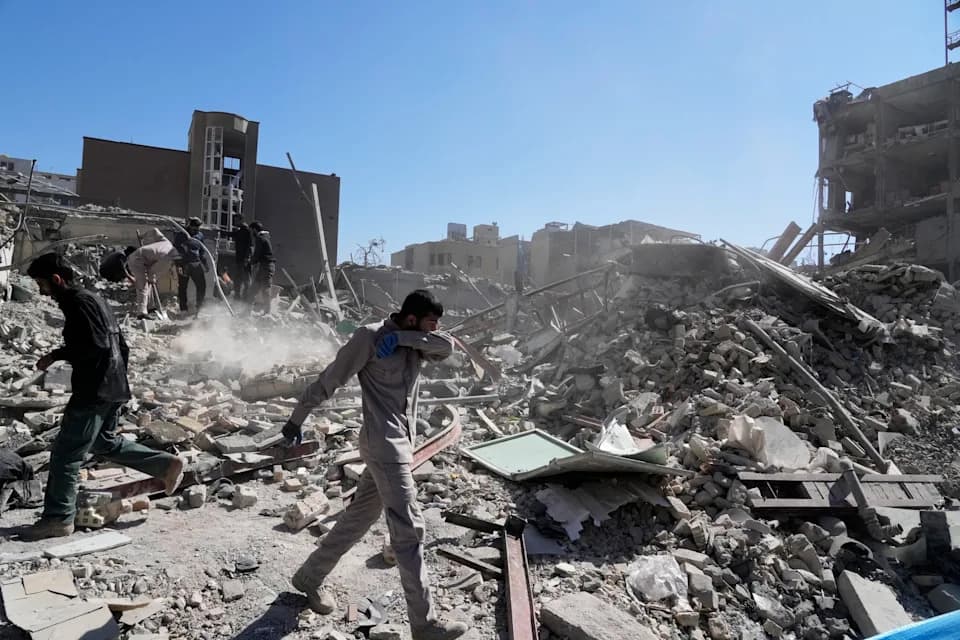
A group of men inspects the ruins of a police station struck Monday amid the U.S.–Israeli military campaign in Tehran, Iran, Tuesday, March 3, 2026. (AP Photo/Vahid Salemi)(ASSOCIATED PRESS)
The war unfolding across the Middle East has reverberated through nearly every country in the region, producing missile strikes, reported casualties, and closures of key embassies, airspace corridors and commercial routes. Governments are urging citizens to leave where possible, airlines are canceling flights, and shipping firms are rerouting to avoid the Strait of Hormuz and, in some cases, the Suez Canal. This article summarizes the reported impact country by country, drawing on local authorities, international statements and real-time flight-tracking data.
Iran
Damage and casualties: Iranian authorities and humanitarian organizations report the highest death toll in the region. The Iranian Red Crescent said at least 787 people have been killed; state media reported that more than 160 of those deaths resulted from a strike on an elementary school in Minab. Iranian officials have also reported strikes on nuclear-related facilities, missile launchers and leadership compounds. Some satellite imagery analysts reported damage to buildings at the Natanz nuclear complex. These claims are reported by local sources and have not been independently verified in every case.
Airspace: Closed.
Israel
Damage and casualties: Several locations in Israel were struck by missiles launched from Iran or Iran-backed groups, with at least 11 reported dead. The military has not publicly detailed the full extent of damage to sensitive bases and installations.
Airspace: Closed for commercial flights.
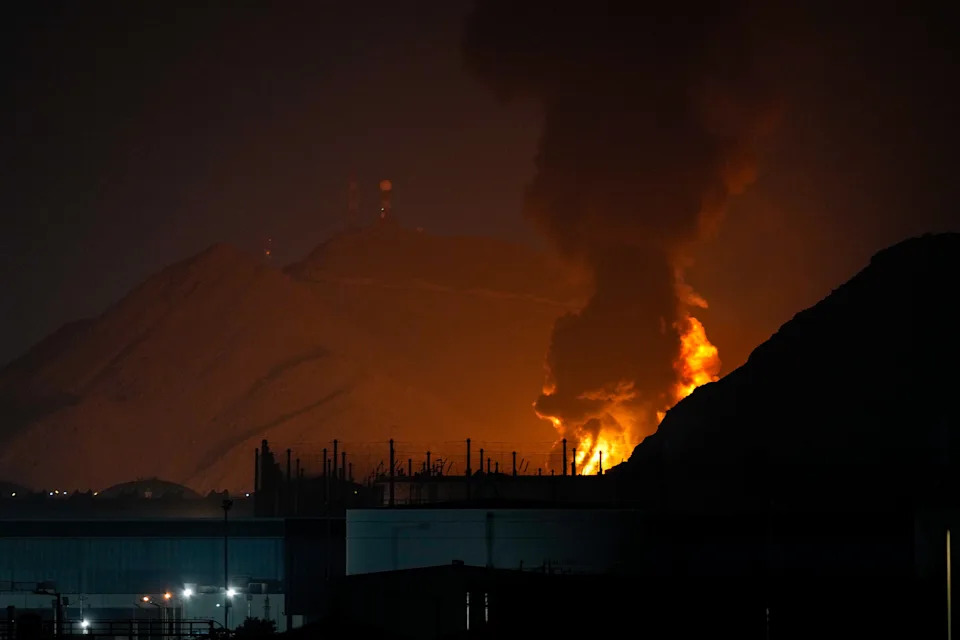
Large fire and plume of smoke is visible after, according to the authorities, debris of an Iranian intercepted drone hit the Fujairah oil facility, in Fujairah, United Arab Emirates, Tuesday, March 3, 2026. (AP Photo/Altaf Qadri)(ASSOCIATED PRESS)
Lebanon
Damage and casualties: Hezbollah-fired missiles into Israel prompted retaliatory strikes; Lebanese authorities reported at least 52 killed and 154 wounded. Israeli strikes have targeted sites in Beirut described by Israel as Hezbollah command centers and weapons storage. Ground troop movements were reported near the southern border. The U.S. Embassy in Lebanon closed to the public.
Airspace: Not fully closed — flights continue, but many carriers have canceled services.
Saudi Arabia
Damage and casualties: Two drones struck the U.S. Embassy compound in Riyadh, causing a limited fire and minor damage, according to Saudi officials; the embassy advised Americans to avoid the area. Saudi defenses also intercepted drones targeting the Ras Tanura oil refinery, a facility with more than half a million barrels per day of refining capacity.
Airspace: Partially closed in areas bordering Iraq and over parts of the Persian Gulf.
Kuwait
Damage and casualties: The U.S. Embassy compound was struck and closed to the public. A U.S. official, speaking on condition of anonymity, reported six U.S. soldiers in a logistics unit were killed by a strike in Kuwait. Kuwait’s health ministry also reported one civilian death and dozens injured in a separate strike.
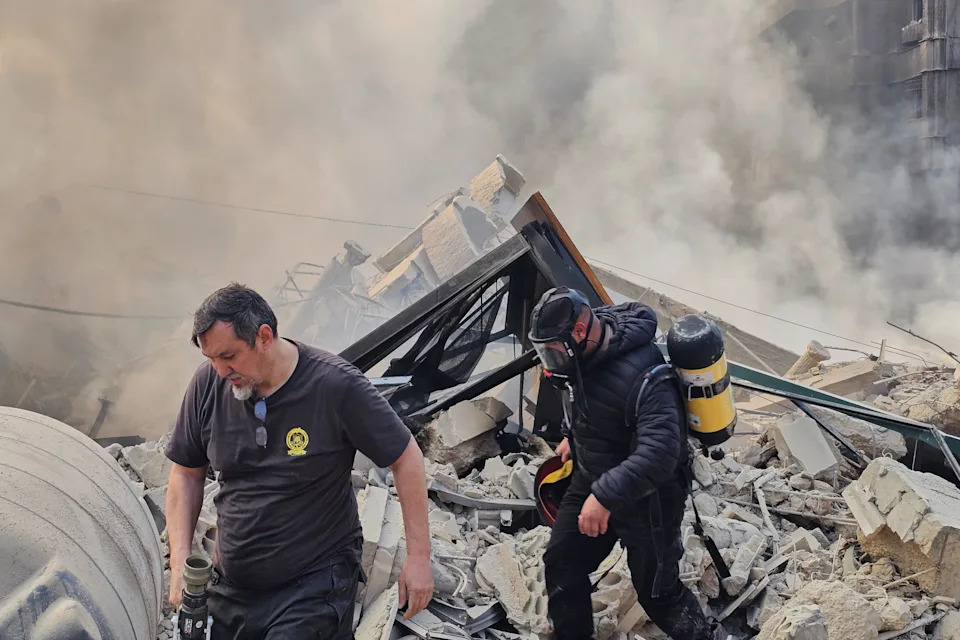
Firefighters inspect the rubble as smoke rises from a building hit by an Israeli airstrike in Dahiyeh, a southern suburb of Beirut, Lebanon, Tuesday, March 3, 2026. (AP Photo/Hassan Ammar)(ASSOCIATED PRESS)
Airspace: Closed.
United Arab Emirates
Damage and casualties: Three people — foreign workers from Nepal, Bangladesh and Pakistan — were reported killed. Dubai’s international airport and some coastal hotels sustained damage, according to military statements, and two Amazon data centers in the UAE were reported targeted. Evacuation flights began amid widespread disruptions.
Airspace: Closed for commercial flights, though limited evacuation flights have operated.
Egypt
Damage and casualties: Egypt’s economy is feeling ripple effects as shipping firms reroute vessels away from the Suez Canal. The canal is a vital source of foreign-exchange earnings and the re-routing has economic consequences for an already fragile economy.
Airspace: Commercial flights continue but with cancellations; many countries advise travelers to use Taba or Sharm al-Sheikh as alternatives to Cairo.
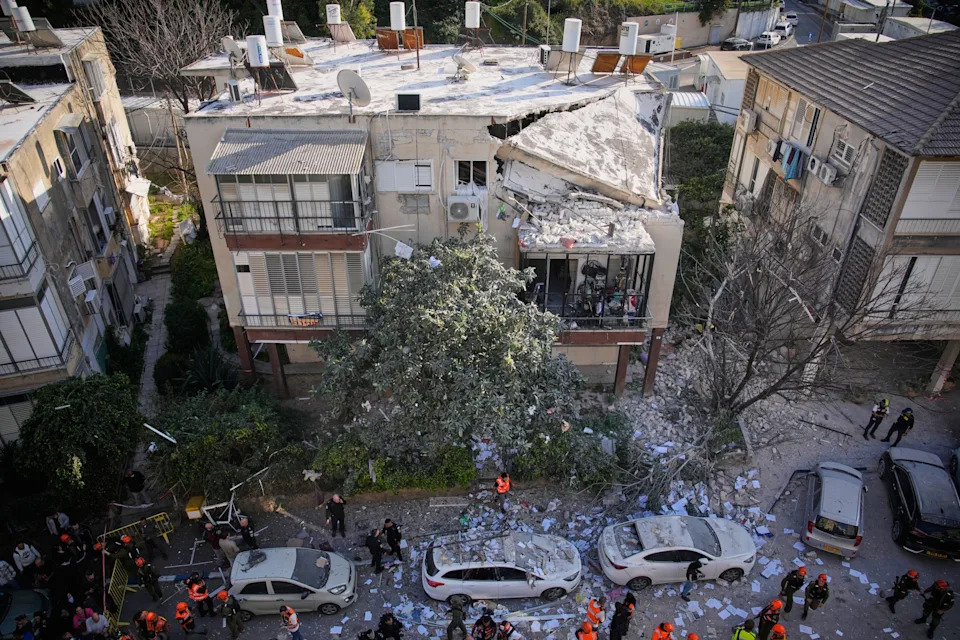
Officers from Israel's Home Front Command inspect a damaged apartment building after an Iranian missile strike in Ramat Gan, Israel, Tuesday, March 3, 2026. (AP Photo/Ohad Zwigenberg)(ASSOCIATED PRESS)
Jordan
Damage and casualties: Authorities reported five people injured by falling shrapnel after projectiles were intercepted over Jordanian airspace.
Airspace: The Civil Aviation Authority announced nightly airspace closures from 6 p.m. to 7 a.m. until further notice.
Qatar
Damage and casualties: Iranian strikes have reportedly hit some energy facilities in Qatar.
Airspace: Closed.
Iraq
Damage and casualties: Strikes on sites linked to Iranian proxies have killed militia members, and U.S. bases and the U.S. consulate in Erbil have faced drone and missile attacks. Protesters also attempted to storm the U.S. Embassy in Baghdad. Iraq’s Ministry of Oil announced a pause in production at the Rumaila fields near Basra, citing tanker shortages tied to disruptions in the Gulf.

Coffins holding the bodies of mostly children sit in a room as they are prepared for the funeral of those killed in what Iranian officials said was an Israeli-U.S. strike Feb. 28 at a girls' elementary school in Minab, Iran, Tuesday, March 3, 2026. (Amirhossein Khorgooei/ISNA via AP)(ASSOCIATED PRESS)
Airspace: Closed.
Bahrain
Damage and casualties: A strike-related fire killed one Asian worker and seriously wounded two others, according to Bahrain’s Interior Ministry. A drone impact was also reported near an Amazon data center.
Airspace: Closed.
Syria
Damage and casualties: State media reported minor injuries from falling missile debris in areas outside Damascus and in southern provinces; no large-scale material damage was reported in those accounts.
Airspace: Closed.
Oman
Damage and casualties: Oman reported multiple drone attacks on commercial ports, including Salalah and Duqm, and at least one vessel was struck off its coast.
Airspace: Open but many commercial flights have been canceled.
Sources and notes: Airspace status and flight activity are based on Flightradar24 and national aviation authorities as of the latest updates. Casualty and damage figures are drawn from local governments, humanitarian organizations, military statements and news agencies; many claims remain unverified and some figures may change as events develop. AP reporters and regional correspondents contributed to the reporting.
Help us improve.





















