
The article contends that President Trump escalated a poorly planned military campaign against Iran, undermining diplomatic progress after reported concessions in Geneva. It describes strikes that the original account says targeted Iran's political and security leadership and notes that some of those claims (including deaths of top officials) lack independent verification. The piece warns that mixed messaging and no clear objectives risk a wider regional war and significant civilian harm.
The Rise of a 'Mad Emperor': How Trump's Iran Escalation Broke Diplomacy
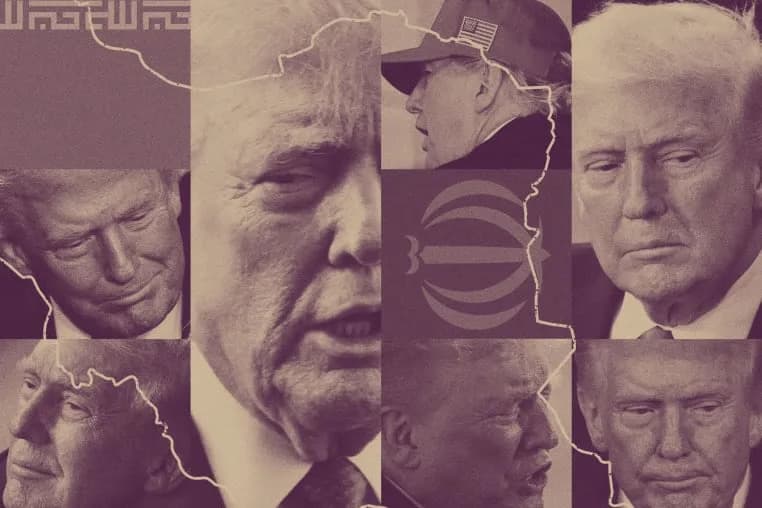
The rise of a mad emperor
The article argues that President Donald Trump has escalated a reckless and poorly planned military campaign against Iran, transforming efforts to curb Tehran’s nuclear program into broad strikes that targeted its political leadership and security apparatus. It warns that the administration's actions and mixed messaging risk a wider regional war and that key claims in the original account require independent verification.
Military Buildup and Questions of Rationale
In the days before talks with Iran, Mr. Trump ordered a large buildup of U.S. military assets near Iranian waters and threatened force unless Tehran made concessions he viewed as sufficient over its nuclear program. The piece notes that administration statements and the President’s public remarks offered little coherent explanation for the urgency — especially after Mr. Trump had previously claimed he had "totally obliterated" some of Iran’s nuclear sites and after U.S. officials said Iran was not enriching uranium at the time. The article also points out there was no public evidence that Iran possessed ballistic missiles capable of striking the U.S. mainland.
Diplomacy Undercut
During Geneva talks, Omani mediators reportedly said Iran agreed to significant limits on uranium stockpiles while refusing to accept curbs on its ballistic missile program or regional proxy activities. That concession, the article says, suggested negotiations were making headway — but two days later a U.S.-led air campaign with Israeli participation struck targets in Iran and, according to the piece, effectively wiped out diplomatic momentum.
Scope of the Strikes And Verification Issues
The original account asserts the strikes went far beyond damaged nuclear facilities or missile sites and targeted Iran’s broader political command structure. It claims the U.S. and Israel killed Iran’s supreme leader, Ayatollah Ali Khamenei, and multiple senior officials, and struck the navy and Revolutionary Guard infrastructure. These would be momentous developments if confirmed; however, such extraordinary claims require independent verification. The improved article preserves the report’s account while clearly noting that public, reliable confirmation of these specific high-level deaths and the full scope of damage was not available in mainstream reporting at the time.
"Surrender or face death," Mr. Trump told Iran's IRGC in a posted video statement, and he urged Iranians to "take over your government" after the strikes.
Contradictory Messaging
The piece highlights sharply inconsistent public statements by Mr. Trump and senior officials. Mr. Trump said he was open to diplomacy even as military action continued, telling The Atlantic, "They want to talk, and I have agreed to talk, so I will be talking to them." In separate interviews he floated a range of mutually contradictory outcomes — from a Venezuela-style change in leadership to a popular uprising, and even the unlikely scenario that the IRGC would lay down arms voluntarily. He has offered varying estimates of how long operations might last — from "two or three days" to "four or five weeks" or "whatever it takes" — and has not ruled out deploying ground troops.
Defense Secretary Pete Hegseth added to the mixed signals by insisting the campaign was "the opposite" of nation-building while also claiming, paradoxically, that "the regime sure did change."
Assessment: Improvisation and Risk
Taken together, the article argues, the administration appears to lack a coherent strategy and has been improvising as events unfold. That open-ended approach, the piece warns, could trap the U.S. in a longer, bloodier intervention than anticipated, increase civilian suffering in Iran, destabilize the broader Middle East, and disrupt the global economy. The improved version emphasizes factual caution: some of the most consequential claims in the original piece are reported as assertions and should be treated as unverified until corroborated by independent sources.
Conclusion: The episode — whether the most alarming reported details are later confirmed or not — highlights the dangers of high-stakes military action without clear objectives, rigorous public justification, or transparent evidence for the most dramatic claims being made.
Help us improve.





















