
Key Takeaway: John Fishwick, a former U.S. attorney, says recent U.S.-Iran exchanges amount to an "isolated military action," not a declared war, noting war usually implies sustained ground combat. Six U.S. service members were killed in operations against Iran, with identities withheld for 24 hours for next-of-kin notification. Two drones struck the U.S. Embassy in Riyadh, causing minor damage. President Trump warned strikes could continue for "four or five weeks" but said ground forces are unlikely.
Former U.S. Attorney: Current U.S.-Iran Exchanges Are "Isolated Military Action," Not A Declared War
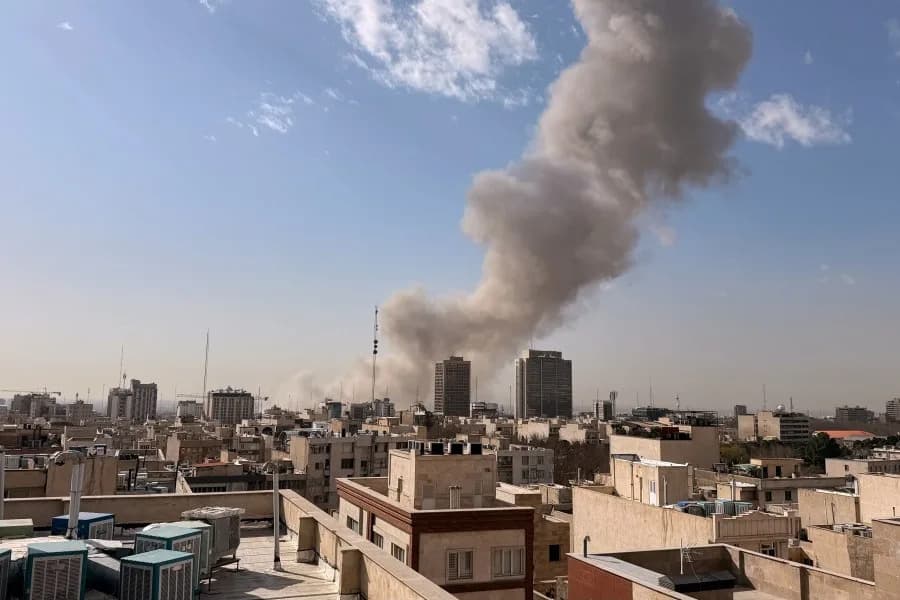
US not at war with Iran, former district attorney says
John Fishwick, a former U.S. attorney for the Western District of Virginia, told NewsNation he does not consider the recent U.S.-Iran exchanges to constitute a formal war. He described the events as "an isolated military action," distinguishing them from a traditional war that typically involves sustained ground combat.
Speaking on "Jesse Weber Live," Fishwick said,
"I don’t think it’s a war. War usually means boots on the ground and sustained fighting."He noted that President Trump and Defense Secretary Hegseth have referenced the term "war" at times, but neither has formally declared one.
In his first public response to an attack on the U.S. Embassy in Riyadh, President Trump told NewsNation, "you’ll find out soon" about potential retaliation. U.S. Central Command reported that six U.S. service members were killed during a military operation against Iran; their identities are being withheld for 24 hours to allow next-of-kin notification.
On Monday night, two drones struck the U.S. Embassy in Riyadh, causing what initial assessments described as minor material damage and a limited fire. President Trump also told reporters that deploying ground forces is unlikely, while warning that airstrikes could continue for "four or five weeks" and saying the U.S. has a "tremendous" stockpile of ammunition.
Defending the administration’s response, Fishwick said the strongest legal and political justification is protection of the homeland. "We’re protecting the homeland. We’re protecting our country," he said, citing Iran’s long-range missiles and alleged threats against President Trump as factors that make the situation particularly serious.
Why the Distinction Matters
Fishwick’s remarks draw a deliberate legal and semantic distinction between discrete military operations and a formal, declared war. That distinction affects presidential authorities, congressional oversight and public expectations about the duration and scope of U.S. involvement.
As tensions escalate, officials continue to weigh further strikes, diplomatic responses and the risks of broader confrontation. Casualties, attacks on diplomatic sites, and public statements from both sides have heightened international concern and scrutiny.
Copyright 2026 Nexstar Media, Inc. All rights reserved. This material may not be published, broadcast, rewritten, or redistributed.
Help us improve.





















