Iran’s foreign minister Seyed Abbas Araghchi told China’s Wang Yi that Tehran will "do its utmost" to protect Chinese nationals and institutions after surprise strikes by the US and Israel. Araghchi said Iran would defend itself and urged China to help prevent further escalation. China called for an immediate halt to military actions, while analysts highlighted deepening China–Iran ties, including a 25-year strategic pact and large Chinese purchases of Iranian oil.
Iran Pledges to Protect Chinese Nationals After US–Israel Strikes, Seeks China’s Help to Prevent Escalation
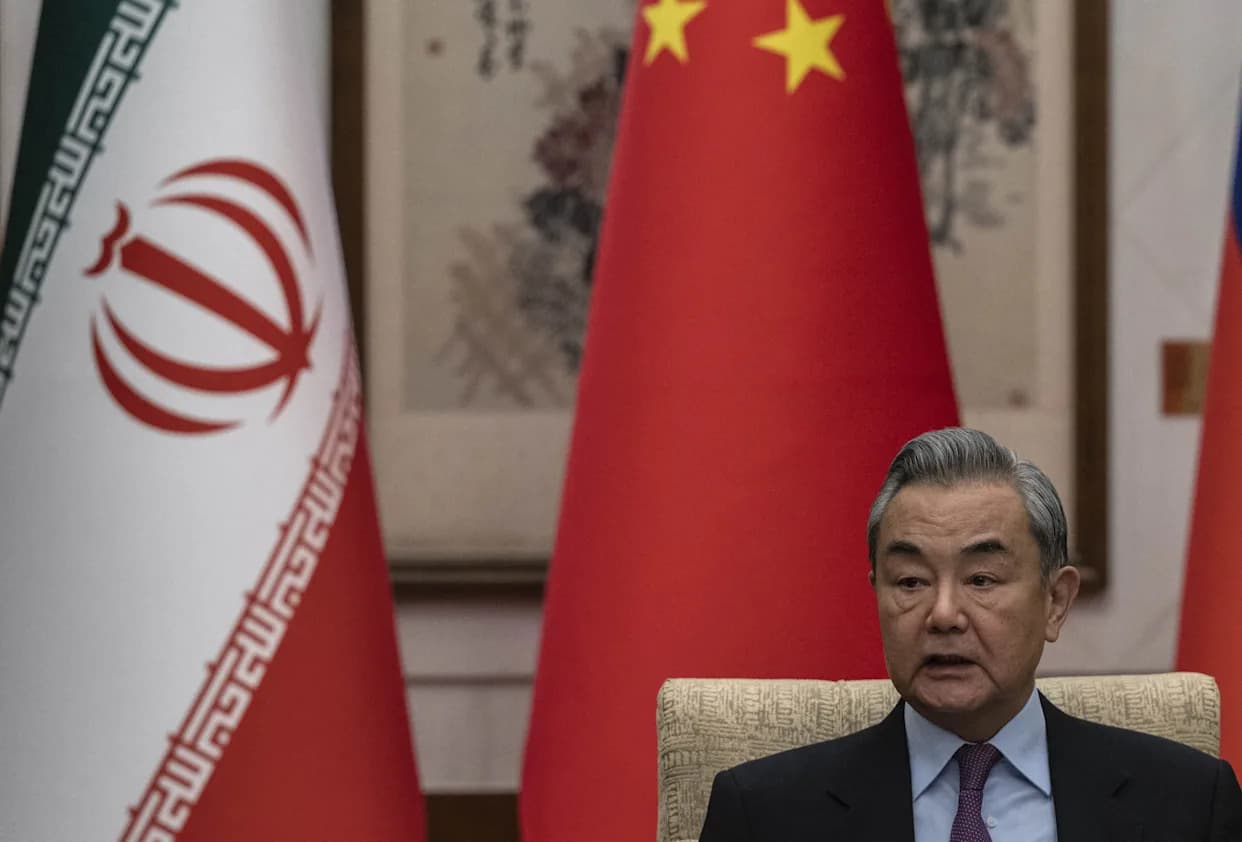
Chinese Foreign Minister Wang Yi speaks during a meeting with Iranian Deputy Foreign Minister Kazeem Gharibabadi (not pictured) in Beijing on March 14, 2025 [Pool via AFP]
Iran’s foreign minister, Seyed Abbas Araghchi, told China’s Wang Yi that Tehran will do everything necessary to protect Chinese citizens, personnel and institutions in Iran after a surprise series of strikes attributed to the United States and Israel. The phone call, announced by China’s Ministry of Foreign Affairs, came as Tehran said it would defend itself "at all costs" and sought Beijing’s assistance in preventing a wider regional escalation.
Key Exchange
During the call on Monday, Araghchi said Iran would "do its utmost to guarantee the safety and security of Chinese personnel and institutions," the Chinese ministry reported. He accused Washington of having "launched war against Iran for the second time during their ongoing negotiations," saying the strikes occurred despite "positive progress in the latest round of negotiations."
"Tehran had no choice but to defend itself," Araghchi told Wang, and he expressed hope that China would play a role in preventing further escalation across the region.
Wang reiterated Beijing’s long-standing ties with Tehran, telling Araghchi that "China values the traditional friendship between China and Iran and supports Iran in safeguarding its sovereignty, security, territorial integrity and national dignity and in upholding its legitimate and lawful rights and interests." He also said China had urged the US and Israel to halt military actions immediately to avoid wider conflict.
Context And Wider Implications
The strikes took place hours after Oman’s foreign minister, Badr al-Busaidi—who mediated the most recent indirect talks between Washington and Tehran—said a peace deal was closer than ever. "A peace deal is within our reach," Busaidi told CBS News shortly before the attacks began.
Analysts note that China and Iran have deepened ties in recent years. Beijing and Tehran signed a 25-year strategic agreement in 2021, and China has worked to limit Iran’s diplomatic isolation by supporting its participation in groupings such as BRICS+ and the Shanghai Cooperation Organisation. According to a Chatham House briefing by Ahmed Aboudouh, more than 80% of Iran’s shipped oil in 2025 went to China, representing about 13.5% of China’s seaborne oil imports that year.
What This Means
The phone call highlights Beijing’s diplomatic role and the security concerns of foreign nationals in Iran amid active hostilities. It also underscores the strategic and economic ties between China and Iran—factors that could shape international responses and efforts to prevent a broader regional conflagration.
Help us improve.