
Key Takeaway: In private briefings, Trump administration officials told congressional staff that U.S. intelligence did not indicate an imminent Iranian preemptive strike before the joint U.S.-Israeli operation. Officials acknowledged a broader threat from Iran’s missiles and proxy networks. Shared intelligence and weeks of tracking enabled near-simultaneous daylight strikes that killed Supreme Leader Ayatollah Ali Khamenei and about 40 senior figures. Lawmakers pressed for answers about the operation’s justification and next steps.
U.S. Intelligence Told Congress There Was No Indication Iran Planned A Preemptive Strike Before Joint U.S.-Israeli Operation
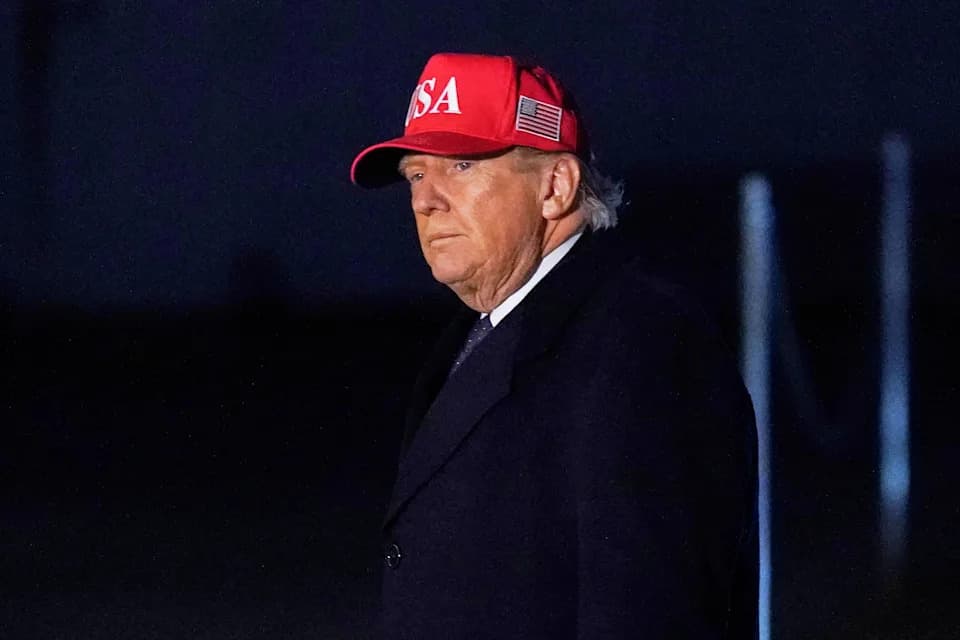
President Donald Trump walks on the South Lawn upon his arrival to the White House, Sunday, March 1, 2026, in Washington. (AP Photo/Jose Luis Magana)(ASSOCIATED PRESS)
WASHINGTON — In private briefings on Sunday, Trump administration officials told congressional staff that U.S. intelligence did not indicate an imminent Iranian strike or that Tehran was preparing a preemptive attack on the United States, two people familiar with the briefings said.
Officials did acknowledge a broader regional threat from Iran’s missile capabilities and its network of proxy forces, but they offered no clear picture of what might happen inside Iran after the joint U.S.-Israeli operation, the sources said, speaking on condition of anonymity to describe nonpublic briefings.
Contrast With Public Messaging
The account given to congressional staff contrasts with President Donald Trump’s public statement after the strikes. In a video message, Trump said, “Our objective is to defend the American people by eliminating imminent threats from the Iranian regime. A vicious group of very hard, terrible people.” Senior administration officials had earlier told reporters there were indicators Iran might mount a preemptive response.
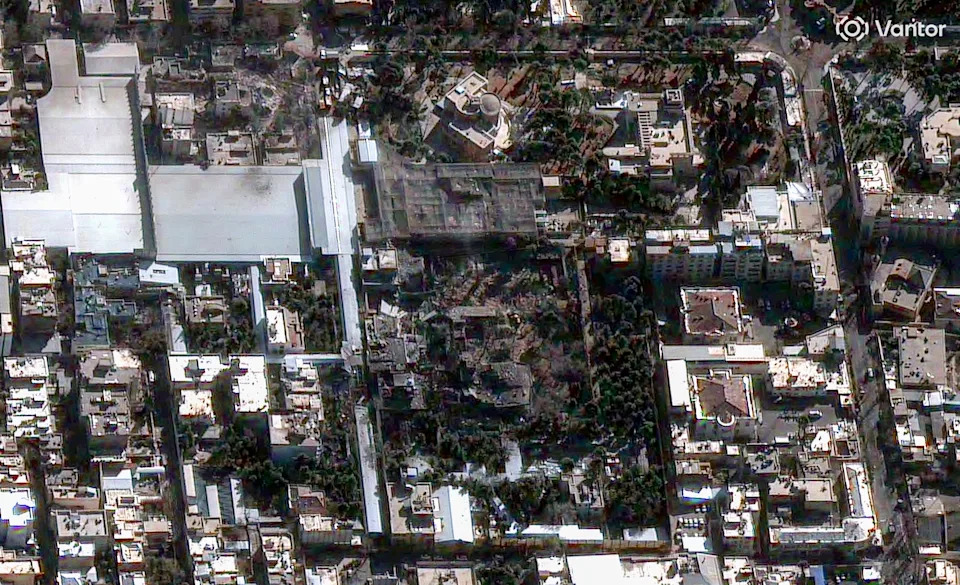
In this satellite image provided by Vantor, damaged buildings are seen in the Ayatollah Ali Khamenei's official residence in Tehran, Iran, Sunday, March 1, 2026. (Satellite image ©2026 Vantor via AP)(ASSOCIATED PRESS)
Intelligence Sharing and The Operation
According to an Israeli military official and another person familiar with the planning, U.S. and Israeli authorities spent weeks tracking movements of senior Iranian figures — including Supreme Leader Ayatollah Ali Khamenei — and shared intelligence that helped time a surprise daylight operation.
The Israeli official said the barrage unfolded so rapidly that three strikes in three locations hit within a single minute, killing Khamenei and roughly 40 senior figures, including the head of the Revolutionary Guard and Iran’s defense minister. Officials described a window of opportunity created by weeks of surveillance, rehearsals and real-time confirmation that key targets were gathered together.
Daylight strikes, the official added, increased the element of surprise and reduced the chance that senior figures could flee after the first blows. The official said Israeli and U.S. forces coordinated closely and drew on similar tactics used at the outset of last June’s conflict.
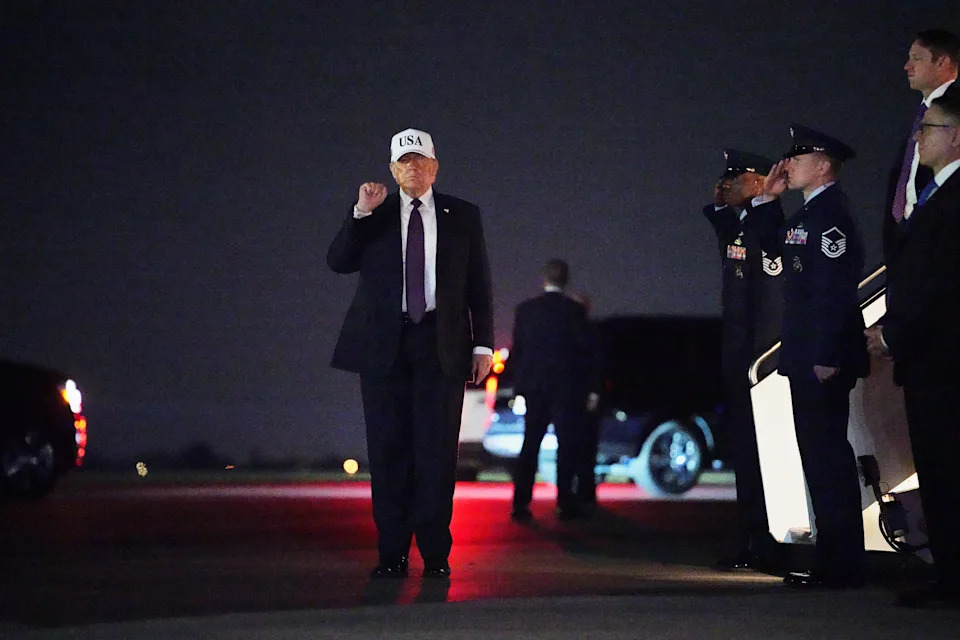
President Donald Trump holds up a fist after disembarking Air Force One at Palm Beach International Airport in West Palm Beach, Fla., Friday, Feb. 27, 2026. (AP Photo/Matt Rourke)(ASSOCIATED PRESS)
Casualties, Targets and Ongoing Risk
President Trump said U.S. forces and partners struck “hundreds” of targets, naming Revolutionary Guard facilities, Iranian air-defense sites and nine warships. The military announced three U.S. service members were killed in the operation.
Virginia Sen. Mark Warner, the top Democrat on the Senate intelligence committee, told The Associated Press that the U.S. working relationship with Israel’s intelligence services is historically strong, but he expressed serious concerns about the strike’s justification, the administration’s long-term strategy and the risks to American troops. “No tears will be shed over their leadership being eliminated, but always the question is: OK, what next?” Warner said.
Congressional Briefings and What Comes Next
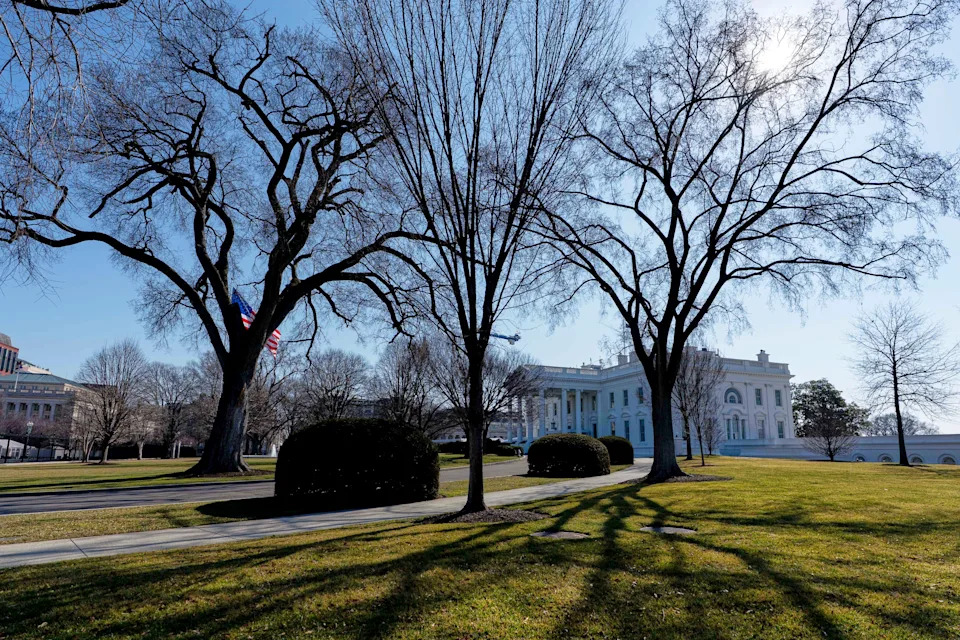
The White House is seen Sunday March 1, 2026, in Washington, ahead of the arrival of President Donald Trump. (AP Photo/Jose Luis Magana)(ASSOCIATED PRESS)
The White House said several administration officials — named as Marco Rubio, Pete Hegseth, John Ratcliffe and Dan Caine — would brief the full Congress on the operation on Tuesday, with additional briefings for Hill leadership scheduled beforehand. Politico first reported details of the private briefings.
A senior White House official told staff that Iran’s “new potential leadership” has suggested willingness to talk with the United States. The official, speaking on condition of anonymity, said President Trump indicated he would be “eventually” willing to speak with Iran’s new leaders but that, for now, the military operation “continues unabated.”
The official did not identify who the possible new leaders are or how they conveyed readiness to engage. Separately, Trump told The Atlantic he planned to speak with Iran’s new leadership: “They want to talk, and I have agreed to talk, so I will be talking to them,” he said, declining to give a timeline.
Why It Matters: The difference between private intelligence briefings and public statements raises questions for lawmakers and the public about the operation’s justification, the quality of the intelligence, and the strategy for what follows — including potential regional escalation and risks to U.S. personnel.
Associated Press writers Matthew Lee, Will Weissert and Ben Finley contributed to this report. Federman reported from Jerusalem.
Help us improve.





















