
Summary: Heavy US and Israeli air strikes struck Tehran and other cities after reports that Supreme Leader Ayatollah Ali Khamenei and several senior commanders were killed. A temporary three-member council is governing until the Assembly of Experts selects a new supreme leader, while the IRGC and other security services have vowed retaliation. Authorities reported significant civilian casualties — including strikes on schools — and imposed widespread internet outages as the nation entered an extended period of mourning.
Tehran Under Fire: Leadership Reorganises After Khamenei's Death as US–Israel Strikes Continue
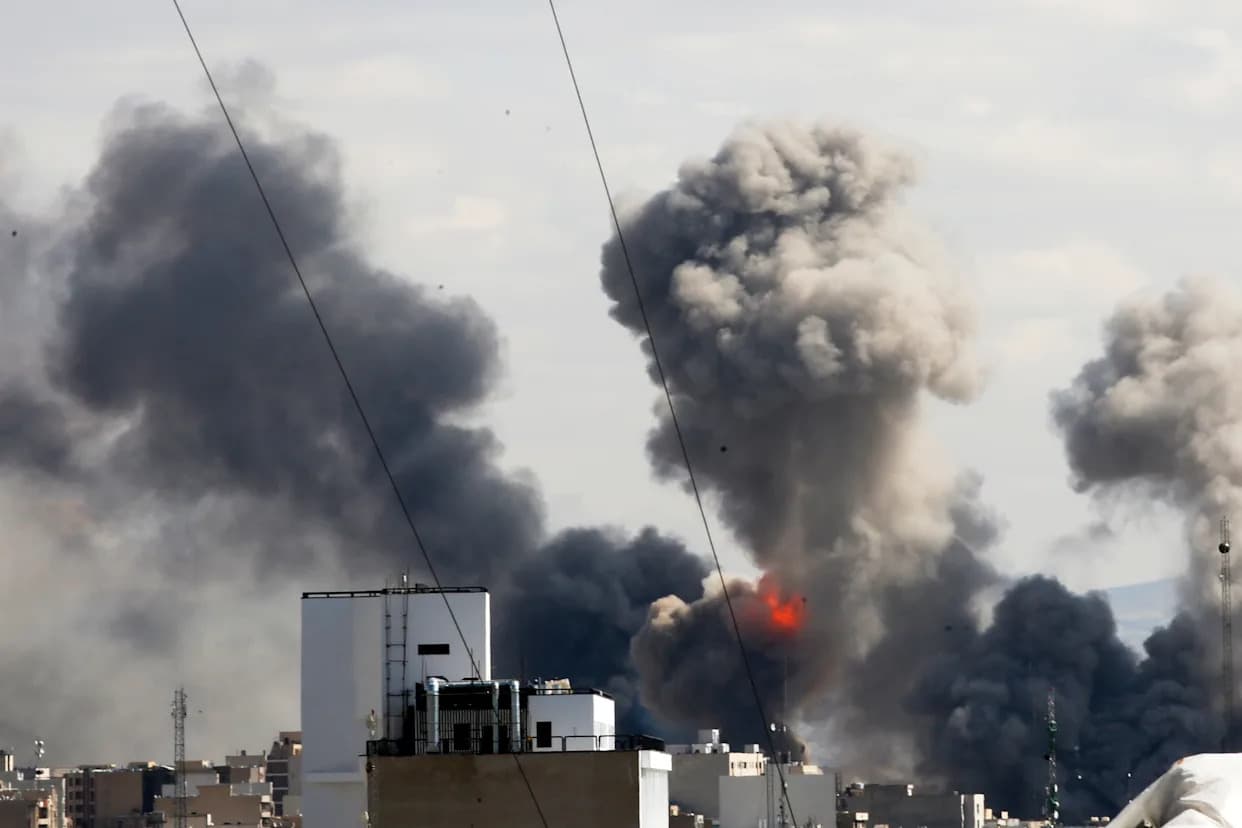
Plumes of smoke rise over residential Tehran amid ongoing United States-Israeli strikes, March 1, 2026 [Fatemeh Bahrami/Anadolu Agency]
Massive air strikes by the United States and Israel continued to batter Tehran and other Iranian cities after Supreme Leader Ayatollah Ali Khamenei and several senior commanders were reported killed at the start of the conflict on Saturday. The capital was struck repeatedly on Sunday, with multiple neighbourhoods hit and authorities imposing near-total internet shutdowns for a second day.
Interim Leadership and Constitutional Process
Iranian officials say a temporary three-member council has been formed to steer the country until the Assembly of Experts names a new supreme leader under post-1979 law. President Masoud Pezeshkian said the council "has begun its work," and Foreign Minister Abbas Araghchi told Al Jazeera that the selection process could conclude within days.
The interim council reportedly includes President Masoud Pezeshkian and judiciary chief Gholam-Hossein Mohseni-Ejei; Ayatollah Alireza Arafi was later named as the required jurisprudence expert after selection by the Expediency Council. Officials have emphasised continuity and adherence to constitutional procedures.
Military Losses, IRGC Response and Threats
Iran’s Islamic Revolutionary Guard Corps (IRGC) — a major military and economic force since the 1979 revolution — is expected to play a pivotal role. Senior military figures reported killed include IRGC commander Mohammad Pakpour, armed forces chief of staff Abdolrahim Mousavi, Defence Council chief Ali Shamkhani, and police intelligence chief Gholam-Reza Rezaeian. The IRGC has vowed revenge, announcing what it described as "the heaviest offensive operations" against what it called occupied territory and US bases in the region.
The regular army also pledged to defend the country. Officials claimed bombing runs on US bases across the region but did not release independent verification footage.
Civilian Impact and Local Reports
Local authorities reported heavy civilian casualties. Videos and local statements indicated strikes in Tehran’s Narmak neighbourhood near 72 Square — the area of a reported high-profile residence — with at least two children killed at a damaged school. Officials separately reported more than 150 people, many of them children, were killed in an attack on a school in the southern city of Minab. Independent verification of some casualty figures remains limited amid the communications blackout.
There were also unconfirmed reports that former president Mahmoud Ahmadinejad had been killed; the state-linked Iranian Labour News Agency denied those reports, citing an informed source without further detail.
Domestic Politics, Public Order and Mourning
Senior officials and prominent political figures publicly called for continuity. President Pezeshkian urged pro-establishment supporters to gather at mosques and on major streets. Former presidents Hassan Rouhani and Mohammad Khatami voiced support for the temporary council and urged unity; Hassan Khomeini praised Khamenei and reaffirmed the importance of defending the Islamic Republic’s institutions.
Authorities declared seven days of public holidays and 40 days of mourning, organising large memorial gatherings. Police and security services said they were prepared to maintain public order amid warnings from US and Israeli officials urging protests meant to pressure Iran's leadership.
Regional and International Implications
Security chief Ali Larijani posted messages to regional governments saying Tehran does not seek attacks on neighbours while simultaneously labelling US bases in those countries as "American territory" and threatening unprecedented force in a separate message. US and Israeli officials have said they will continue air operations for days or weeks, raising questions about how Iran’s internal power dynamics and regional posture will evolve.
Note: Many details in this fast-developing story remain unverified because of restricted communications and conflicting reports from local and international sources. casualty figures and attributions are reported by Iranian authorities and local media.
Help us improve.





















