
The recent US–Israel strikes on Iran mark a significant escalation that could evolve into a sustained campaign aimed at crippling Tehran's leadership and military capabilities. Officials say the operation is larger and more complex than last June's 12‑day attacks and has struck leadership targets and ballistic missile infrastructure. Iran has launched missiles at US bases in the Gulf while simultaneously signalling some openness to de‑escalation. Analysts warn regionalisation and proxy involvement could prolong the conflict and make it existential for the regime.
Could the US–Israel Strikes on Iran Become a Protracted Campaign?
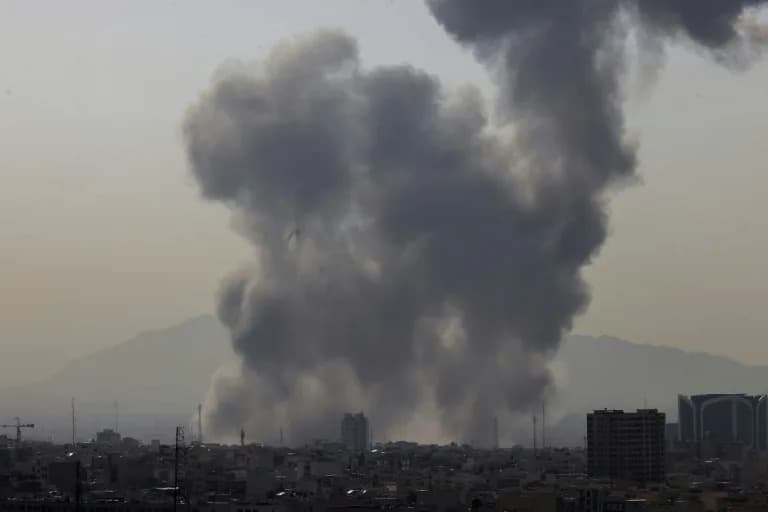
The joint US-Israeli strikes targeted Iran's leadership and its ballistic missile programme (ATTA KENARE)(ATTA KENARE/AFP/AFP)
The joint US–Israeli strikes launched against Iran on Saturday risk evolving into a prolonged military campaign with complex strategic aims, including attempts to decapitate Tehran's leadership and significantly degrade its security capabilities.
Background
During the 12-day conflict in June last year, Israeli forces, supported by the United States, carried out targeted strikes intended to dismantle key Iranian nuclear facilities. Officials now say the current operation is on a markedly larger and more complex scale.
Scale and Targets
Israel's army chief, Lieutenant General Eyal Zamir, warned the operation is "unfolding on a completely different scale, more complex and more complicated" than last June's campaign. Analysts report the strikes targeted senior figures and key elements of Iran's security architecture, including the Supreme Leader Ali Khamenei (Tehran says he remains alive), the military chief of staff and leaders of the Islamic Revolutionary Guard Corps (IRGC). Strikes have also hit elements of Iran's ballistic missile programme.
"This is an all‑out decapitation campaign and an effort to wear down Iran's capabilities," said David Khalfa, co-founder of the Atlantic Middle East Forum research centre.
Iran's Response
Iranian Foreign Minister Abbas Araghchi described US and Israeli installations involved in the operation as "legitimate targets." State media reported subsequent missile strikes at US bases in the Gulf. At the same time, Araghchi told US television he had reassured Gulf capitals that Tehran had "no intention of attacking them" and framed strikes on US facilities as an act of self-defence. He also signalled an openness to communication, saying that "if the Americans want to talk to us, they know how they can contact me" and that Iran is "clearly interested in de‑escalation."
Risk of Regional Escalation
Analysts warn the conflict may already be widening. Khalfa said Iran is engaging in "horizontal escalation," prepared to regionalise the fight by targeting US bases across the Arabian‑Persian Gulf and striking Israel. That dynamic raises the chance that Gulf states could permit US strikes from their territory or that Iran's regional proxies — including Hezbollah — could intensify attacks, drawing more actors into a protracted confrontation.
Sanam Vakil, director of the Middle East and North Africa programme at Chatham House, described the campaign as "a direct blow to the state's security architecture and governing apparatus," noting the conflict now appears existential and unlikely to end quickly.
Brandan Buck of the Cato Institute warned Washington risks being "drawn into a new conflict in the Middle East with no clear way out," arguing that promises of limited action can pave the way for protracted wars.
Outlook
Experts suggest the campaign could last days or weeks, and potentially longer if regionalisation and proxy involvement intensify. While some Iranian officials publicly express interest in de‑escalation, the combination of leadership‑level targeting and strikes on missile infrastructure has raised the stakes and increased the risk that the confrontation will become protracted and unpredictable.
What to watch next: official casualty and damage assessments, communications between Washington and Tehran, reactions from Gulf states, and any mobilization by Iran's regional proxies.
Help us improve.





















