
Stephen Miller told CNN the United States will “conduct ourselves as a superpower,” reflecting a shift toward an unapologetic, power-first foreign policy after a U.S. special forces operation in Venezuela. Officials say the raid seized President Nicolás Maduro and involved nearly 200 U.S. personnel, raising legal and congressional oversight questions. Critics call the posture imperialistic, while the administration cites security and strategic interests — including renewed focus on Greenland and rare-earth minerals. Key questions remain about post-Maduro planning, costs, and whether further unilateral actions are planned.
Trump’s New Doctrine: Strength, Force, Power — What Stephen Miller’s Remarks Mean for U.S. Foreign Policy

President Donald Trump walks on the South Lawn after landing at the White House on January 4, 2026, in Washington, DC. - Alex Wong/Getty Images
One of President Donald Trump’s longest-serving aides offered a blunt articulation of a major shift in U.S. posture abroad, saying the administration will prioritize power and force as it pursues an assertive agenda following a dramatic operation in Venezuela.
“We live in a world…that is governed by strength, that is governed by force, that is governed by power. These are the iron laws of the world,” Deputy Chief of Staff Stephen Miller told CNN’s Jake Tapper. “We’re a superpower. And under President Trump, we are going to conduct ourselves as a superpower.”
The remarks came after a U.S. special forces operation that, according to officials, seized Venezuelan President Nicolás Maduro and transported him to a New York court appearance. U.S. officials said the raid involved nearly 200 personnel on the ground and included a fierce firefight. The White House has framed the action as necessary for U.S. security; critics see it as a provocative breach of Venezuelan sovereignty.
What Miller’s Comments Signal
Miller’s language underscores a deliberate move away from multilateral restraint toward an unapologetic, unilateral projection of American power. The administration has also issued fresh threats toward other countries — including warnings to Colombia, Mexico, and Iran — and promoted a tough, headline-producing approach that emphasizes short, decisive operations over long-term nation-building.
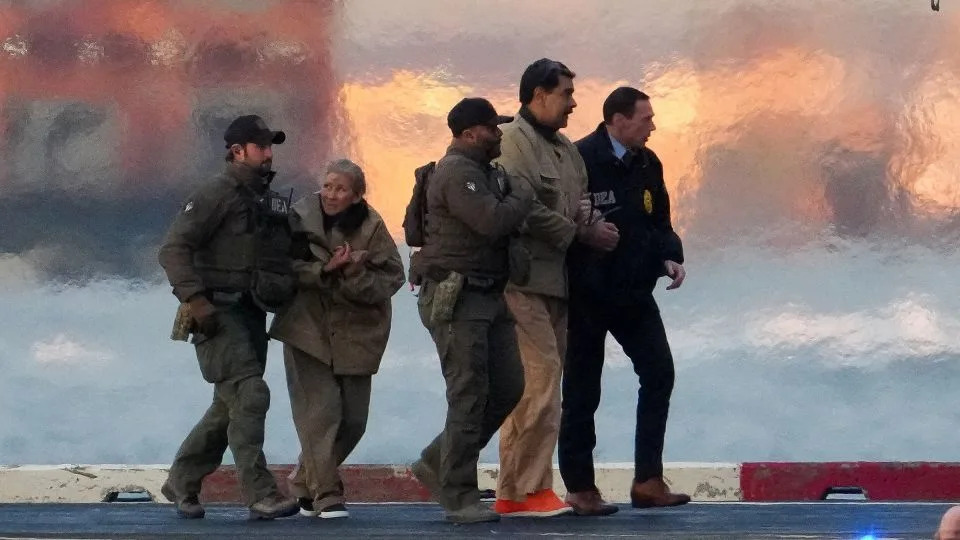
Law enforcement officials move captured Venezuelan President Nicolas Maduro and his wife Cilia Flores, second from left, out of the helicopter in New York on January 5. - Adam Gray/Reuters
Congress, Oversight and Legal Questions
Key questions follow: did the White House seek congressional authorization for the Venezuela operation, and if not, on what legal basis? Republican congressional leaders largely accepted the administration’s characterization of the raid as a law-enforcement mission, with some arguing advance notification would have been impractical. Legal scholars and lawmakers from both parties have raised alarm about the apparent bypassing of Congress for what many characterize as an act of war.
Post-Raid Planning and Practical Limits
Even if removing Maduro could create opportunities for a democratic transition and the return of refugees, practical concerns remain. The raid did not dismantle the Venezuelan security apparatus or the criminal networks that sustain it. Analysts ask whether the administration has a viable plan for stabilizing Venezuela, who will lead any transition, how much it will cost U.S. taxpayers, and whether further incursions are planned — Miller himself referenced an “ongoing” military operation.
Greenland, Minerals and Great-Power Competition
Miller also suggested Greenland — an autonomous territory of Denmark — should be part of U.S. strategic plans. His comments, and a State Department social post stating “This is Our Hemisphere,” fuel concern that the administration views strength as the primary determinant of international order. Greenland’s strategic location and deposits of rare-earth and other critical minerals make it a growing focus of great-power rivalry, but any attempt to subsume the island would create a diplomatic crisis with a NATO ally and raise serious legal and ethical questions.
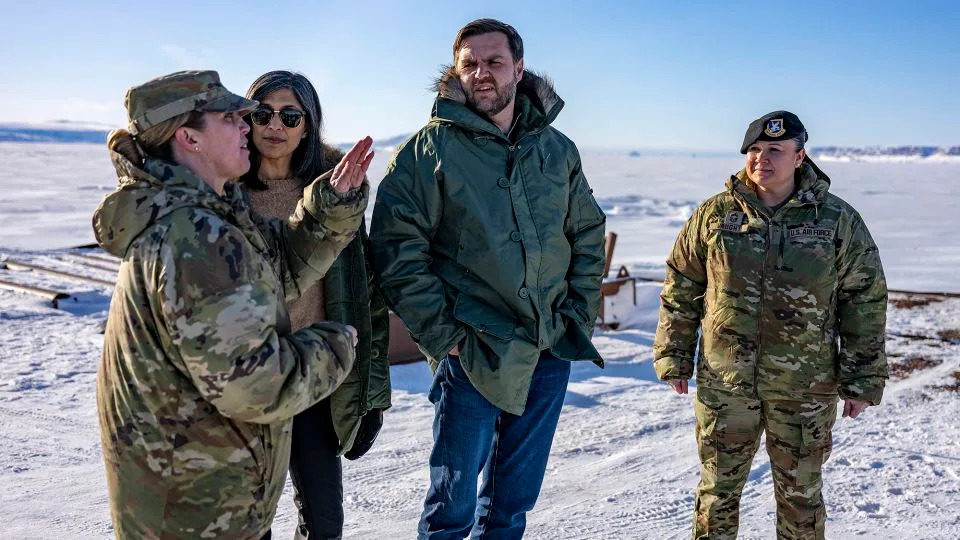
US Vice President JD Vance (2R) and Second Lady Usha Vance (2L) tour the US military's Pituffik Space Base in Greenland on March 28, 2025. - Jim Watson/AFP/Getty Images
Political Reaction
Critics across the political spectrum called the rhetoric imperialistic. Senator Bernie Sanders said Miller’s argument amounted to a “very good definition of imperialism,” warning the stance is not what many Americans want. Supporters argue a more muscular posture defends U.S. interests and deters adversaries.
Open Questions
- Does the administration have a clear, credible plan for Venezuela after Maduro’s removal?
- Will the White House seek congressional authorization for future operations that may constitute acts of war?
- How will long-term costs — diplomatic, financial and human — be managed?
- How will allies react if the U.S. pursues unilateral actions involving NATO partners or contested territories?
The exchange highlights a broader debate about the role of American power in the 21st century: whether strength alone can secure U.S. goals, or whether enduring influence requires alliances, legal constraints and long-term strategy. As the administration defines its second-term doctrine, voters and lawmakers will be watching — and deciding — whether this approach aligns with U.S. values and interests.
Reporting based on statements by administration officials and public interviews; many details remain contested and under legal and congressional review.
Help us improve.





















