
Nicolás Maduro’s 12-year rule ended after U.S. forces removed him and his wife early Friday, abruptly halting a presidency marked by contested elections, human rights abuses and economic collapse. Under Maduro, Venezuela’s economy shrank to roughly 28% of its 2013 size and oil export revenues fell to about 20% of their 2013 level. International investigators documented widespread abuses since 2014, while nearly eight million Venezuelans fled abroad. His survival relied on a patronage network of military leaders, chavista elites, colectivos and support from allies including Cuba, China and Russia — raising urgent questions about Venezuela’s stability and the path forward.
How a U.S. Operation Ended Nicolás Maduro’s 12-Year Rule — What Comes Next for Venezuela

Venezuela's President Nicolas Maduro gestures during a ceremony to swear in new community-based organisations in Caracas, Venezuela, on December 1. - Leonardo Fernandez Viloria/Reuters
Nicolás Maduro cultivated an image that mixed personal eccentricities with shrewd political survival. Known for verbal gaffes that spawned the popular nickname “maduradas,” he nonetheless consolidated power after Hugo Chávez’s death and survived years of domestic unrest and international pressure — until a U.S. operation in the early hours of Friday removed him and his wife from Venezuela.
From Union Organizer to Chávez’s Successor
Maduro rose from humble beginnings — a student activist, a Caracas Metro bus driver and a union leader — into Chávez’s inner circle. He served as foreign minister and vice president before Chávez, who had been weakened by illness, publicly endorsed him in December 2012. That endorsement made Maduro the de facto heir to chavismo and launched a presidency marked by contested legitimacy and persistent political conflict.
Contested Elections and an Entrenched Power Network
Maduro’s legitimacy was repeatedly questioned. In the April 2013 presidential vote he defeated Henrique Capriles by just 1.59 percentage points, a steep fall from Chávez’s margins six months earlier. Subsequent national votes — notably 2017 (constitutional), 2018 and 2024 (presidential), and 2020 (legislative) — were widely criticized for irregularities. Though the opposition won the 2015 parliamentary election, chavista maneuvers neutralized that victory.
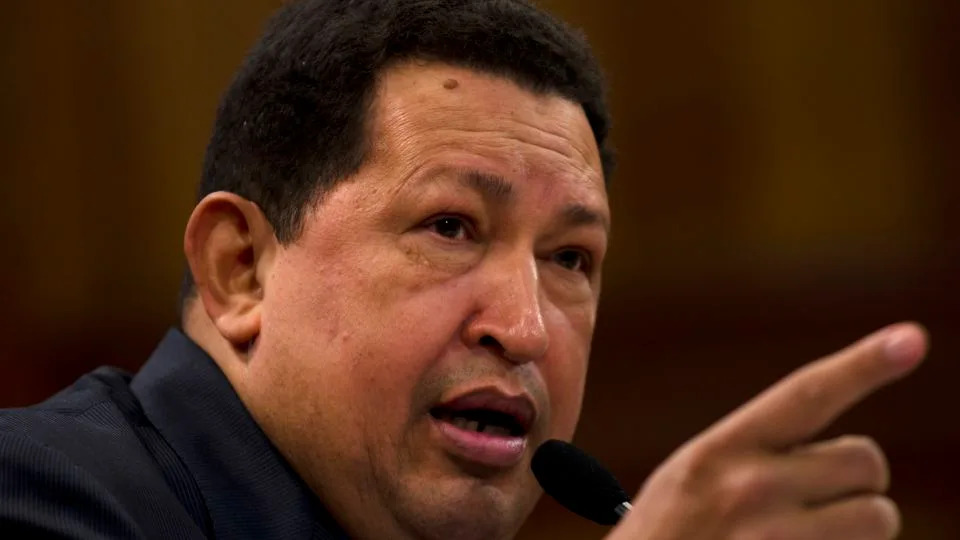
Venezuelan President Hugo Chavez gives his first press conference after winning national elections on October 9, 2012, in Caracas, Venezuela. - Gregorio Marrero/LatinContent/Getty Images
To survive politically, Maduro built a confederation of interests that included military leaders, longtime chavista oligarchs, and armed groups known as colectivos. Analysts say Maduro secured loyalty by granting the armed forces and influential figures economic stakes and positions of power, effectively weaving a patronage network that protected his rule.
International Alliances and the Role of Cuba
Maduro relied on geopolitical partners — notably Cuba, China, Russia and Iran — to buffer international isolation. Cuban security cooperation was repeatedly cited by outside officials as instrumental in helping the government anticipate and blunt opposition challenges, including the 2019 uprising. Cuba’s relationship with Maduro dates back decades and became a strategic pillar of his survival strategy.
Human Rights, Repression, and International Scrutiny
UN investigators and other international bodies documented a pattern of rights violations over many years. A 2020 UN investigative mission found reasonable grounds to believe Venezuelan authorities and security forces planned and executed large-scale violations since 2014, potentially amounting to crimes against humanity, including arbitrary detention, torture, extrajudicial killings and politically motivated persecution.
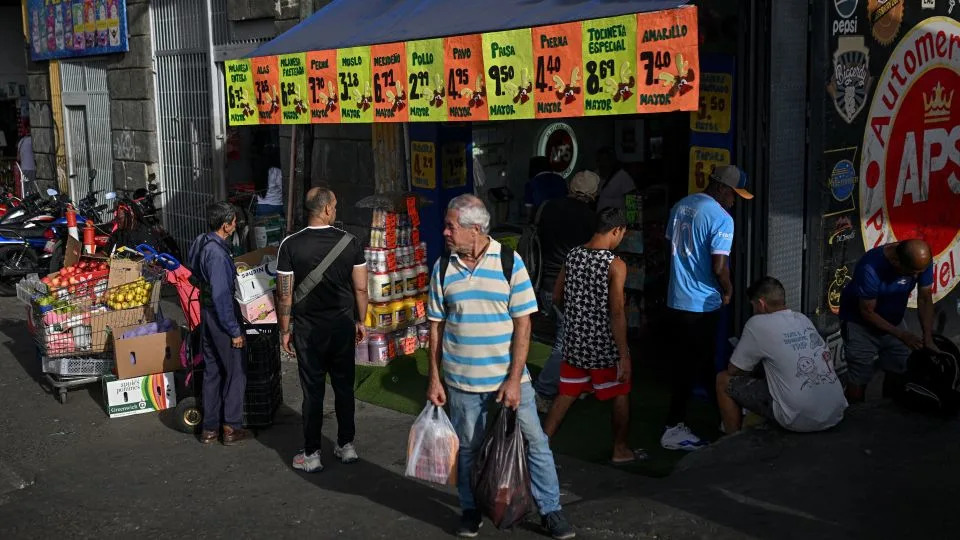
A man holds a grocery bag in front of a store displaying signs with dollar prices at the Quinta Crespo municipal market in Caracas on November 13. - FEDERICO PARRA/AFP/AFP via Getty Images
Economic Collapse and Mass Migration
Venezuela’s economy suffered a steep decline during Maduro’s tenure. According to IMF estimates cited in reporting, the economy stood at roughly 28% of its 2013 size, and oil export revenues fell to about 20% of their 2013 level per OPEC+ data. While U.S. sanctions — including targeted measures and, from 2019, sanctions on PDVSA — played a role, long-term mismanagement, underinvestment in the oil sector and internal power struggles were major contributors.
The social cost was enormous: poverty reached catastrophic levels at the crisis’ worst points, and nearly eight million Venezuelans now live abroad, making Venezuela’s exodus one of the largest displacement crises in the world.
The U.S. Operation and Immediate Aftermath
According to the reporting in this article, U.S. forces detained Maduro and his wife in the early hours of Friday and transported them out of the country, abruptly ending his 12-year rule. The sudden removal of a leader who depended on a complex web of military, political and illegal actors raises urgent questions about security, governance and the prospects for a stable transition.
Maduro’s years in power left Venezuela with a collapsed economy, documented rights abuses, and a diaspora of nearly eight million people — and his abrupt removal now poses difficult questions about stability and who will manage the transition.
Reporting in this piece synthesizes public accounts, UN findings, international data (IMF, OPEC+) and expert commentary to summarize Maduro’s trajectory and the implications of his removal.
Help us improve.


