The White House said the Kennedy Center board "voted unanimously" to add President Trump’s name, but reporting shows new May bylaws limited voting to presidential appointees and excluded congressional ex officio members. Rep. Joyce Beatty says she was muted during the meeting and has filed a federal lawsuit. Legal experts say the bylaw change may conflict with the center’s charter, while lawmakers have proposed legislation and some artists are canceling performances.
New Reporting: How Trump-Appointed Trustees Moved To Rename The Kennedy Center

Two weeks ago, White House press secretary Karoline Leavitt said the Kennedy Center board had “voted unanimously” to add President Donald Trump’s name to the John F. Kennedy Center for the Performing Arts. New reporting and court filings reveal that claim rests on a change to the center’s bylaws that limited voting to presidentially appointed trustees — excluding congressional designees who serve as ex officio members.
What the Reporting Shows
The Washington Post obtained revised bylaws, adopted in May, specifying that board members designated by Congress — known as ex officio members — cannot vote or be counted toward a quorum. Shortly after that revision, board members appointed by President Trump approved the name change.
Joyce Beatty’s Role And Lawsuit
Rep. Joyce Beatty (D-Ohio), an ex officio member of the board, attempted to participate in the meeting and to object to the process but was reportedly placed on mute. Beatty has filed a federal lawsuit challenging the change and the process that produced it.
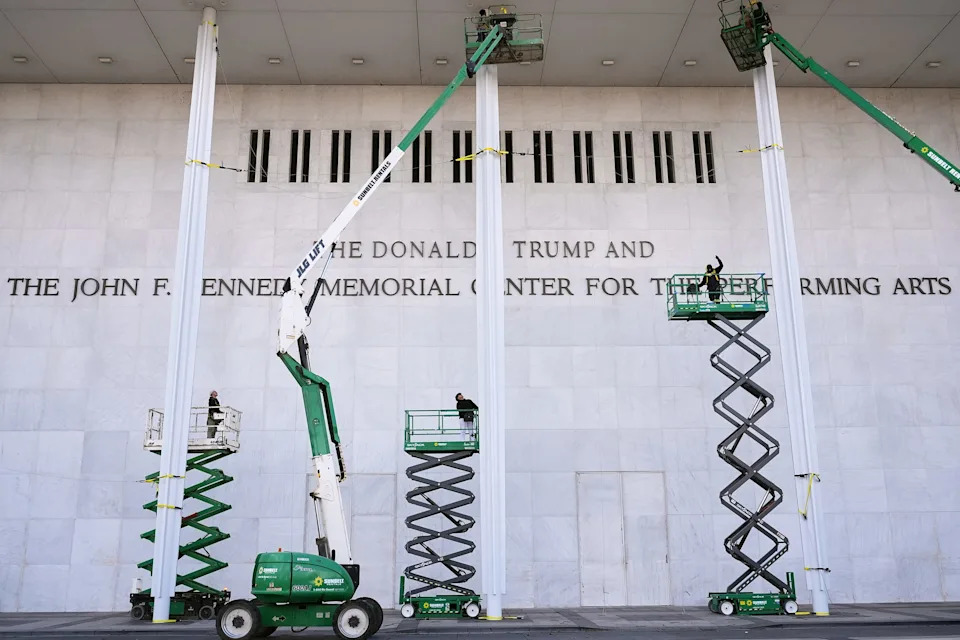
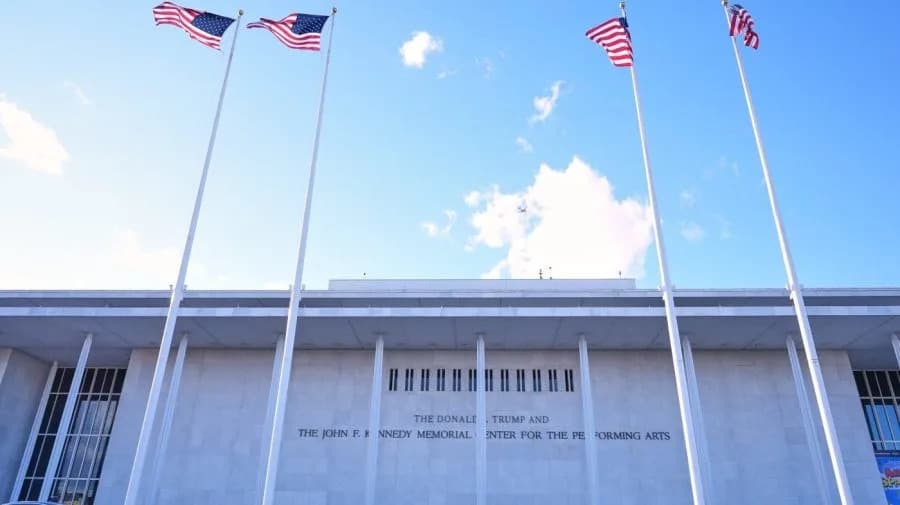
FILE - New signage, The Donald J. Trump and The John F. Kennedy Memorial Center For The Performing Arts, is unveiled on the Kennedy Center in Washington, Dec. 19, 2025. (AP Photo/Jacquelyn Martin), File)(Jacquelyn Martin / AP Photo)
Legal And Political Fallout
Legal experts quoted in reporting warn that the bylaw revisions may conflict with the institution’s charter and could be subject to legal challenge. Lawmakers have also reacted: Rep. April McClain Delaney (D-Md.) introduced legislation seeking to remove the president’s name from the center.
Artist Pushback
Several performers have reportedly canceled appearances at the Kennedy Center in response to the renaming, increasing public scrutiny and pressure on the institution.
Key point: The claim of a “unanimous” board vote depends on bylaws that exclude certain board members from voting, so the public characterization is contested.
This report updates earlier coverage as the civil suit and legislative responses continue to develop.
Help us improve.