
Rep. Mike Lawler (R-N.Y.) sharply criticized House leaders after talks to secure a vote on expiring COVID-era Obamacare premium subsidies collapsed. Lawler called the decision "idiotic" and accused both parties of failing to find a solution, urging colleagues to sign a discharge petition to force a vote. Three discharge petitions have been filed—two bipartisan proposals with reforms and one Democratic-led three-year extension—but some moderates remain reluctant to back the straight extension. The outcome will affect millions who could face premium increases when subsidies end at year-end.
Moderate Republican Mike Lawler Blasts House Leaders, Demands Vote on Expiring Obamacare Subsidies

Rep. Mike Lawler leaves a meeting of the House Republican Conference on March 4, 2025, in Washington.
A centrist House Republican on Tuesday publicly criticized both parties after negotiations to hold a vote on extending COVID-era Obamacare premium subsidies collapsed.
Rep. Mike Lawler (R-N.Y.) told reporters the decision not to hold an up-or-down vote on the subsidies—set to expire at the end of the year—was "idiotic" and "political malpractice." He also accused House Minority Leader Hakeem Jeffries (D-N.Y.) of rejecting moderate Republicans' compromise proposals to preserve political leverage.
"You have two leaders that are not serious about solving this," Lawler said, referring to Jeffries and Speaker Mike Johnson (R-La.). "I am angry for the American people. This is absolute bulls---."
Senate Republicans have proposed replacing the current subsidies with plans that expand Health Savings Accounts (HSAs). Meanwhile, House GOP leadership has offered a separate package focused on lowering costs through cost-sharing reductions, drug-price transparency measures and expanded association health plans that would help small employers and the self-employed buy coverage together.

House Speaker Mike Johnson in the Roosevelt Room of the White House in Washington, Dec. 2, 2025.
Although most House Republicans oppose any clean extension of the subsidies, Democrats and a group of moderate Republicans warn that failing to act will leave millions of Americans facing significant premium increases next year.
Efforts To Force A Vote
Pressure to act has produced three discharge petitions—procedural tools that can bypass House leadership if a majority of members sign. Two petitions are bipartisan and pair limited extensions with policy reforms. A third, led by Jeffries, seeks a straightforward three-year extension of the subsidies.
Some moderates remain hesitant to back Jeffries' straight extension. Rep. Don Bacon (R-Neb.) told NBC News he would not sign the Democratic-led petition, and a source close to Rep. Jen Kiggans (R-Va.) indicated she would likewise decline.
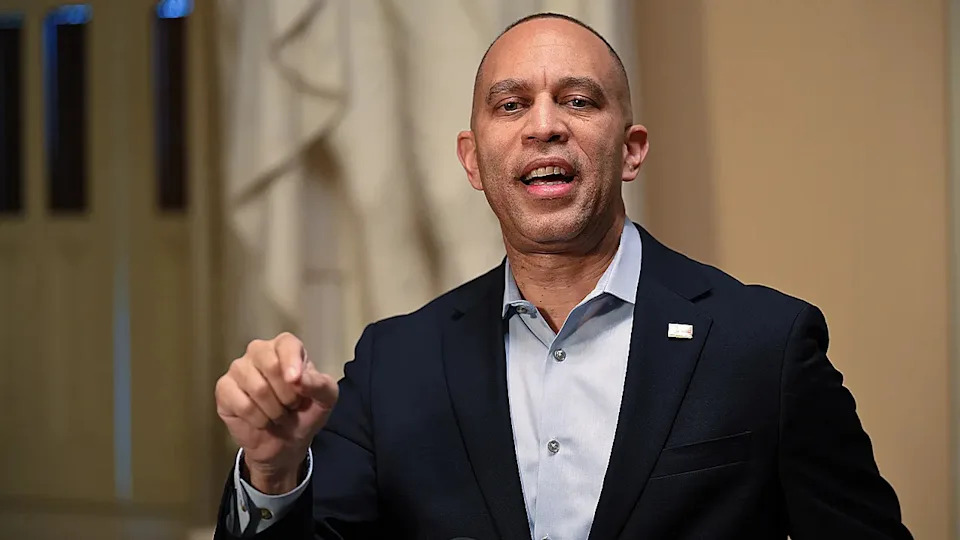
House Minority Leader Hakeem Jeffries speaks during a press conference on Capitol Hill in Washington, Nov. 3, 2025.
On the House floor, Lawler urged colleagues to set aside partisan differences and sign a discharge petition immediately.
"If everybody who says they care about extending this signs the discharge, it could be solved today," Lawler said. "Put the party crap aside and sign the damn discharge today."
Addressing Jeffries directly, Lawler added: "Come down to this floor, sign the discharge, and show real leadership. Because sadly, my conference has failed to do that."
Leadership Response
Speaker Johnson, asked about Lawler's comments at his weekly press conference, called Lawler "a very dear friend" and emphasized district-level differences across the Republican conference. Johnson said many Republicans objected to voting on what he described as a "COVID-era" policy created by Democrats, and that leadership sought alternatives but talks "just was not to be."
The dispute leaves lawmakers weighing political priorities against the risk of higher health-care costs for millions of Americans when the subsidies expire at year-end.


