
Renewed clashes along the Thai-Cambodian border have forced hundreds of thousands to evacuate, leaving many villages quiet save for distant gunfire. A small number of residents in border provinces such as Buriram have stayed behind as Village Security Volunteers to guard empty homes, run checkpoints and care for abandoned animals. Volunteers completed brief training, may carry firearms supplied by authorities, and perform unpaid, around-the-clock duties to protect property and reassure displaced neighbors.
Thai Villagers Remain Behind to Guard Empty Homes as Border Clashes Force Mass Evacuations

Village security volunteer Somjai Kraprakon gives food to stray dogs in the community while villagers have moved to an evacuation center amid the ongoing border conflict between Thailand and Cambodia, in Buriram province, Thailand, Friday, Dec. 12, 2025. (AP Photo/Sakchai Lalit)(ASSOCIATED PRESS)
Renewed fighting along the Thai-Cambodian border has driven hundreds of thousands of villagers from their homes, leaving once-busy communities largely quiet except for the distant rumble of gunfire. In several border villages, however, a small number of residents have chosen to stay behind to protect property and care for animals abandoned in the evacuations.
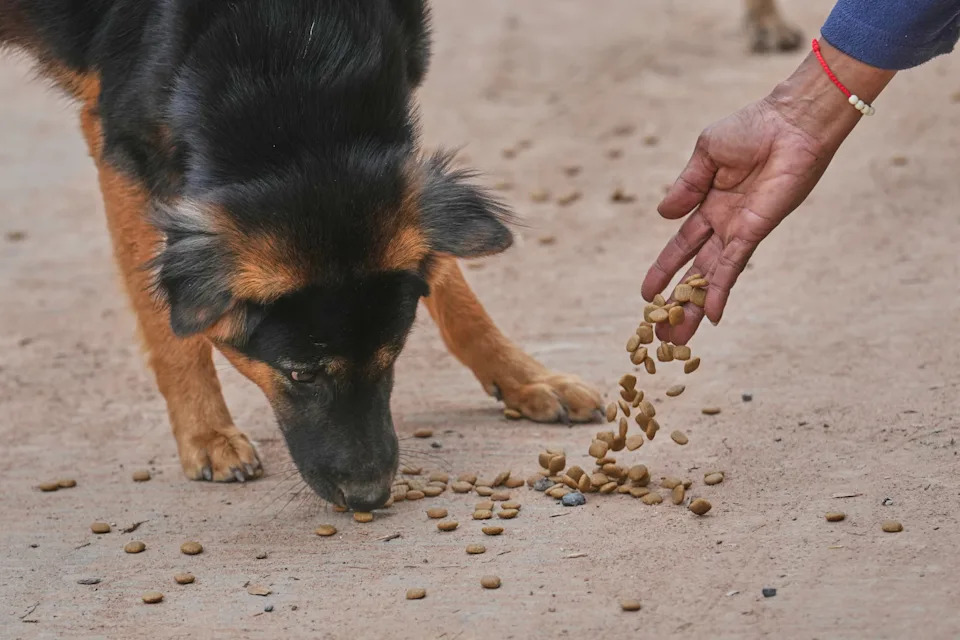
Village security volunteer Somjai Kraprakon gives food to stray dogs in the community while villagers have moved to an evacuation center amid the ongoing border conflict between Thailand and Cambodia, in Buriram province, Thailand, Friday, Dec. 12, 2025. (AP Photo/Sakchai Lalit)(ASSOCIATED PRESS)
Volunteers Hold the Line
In a village in Buriram Province, about 6 miles (10 kilometers) from the frontier, 52-year-old Somjai Kraiprakon and roughly 20 neighbors gather around a roadside house to keep watch over nearby homes. Appointed by the local administration as Village Security Volunteers, they guard empty properties after many residents fled and because fewer security officials are stationed nearby than usual.
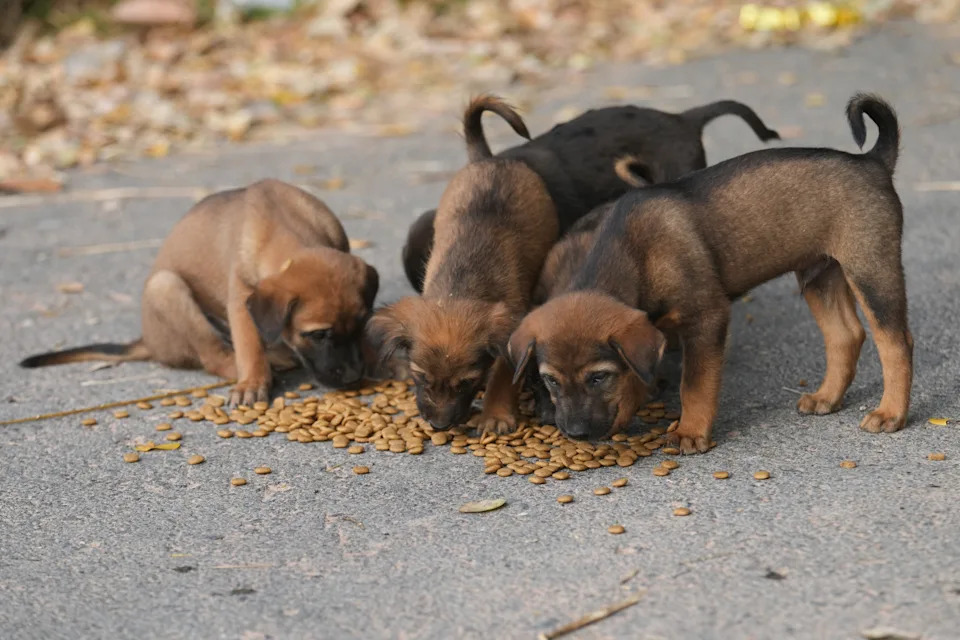
Stray dogs are given food by a village security volunteer in the community while villagers have moved to an evacuation center amid the ongoing border conflict between Thailand and Cambodia, in Buriram province, Thailand, Friday, Dec. 12, 2025. (AP Photo/Sakchai Lalit)(ASSOCIATED PRESS)
Training, Duties and Risks
Somjai volunteered shortly after clashes escalated in July. She completed a three-day district training course covering firearms safety and patrol techniques before her appointment in November. Volunteer village guards are permitted to carry firearms supplied by authorities, and the military has said such volunteers help bolster public confidence and village security during periods of instability.
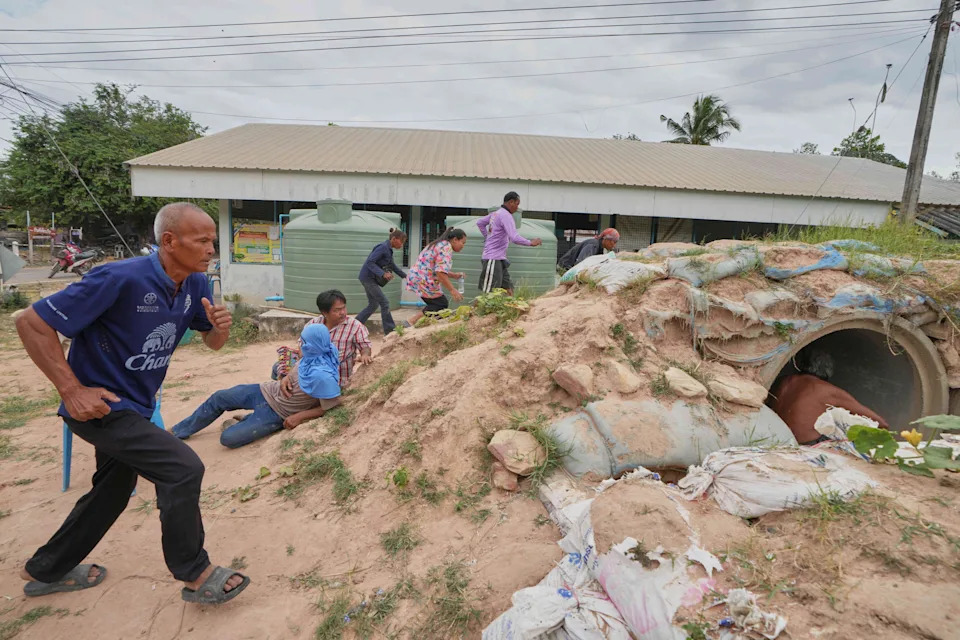
Village security volunteers and resident run into shelter while the blasts sounded too close in Buriram province, Thailand, Friday, Dec. 12, 2025, following renewed border conflict between Thailand and Cambodia. (AP Photo/Sakchai Lalit)(ASSOCIATED PRESS)
"We do it with our own will, for the brothers and sisters in our village," said village chief Praden Prajuabsook, who leads a team of about a dozen volunteers.
The army describes volunteers' responsibilities as including patrols, checkpoints, standing guard inside villages, protecting property and monitoring suspicious activity. In practice, teams rotate daytime posts and conduct patrols after dark to deter looting and infiltration.
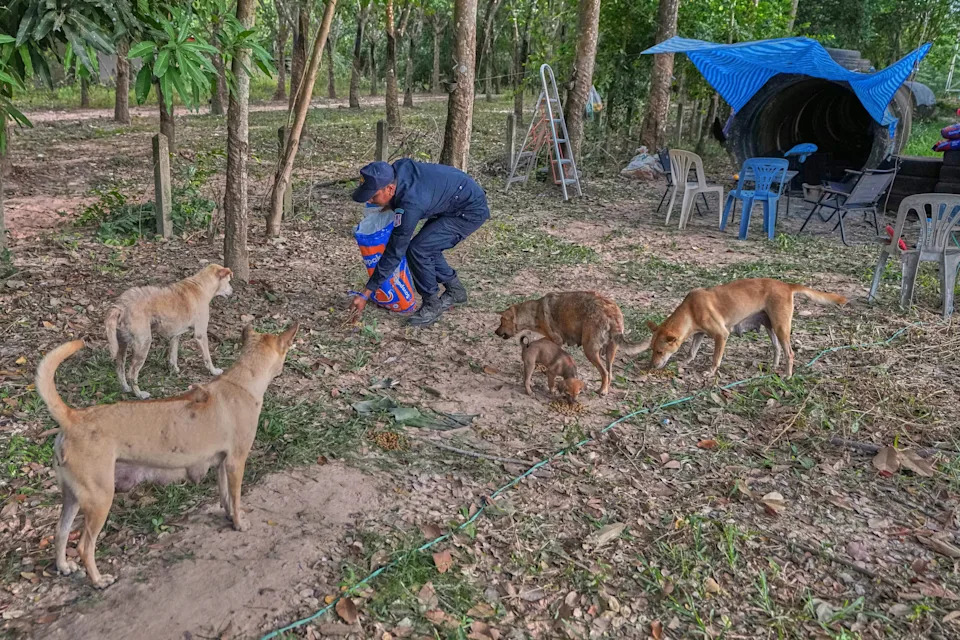
Village security volunteer Alonkot Sae-Lee gives food to stray dogs in the community front of shelter while villagers have moved to an evacuation center amid the ongoing border conflict between Thailand and Cambodia, in Buriram province, Thailand, Friday, Dec. 12, 2025. (AP Photo/Sakchai Lalit)(ASSOCIATED PRESS)
Everyday Tasks: From Checkpoints to Feeding Animals
Beyond guarding homes and running checkpoints, volunteers also tend to dozens of abandoned animals. Somjai’s primary duty is caring for about 70 dogs left behind by evacuees; she started feeding some from her own funds until donations arrived. In nearby villages, volunteers ride between houses to feed pigs, chickens and other livestock.
Life Under Fire
The volunteers' meeting house doubles as a kitchen and sleeping area. Explosions and occasional stray ammunition create a constant background risk. When blasts come too close, Somjai and others hurry to a makeshift bunker built from precast concrete drainage pipes reinforced with dirt, sandbags and car tires.
As of Saturday, roughly two dozen people had been reported killed in the renewed violence. Though villages like Praden’s lie close to the battlegrounds, volunteers say they are motivated by a desire to protect neighbors’ property and provide reassurance to those who have evacuated.
Context: The recent clashes ended a brief lull in fighting that followed a July ceasefire. Border tensions derive from long-standing territorial disputes between the two countries.


