
The Geminid meteor shower will peak over California on the nights of Dec. 13–14, 2025, with rates of 60–120 meteors per hour under dark skies. Meteors originate from debris left by asteroid 3200 Phaethon and often show yellow hues and bright fireballs. For best viewing, head away from city lights after 9–10 p.m., lie flat facing south, and note that the waning crescent moon doesn’t rise until about 2 a.m., leaving most of the night dark.
Geminid Meteor Shower to Peak Over California Dec. 13–14, 2025 — Look for Colorful “Fireballs”

The Geminid meteor shower peaks on Saturday, Dec. 13, and Sunday, Dec. 14, 2025.
California stargazers can look forward to one of the year’s most reliable meteor displays when the Geminid meteor shower peaks the nights of Dec. 13–14, 2025. Under dark skies the shower can produce dozens — even hundreds — of bright, often yellow-tinged meteors, including spectacular fireballs.
When to Watch
NASA predicts the shower will reach its peak on the nights of Saturday, Dec. 13 and Sunday, Dec. 14, 2025. The Geminids typically become active after 9–10 p.m. and continue through dawn; rates are highest in the pre-dawn hours.
What to Expect
These are fast, bright meteors produced by debris from asteroid 3200 Phaethon. National Geographic and NASA note that under the darkest skies you could see as many as 60–120 meteors per hour at peak, and special "fireballs" — very bright flashes — may appear anywhere in the sky. Many Geminids display a yellow hue as they burn up in the atmosphere.
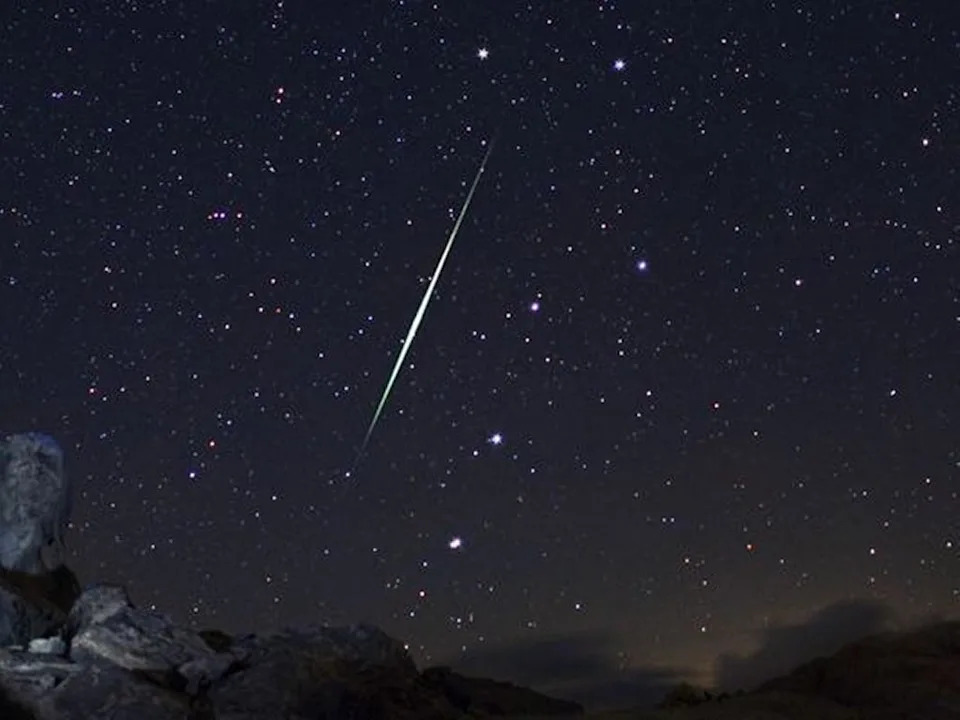
A Geminid fireball explodes over the Mojave Desert in California on Dec. 13, 2009.
Chelsea Gohd of NASA’s Jet Propulsion Laboratory wrote that with the darkest possible skies, observers could see up to 120 Geminid meteors per hour.
Where and How to Watch
To maximize your chances:
- Get away from city and street lights — darker skies dramatically increase visible meteors.
- Allow 20–30 minutes for your eyes to adapt to the dark.
- Lie flat on a blanket or use a reclining chair, look up with your feet pointing south, and let your gaze sweep the eastern sky; the shower’s radiant is in the constellation Gemini and meteors will appear across the sky, often near Jupiter.
- Dress warmly, bring hot drinks, and be patient — the best displays often occur in spurts.
Why 2025 Is Favorable
This year’s viewing is described as "exceptionally favorable" because the waning crescent moon doesn’t rise until about 2 a.m., leaving much of the night darker than in years when the moon is fuller. That makes it easier to spot faint meteors as well as bright fireballs.
Originally noted in the mid-1800s when observers recorded roughly 10–20 meteors per hour, the Geminids have grown into one of the most prolific annual showers. Whether you’re a casual viewer or a dedicated skywatcher, mid-December’s Geminids are a must-see astronomical event.


