
Our Lady of Guadalupe is both a deeply felt religious figure and a nationwide symbol of Mexican identity. The Basilica in Mexico City draws millions of pilgrims, peaking at about 12 million on Dec. 12. From the 1531 apparition to Juan Diego to Miguel Hidalgo’s 1810 banner and later civic uses, the image has moved from private devotion into the public and political sphere.
How Our Lady of Guadalupe Became a Pillar of Mexican Identity

A pilgrim carries an image of the Virgin of Guadalupe past the Popocatepetl in Paso de Cortes on his way to Mexico City, Wednesday, Dec. 10, 2025. (AP Photo/Claudia Rosel)(ASSOCIATED PRESS)
There is a familiar saying in Mexico: “Not all Mexicans are Catholic, but all are Guadalupan.” That phrase captures how the image of Our Lady of Guadalupe has moved beyond personal faith to become a central symbol of Mexican identity.
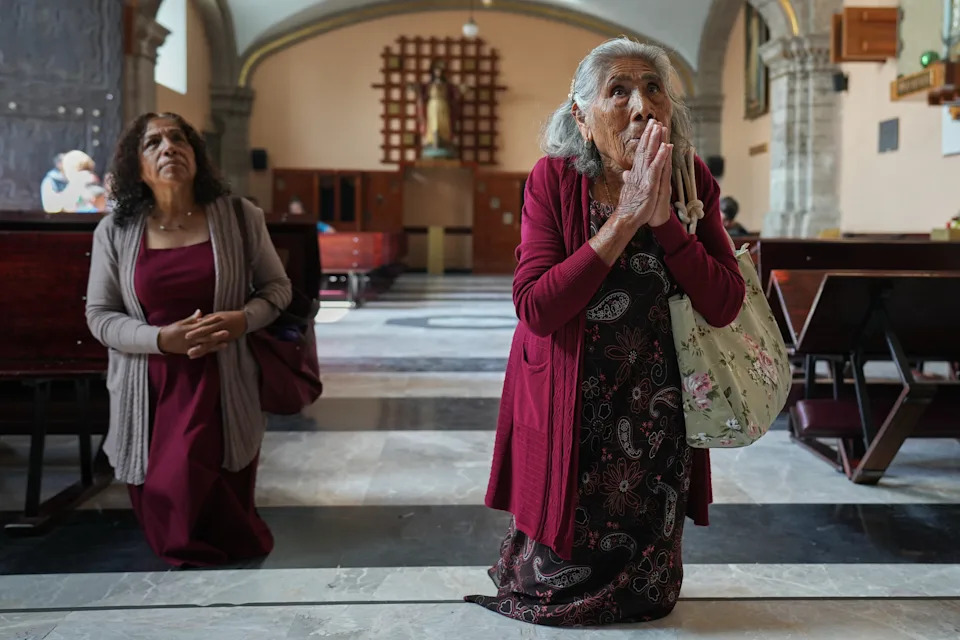
Teresa Morales prays in the Old Basilica of Our Lady of Guadalupe in Mexico City, Wednesday, Nov. 26, 2025. (AP Photo/Claudia Rosel)(ASSOCIATED PRESS)
Origins and Devotion
According to Catholic tradition, the Virgin appeared in December 1531 to an Indigenous man named Juan Diego near Tepeyac Hill, where the Basilica of Our Lady of Guadalupe now stands. The story holds that Juan Diego gathered flowers in his cloak; when he opened it before the bishop, a colorful image of the Virgin was revealed. The cloak (tilma) is displayed in the Basilica and draws pilgrims year-round, peaking at about 12 million visitors on the feast day of Dec. 12.
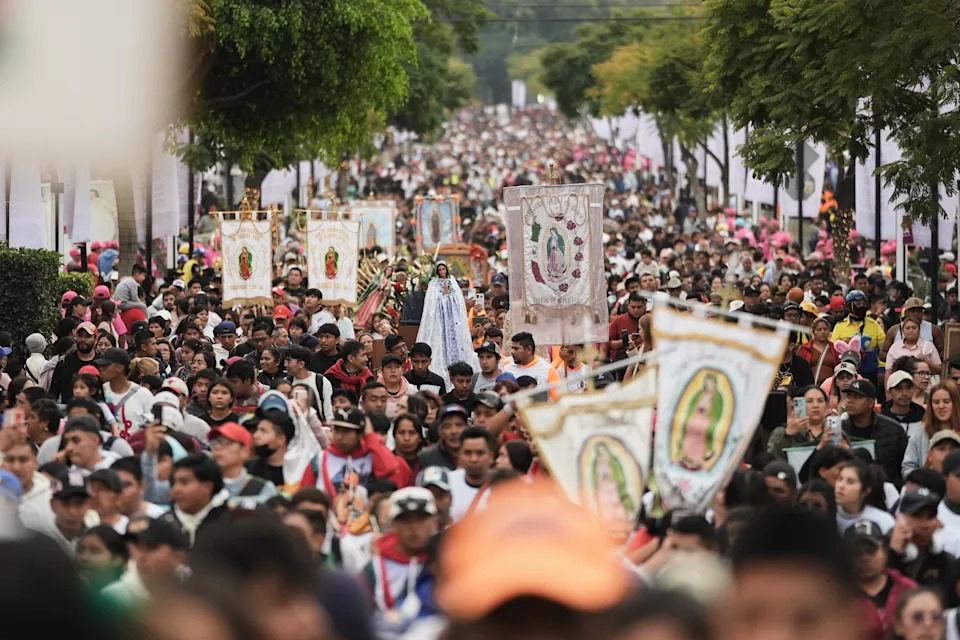
Pilgrims arrive at Our Lady of Guadalupe Basilica in Mexico City, Thursday, Dec. 11, 2025, the day before her feast day. (AP Photo/Claudia Rosel)(ASSOCIATED PRESS)
The Symbol Beyond Religion
After Mexico won independence, the Virgin’s image came to symbolize more than private devotion. Nydia Rodríguez, director of a museum at the Basilica, says the Virgin “embodied not just religious devotion but a sense of national identity.” Examples of her civic role include the 19th-century “Virgin of Congress” painting — a gift to Mexico’s first Constitutional Congress — and the frequent display of her likeness alongside the national emblem in government buildings and official portraits.
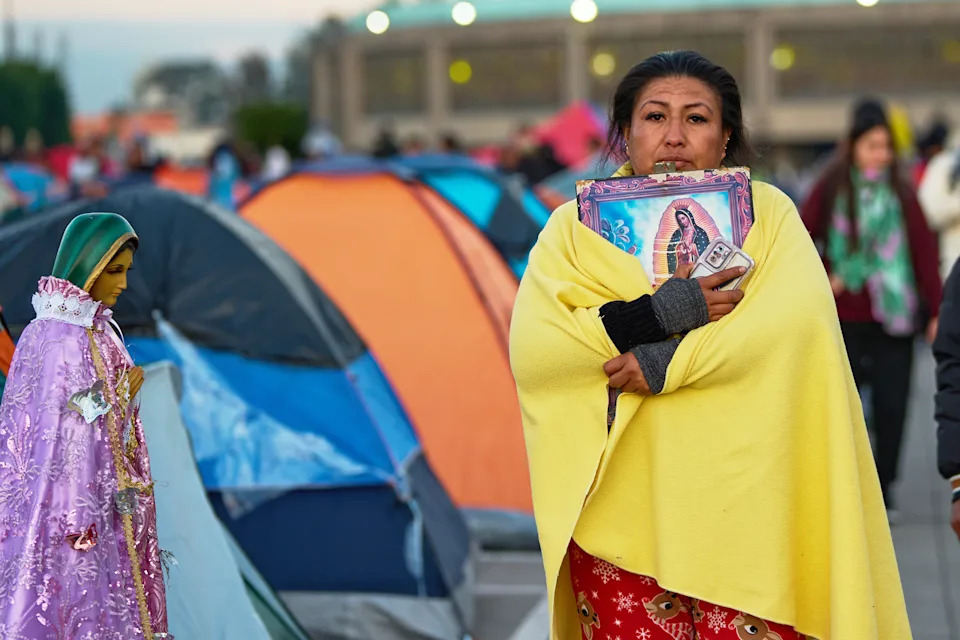
Pilgrims arrive to Our Lady of Guadalupe Basilica in Mexico City, Thursday, Dec. 11, 2025, the day before her feast day. (AP Photo/Claudia Rosel)(ASSOCIATED PRESS)
From Banner to Nation
In 1810, the priest Miguel Hidalgo y Costilla famously carried a depiction of the Virgin on a lance as a banner during the uprising against Spanish rule. That banner remains a powerful historical object at the National Museum of History. Historian Salvador Rueda explains that people rallied behind Hidalgo in part because the Virgin represented a shared identity.
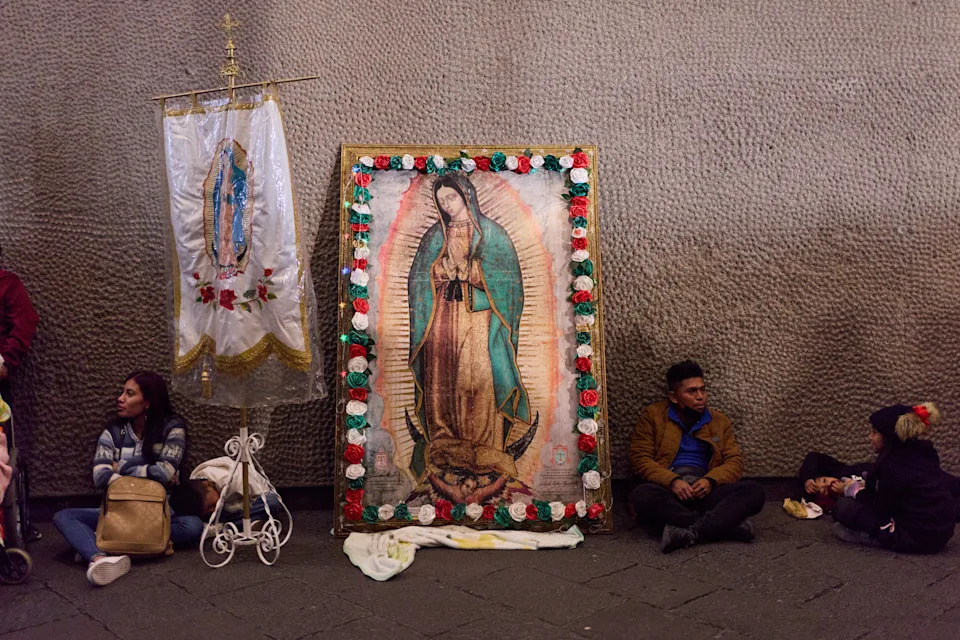
Pilgrims rest next to framed image of the Virgin of Guadalupe outside the Basilica of Guadalupe, in Mexico City, Thursday, Dec. 11, 2025, the day before her feast day. (AP Photo/Claudia Rosel)(ASSOCIATED PRESS)
Devotional Image, Civic Emblem
Over the centuries, the Virgin’s image has appeared in private lockets, murals by artists such as Juan O’Gorman, medals honoring civic service, and the flags of later movements including some Cristero and Zapatista groups. Scholars debate whether the Basilica’s cloak is a miraculous relic or a painted work, but many historians argue that the cloth’s historical and cultural impact is what gives it meaning.
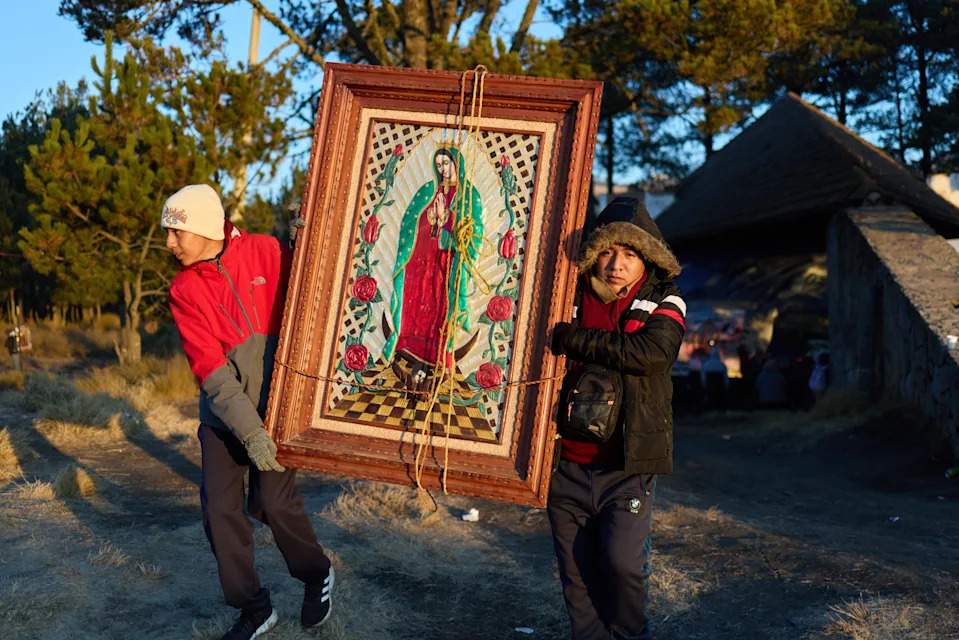
Pilgrims carry a framed image of the Virgin of Guadalupe in Paso de Cortes, Mexico, on their way to Mexico City, Wednesday, Dec. 10, 2025, as millions prepare to flock to the capital for her Dec. 12 feast day. (AP Photo/Claudia Rosel)(ASSOCIATED PRESS)
Living Faith and Personal Stories
The Basilica remains an active site of popular devotion. Pilgrims like 85-year-old Teresa Morales visit to give thanks for perceived miracles — in her case, relief from chronic knee pain after praying to an image of the Virgin she keeps at home. Such personal testimonies coexist with the Virgin’s widespread civic symbolism.
“It’s real because it’s part of reality, of history. Because it shapes an entire world,” historian Salvador Rueda says, summing up why the Virgin’s image matters regardless of debates about its origins.
Whether viewed primarily as an object of faith or as a national emblem, Our Lady of Guadalupe remains a central figure in Mexico’s cultural and historical landscape.


