
Europol’s 48‑page report outlines plausible 2035 scenarios in which robots and unmanned systems alter everyday life and criminal tactics. Key risks include social unrest over automation, hacked social‑care robots used to exploit vulnerable people, and swarms of small drones targeting infrastructure. Experts say a literal “Robocop” force is unlikely by 2035 due to technical and regulatory limits, but Europol urges policymakers to plan now to manage emerging threats.
Europol Warns Of 'Robocop'‑Style Risks By 2035 — Hacked Carebots, Drone Swarms And Social Unrest

The 48-page Europol document imagines various law enforcement technologies - ALLSTAR
Europol’s 48‑page report paints a range of plausible — and sometimes alarming — scenarios for Europe by 2035, in which robots and unmanned systems play a central role in daily life and in criminal activity. The agency frames the analysis as a planning tool for law enforcement and policymakers, not a prediction, but warns that rapid technological change will pose new operational and ethical challenges.
Key Scenarios Described
Researchers outline several possible developments: increased social unrest in areas hit by automation, the malicious hacking of social‑care robots to exploit vulnerable people, and coordinated use of hundreds of small AI‑enabled drones to disrupt power or water infrastructure or to assist criminal acts such as prison breaks.
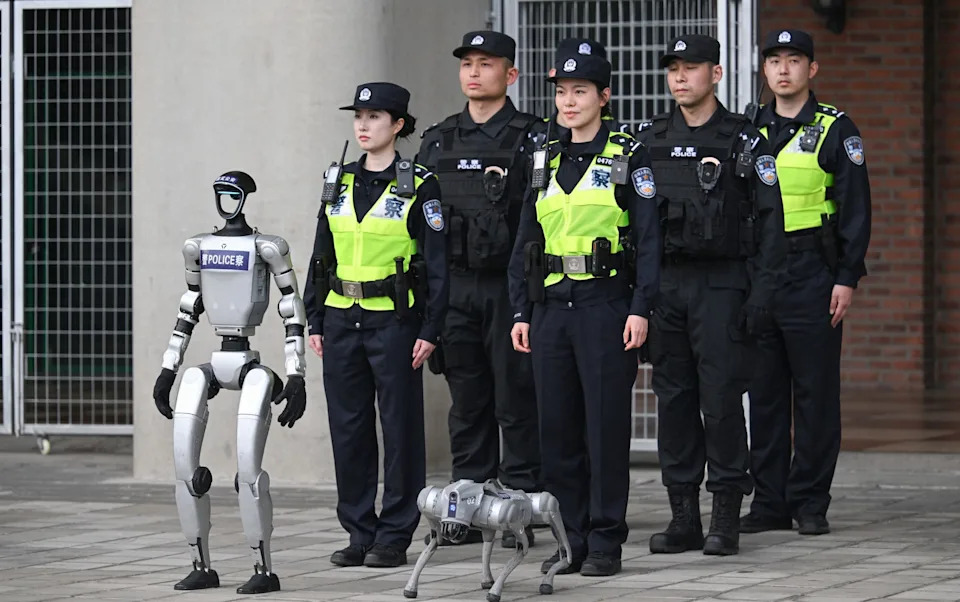
Chinese police forces are already using robot technologies - Jade Gao/Getty
Europol also foresees a future in which police and robots routinely work side by side for searches, evidence gathering and hazardous operations. At the same time, routine duties like patrolling or traffic management could become automated — raising questions about job displacement, morale among officers, and legal responsibility for robot actions.
Real‑World Incidents That Informed The Report
The report cites real incidents to illustrate how unmanned systems are already being used or misused: a chess‑playing robot reportedly broke a child’s finger in 2022; Colombian authorities seized an autonomous submarine carrying 1.5 tonnes of cocaine that was controlled via a Starlink link; and police in California found a vehicle operating without a human driver during a traffic stop. Europol also documents growing criminal use of commercial drones for smuggling, surveillance and attacks.
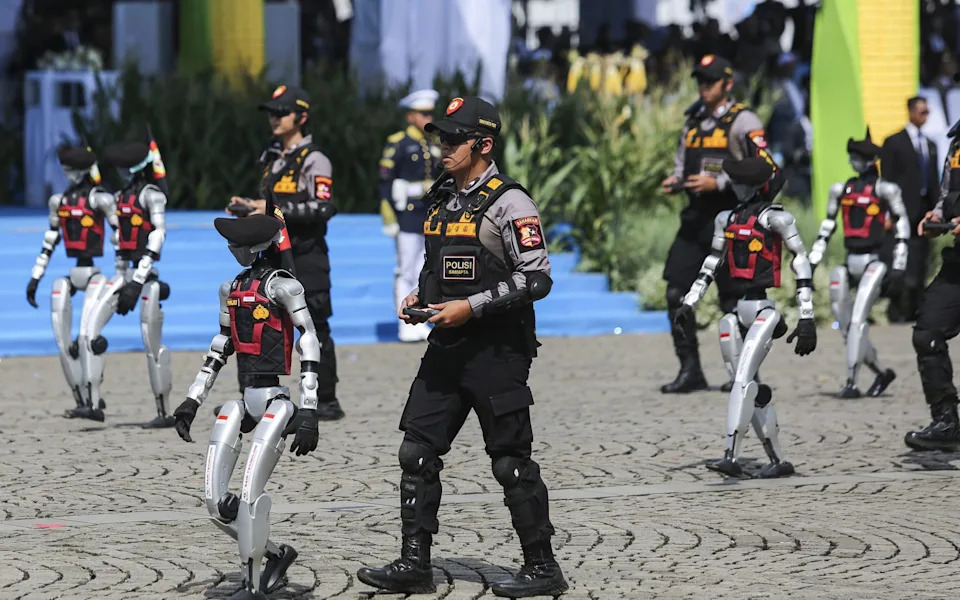
Indonesian police are also integrating artificial intelligence into their operations - Anadolu/Getty
“The empathetic capabilities of social robots might, in the future, be abused by criminal and terrorist actors for a variety of malicious activities,” the report says.
Expert View And Practical Considerations
Industry experts stress that the most cinematic outcomes — a literal Robocop patrolling streets — are unlikely by 2035 due to technical, regulatory and social constraints. Denis Niezgoda of Locus Robotics told The Telegraph that robots will augment many tasks (especially dangerous, dull or repetitive work) but are unlikely to replace human command. Nevertheless, he warned that low‑cost drones and other weapons gleaned from conflict zones could enable new kinds of confrontations between criminal groups and security forces.
The report highlights countermeasures already in use, such as anti‑drone systems that deploy nets, jamming or directed energy, and urges planners to consider legal, technical and ethical frameworks for evidence handling, accident investigation and human oversight of autonomous systems.
Bottom line: Europol does not claim to predict the future, but its scenarios are intended to help governments and police anticipate risks, prioritize safeguards, and invest in training and technology that can mitigate harms as robotics and AI become more widespread.


