
The Philippines is testing transition credits, a forward-looking carbon mechanism that monetizes avoided future emissions to finance replacing coal plant equipment with renewable energy. The pilot at the 270 MW South Luzon plant in Calaca, built by ACEN, aims to show whether the concept can accelerate coal retirements and attract private capital. Supporters cite potential to mobilize billions across the Asia-Pacific; critics warn of repeating past carbon-market integrity failures unless strict verification and community protections are enforced.
Philippines Pilots 'Transition Credits' to Fund Coal-to-Renewables Shift — Calaca Test Case
Dec 11

A semi-submerged freighter lists by the coast of the South Luzon Thermal Energy Power Plant in Calaca, Batangas in the Philippines on Saturday, Oct. 4, 2025. (AP Photo/Anton L. Delgado)(ASSOCIATED PRESS)
CALACA, Philippines — The Philippines is piloting a new type of carbon instrument called transition credits to encourage early retirements of coal-fired power plants by turning avoided future emissions into funds for on-site renewable energy replacements.
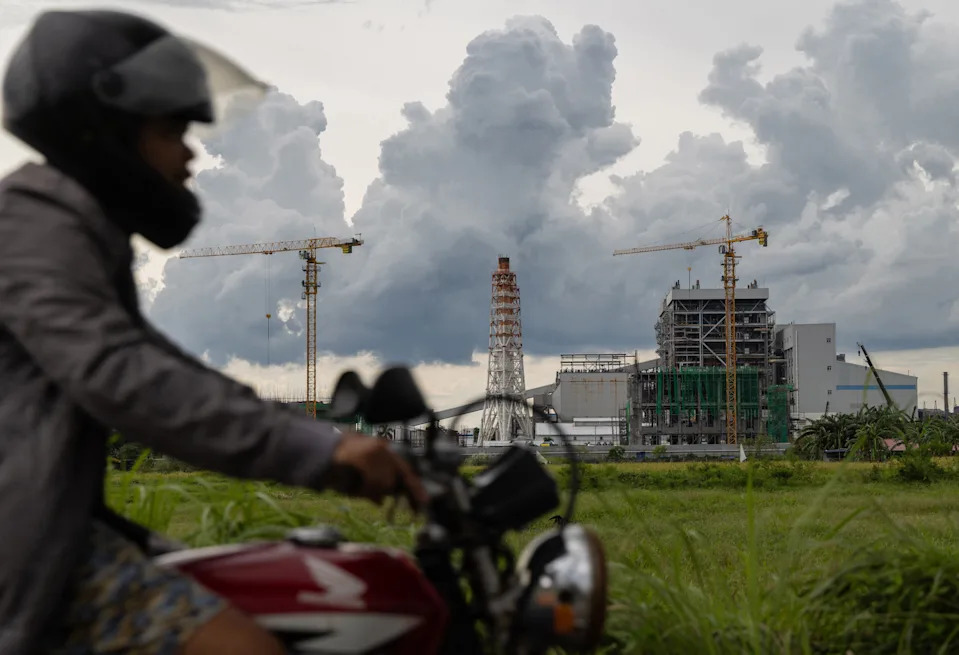
A motorcyclist drives past the South Luzon Thermal Energy Power Plant in Calaca, Batangas in the Philippines on Saturday, Oct. 4, 2025. (AP Photo/Anton L. Delgado)(ASSOCIATED PRESS)
How Transition Credits Work
A traditional carbon credit represents one metric ton of carbon dioxide removed or not emitted today. Transition credits are forward-looking: they assign value to emissions that would be avoided in the future if a coal plant is retired earlier than planned. Proceeds from selling those credits would finance the replacement of fossil-fuel equipment with renewable energy systems at the same sites, helping maintain electricity supply while cutting emissions.
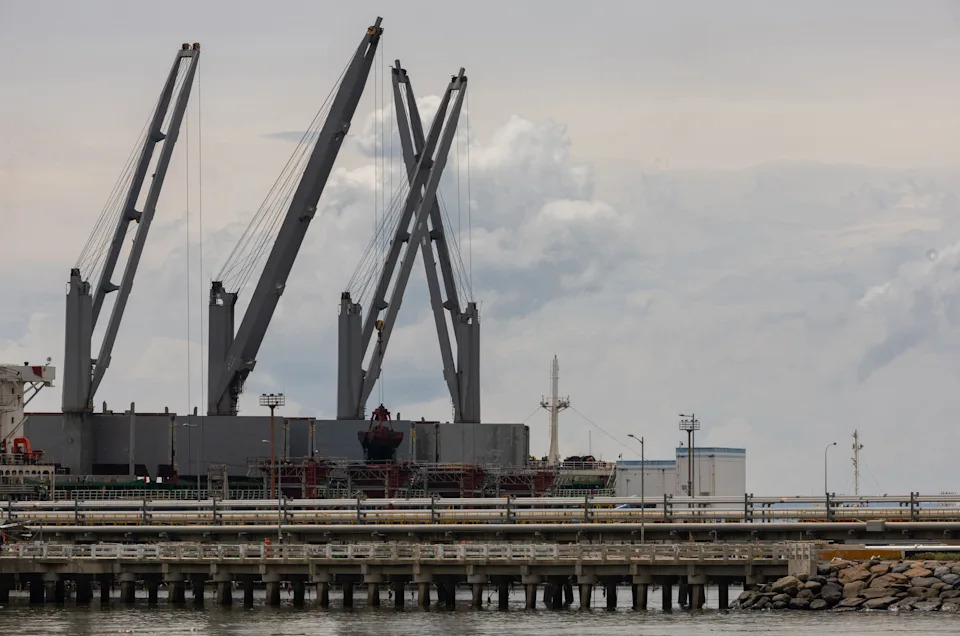
Coal is unloaded in front of the South Luzon Thermal Energy Power Plant in Calaca, Batangas in the Philippines on Saturday, Oct. 4, 2025. (AP Photo/Anton L. Delgado)(ASSOCIATED PRESS)
Pilot Project — Calaca’s South Luzon Plant
The pilot is centered on the 270-megawatt South Luzon Thermal Energy Corp. coal plant in Calaca City, south of Manila. Built about a decade ago by ACEN Corp., the energy unit of Ayala Corp., the facility is slated for retirement by 2040 under ACEN’s pledge; transition credits aim to accelerate that timeline and create a replicable model for other assets.
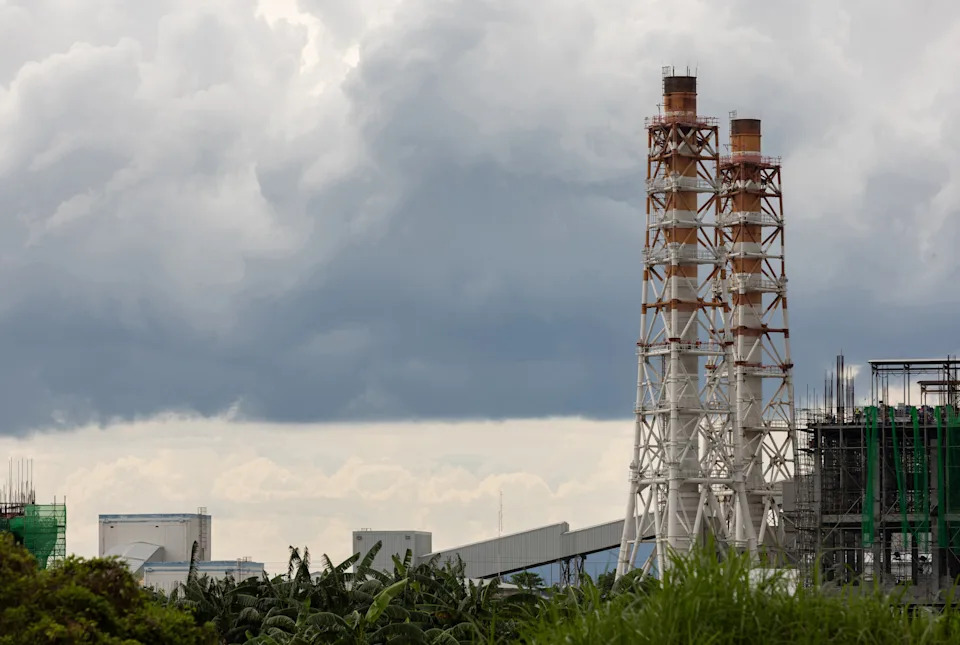
Clouds brew over the South Luzon Thermal Energy Power Plant in Calaca, Batangas in the Philippines on Saturday, Oct. 4, 2025. (AP Photo/Anton L. Delgado)(ASSOCIATED PRESS)
“If it works, there will be a playbook for coal asset owners and their energy transitions,” said Irene Maranan of ACEN.
Support, Estimates and Potential Scale
The concept was developed by The Rockefeller Foundation and has drawn backing from major corporate players, including Japan’s Mitsubishi Corp. Institute estimates suggest a transition credit could be valued in a range roughly between $11 and $52, depending on assumptions. Proponents say about 60 coal plants across the Asia-Pacific could qualify for transition credits, potentially attracting an estimated $110 billion of public and private capital by 2030 if the approach proves credible and scalable.
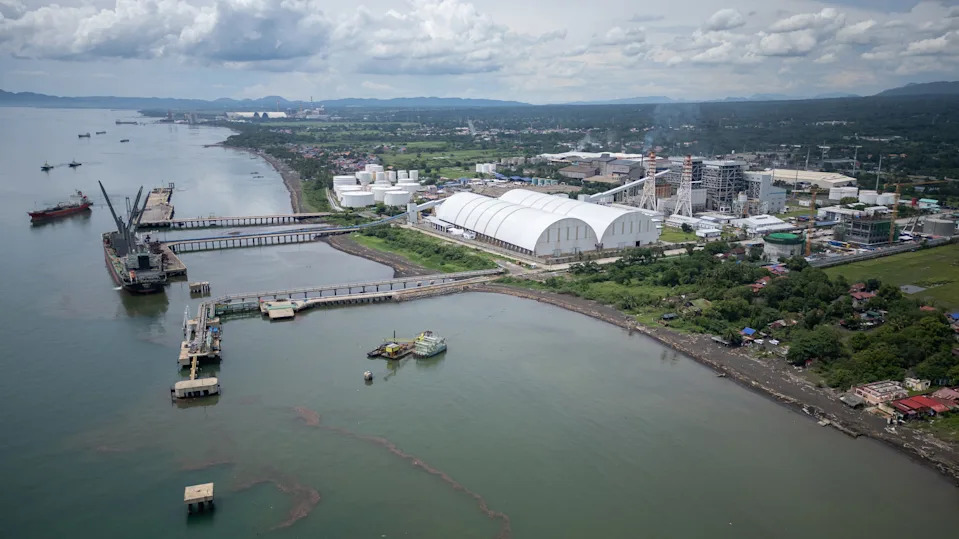
The South Luzon Thermal Energy Power Plant by the coast of Calaca, Batangas in the Philippines on Oct. 4, 2025. (AP Photo/Anton L. Delgado)(ASSOCIATED PRESS)
“We want to do dozens of projects to drive real impact,” said Joseph Curtin of The Rockefeller Foundation. “But to have any credibility, we need to do one project and we need to use that to learn and evolve.”
Criticism and Integrity Concerns
Critics argue transition credits risk repeating the carbon market’s troubled history. Global offset programs have faced accusations of greenwashing, faulty accounting, carbon leakage, weak local benefits and, in some cases, human rights concerns. Activists and analysts warn that without strict rules, independent verification and community protections, transition credits could fall short of promises.
Elle Bartolome of the Philippine Movement for Climate Justice protested offsets at COP30 and cautioned that projects must guarantee community benefits and reparations where harms occurred. Patrick McCully of Reclaim Finance described the approach as potentially “old wine in a new bottle,” urging direct investment in renewables instead of relying on new credit mechanisms unless core integrity problems are resolved.
Regional Context
Southeast Asia is a major coal consumer—third after India and China—and regional electricity demand is projected to rise substantially in the coming decades. The United Nations’ COP30 summit failed to produce a global roadmap for phasing out fossil fuels, underscoring the political difficulty of accelerating coal retirements even as climate scientists warn the world is on track to exceed the 1.5 °C target.
What To Watch
Key indicators of the pilot’s success will include transparent, conservative emissions accounting, independent third-party verification, measurable benefits for affected local communities, and a clear finance plan demonstrating how credits translate to renewable installations without creating loopholes for continued fossil-fuel use.
The Calaca pilot will be closely watched as a potential blueprint for other coal-to-renewables transitions across the Asia-Pacific, but its credibility will hinge on rigorous governance and demonstrable results.


