
The U.S. campaign of strikes on vessels suspected of carrying narcotics has left at least five people alive after initial attacks, but survivors were treated inconsistently: two were recovered and returned to Ecuador and Colombia, one is presumed dead after searches, and two were killed in a contested follow-up strike on Sept. 2. Adm. Frank Bradley defended the Sept. 2 decision as necessary to destroy a vessel still holding cocaine; critics say follow-up strikes may have violated the law of armed conflict. Officials insist policy has not changed while lawmakers seek further answers.
US Strikes On Suspected Narco Boats Left Survivors — Each Handled Differently, Prompting Legal Scrutiny
05:47 PM, 12/10/2025

This screengrab of a video posted by Defense Secretary Pete Hegseth shows a submarine shortly before it is hit by a missile strike, on October 16, 2025. This strike left two survivors, who were repatriated to their home countries of Colombia and Ecuador after being detained by the US Navy. - Pete Hegseth/X
As the U.S. military has carried out a campaign of strikes against vessels suspected of carrying narcotics in the Caribbean Sea and eastern Pacific, at least five people initially survived explosions that sank or disabled their boats and killed crewmembers. The treatment of those survivors varied sharply, prompting congressional questions and legal concerns over whether follow-up attacks complied with the law of armed conflict.
What Happened
The campaign — which U.S. officials say has resulted in 87 people killed aboard 23 vessels — began on Sept. 2. That first operation has drawn particular scrutiny because a follow-up strike reportedly killed two survivors who were clinging to an overturned and damaged boat.
Sept. 2 Follow-Up Strike
Adm. Frank "Mitch" Bradley, commander of Joint Special Operations Command at the time, told lawmakers he ordered a second strike to destroy remaining portions of the vessel after the initial attack because debris appeared to still be afloat and contain cocaine. Officials have defended the decision by arguing survivors could have been rescued and later resumed trafficking.
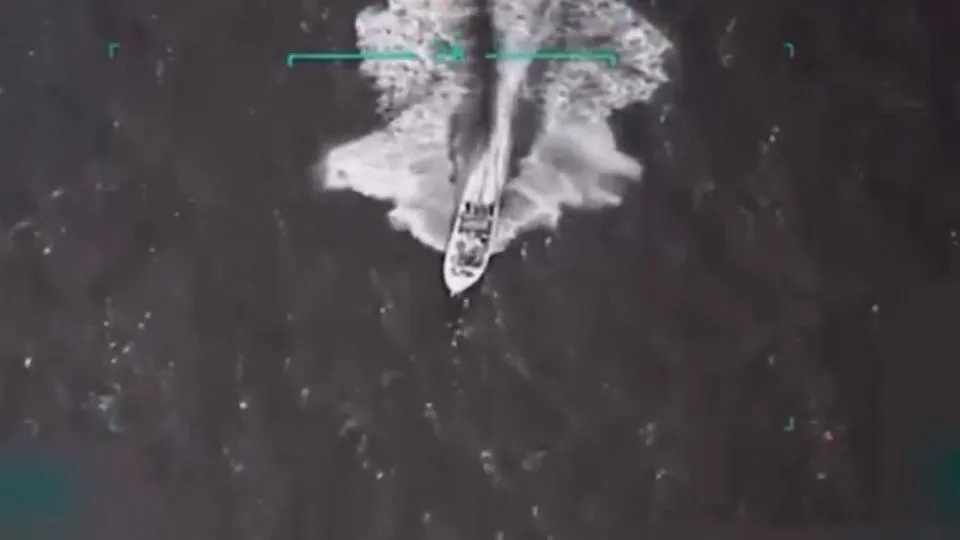
This screengrab taken from a video posted by the Defense Department shows a boat shortly before it is hit by a strike on September 2, 2025. - Defense Department
"They’re breaking the law either way," said Sarah Harrison, a former associate general counsel at the Pentagon and now a senior analyst at the International Crisis Group. "They’re killing civilians in the first place, and then if you assume they’re combatants, it’s also unlawful — under the law of armed conflict, if somebody is 'hors de combat' and no longer able to fight, then they have to be treated humanely."
Different Outcomes in Later Incidents
On Oct. 16, U.S. forces recovered two survivors from a submersible struck in the Caribbean and handed them to their home countries, Ecuador and Colombia. Those two men were reportedly on life rafts after the vessel sank and had no access to the alleged narcotics on board.
By contrast, a survivor reported after Oct. 27 strikes in the Pacific was not recovered and is now presumed dead. Mexican authorities conducted maritime search-and-rescue operations (which typically run for 96 hours) after being notified by the Pentagon that there might be a survivor. The Pentagon has since said it will include that presumed death in its public toll.
Legal And Policy Issues
Lawmakers, legal experts and human-rights analysts have questioned whether killing people who are no longer able to fight — "hors de combat" under the law of armed conflict — could amount to an unlawful killing. Defense officials maintain that policy governing how survivors are handled has not changed and that decisions depend on circumstances at the scene.
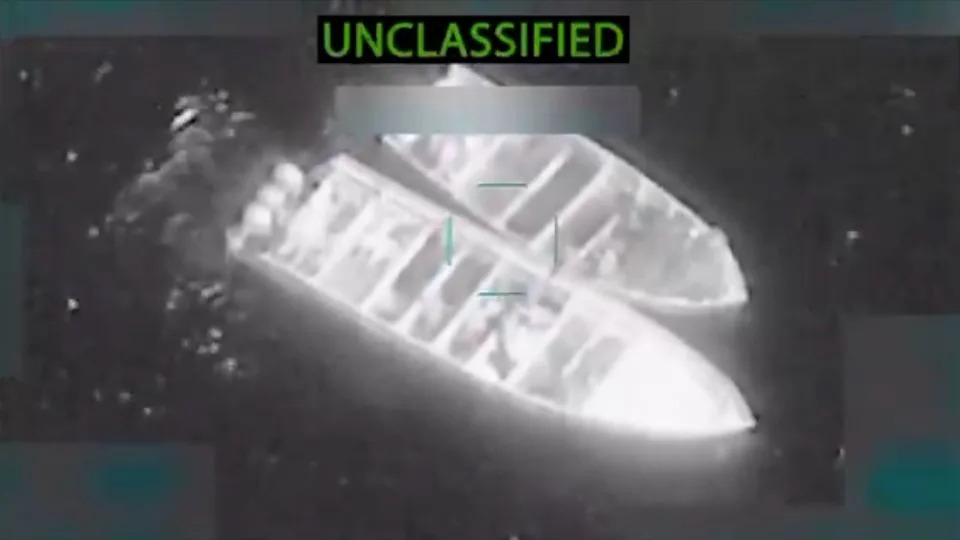
This screengrab taken from a video posted by Defense Secretary Pete Hegseth, shows two boats shortly before they are struck by a missile, in the Eastern Pacific on October 27, 2025. In his post, Hegseth said that US military forces struck these boats and two others, killing 14 people and leaving one survivor. - Pete Hegseth/X
Secretary of Defense Pete Hegseth and other senior officials have publicly backed the operational commanders, saying the follow-up strikes were directed to remove a threat and deny traffickers the ability to recover narcotics. Critics counter that options such as rescue, detention, or secure destruction of contraband should be exhausted before firing on people in the water or clinging to wreckage.
Current Status
Strike tempo has slowed in recent weeks, with a 19-day gap prior to a Dec. 4 operation. Officials say the campaign will continue; lawmakers and legal analysts say they will press for clearer rules and oversight to ensure compliance with domestic and international law.
Key figures: At least five initial survivors across multiple strikes; 87 people killed across 23 boats, according to U.S. officials. Investigations and congressional briefings are ongoing.
Similar Articles

Admiral Will Tell Lawmakers Survivors Of Caribbean Strike Were Lawful Targets, Prompting Legal Scrutiny
Admiral Frank M. Bradley will tell lawmakers in a classified briefing that two survivors of a Sept. 2 U.S. strike in the Cari...

U.S. Launches 22nd Strike on Alleged Terror-Linked Drug Vessel, Killing Four
What Happened: On Dec. 4, U.S. forces conducted the 22nd strike under Secretary Pete Hegseth against a vessel in internationa...

US Military Strike in Caribbean Kills Four; September Double-Strike Prompts War-Crimes Scrutiny
Summary: The US military says a Thursday strike in the Caribbean killed four suspected drug traffickers, with Southern Comman...

Explained: Alleged War Crime in Trump Administration’s Anti‑Drug Boat Strikes
What to know: A September 2 U.S. strike on an alleged "drug boat" in the Caribbean killed 11 people; a follow‑on attack then ...

Colombian Navy Seizes About 7.1 Tonnes of Cocaine in Caribbean; 11 Detained Unharmed Amid U.S. Strike Controversy
Colombian authorities seized about 7.1 tonnes of cocaine in two Caribbean operations, arresting 11 people unharmed and valuin...

Survivors of U.S. Strike: How Two Men Lived After a Semi‑Submersible Was Hit
Two men survived a U.S. drone strike on a semi‑submersible on Oct. 16 and were evacuated by helicopter to a Navy ship. Jeison...


U.S. Strike Ordered by Secretary Pete Hegseth Kills Three Alleged 'Narco‑Terrorists' — 21st Attack on Suspected Drug Boat
What happened: U.S. forces struck a suspected drug-smuggling boat in the Eastern Pacific on Saturday, killing three people SO...

‘Double-Tap’ Strike in Caribbean Killed Survivors of Suspected Drug Boat, Sources Say — 11 Dead
The U.S. military launched a second strike on a suspected drug-smuggling vessel in the Caribbean on Sept. 2 after an initial ...

Top SOUTHCOM Legal Advisor Warned Boat Strikes Could Be Unlawful, Sources Say
Key points: SOUTHCOM’s senior JAG warned that strikes on suspected drug-smuggling boats could be unlawful and might constitut...

Adm. Frank 'Mitch' Bradley to Face Congress After Scrutiny Over Reported Follow‑Up Strike
Adm. Frank “Mitch” Bradley , a career Navy SEAL and current head of U.S. Special Operations Command, will brief Congress abou...

Evolving Accounts: How the Trump Administration’s Story on the Caribbean Boat Strikes Kept Changing
Overview: The Trump administration’s account of two Caribbean boat strikes has shifted repeatedly. Officials first said the i...

White House Shifts Blame to Admiral After Survivors Killed in Strike on Alleged Drug-Smuggling Vessel
The White House has shifted responsibility to Admiral Frank Bradley after survivors were killed following a U.S. strike on an...

Top Southern Command JAG Warned Boat Strikes Could Be Unlawful, Sources Say
Key points: The senior JAG at U.S. Southern Command warned in August that strikes on suspected drug-smuggling boats could amo...

Congress Opens Bipartisan Inquiries After Reported Second Strike Killed Survivors of Suspected Drug Boat
Congressional committees in both chambers have launched bipartisan inquiries after reports that a second strike last Septembe...