Cuba's chargé d'affaires in Washington says Havana and Washington maintain 'channels of communication' but are not engaged in formal negotiations. Cuba remains open to a 'respectful' dialogue yet rejects U.S. demands to change its political system and is boosting defensive preparations amid heightened tensions. The Trump administration has tightened sanctions and oil restrictions that have worsened fuel shortages, which U.N. experts criticized as potentially unlawful. Cuba unveiled wide-ranging economic reforms in June, but Washington says they fall short and continues to demand political change.
Cuba Says It Maintains 'Channels Of Communication' With U.S., But No Formal Talks Underway
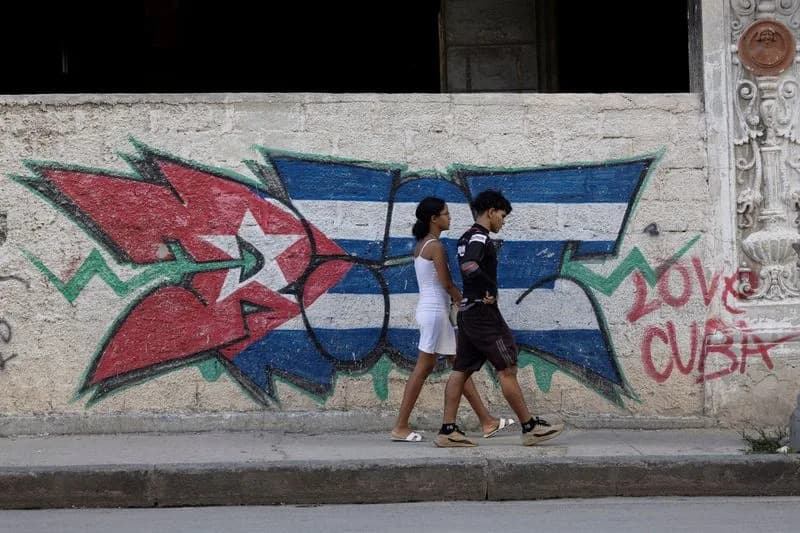
A woman and a man walk past graffiti with the colours of the Cuban flag in Havana, Cuba, October 4, 2026. REUTERS/Ricardo Arduengo
By Matt Spetalnick — Reuters, Washington, Oct 5
Cuba's top diplomat in Washington told Reuters that Havana and Washington have maintained 'channels of communication' but are not engaged in any formal negotiations, even as the Trump administration steps up pressure on the island.
What the Cuban Diplomat Said
In an interview, Lianys Torres Rivera, chargé d'affaires at Cuba's embassy in Washington, said Cuba remains open to a 'respectful' dialogue but is not 'naive' about President Donald Trump's threats. She added that Havana has increased preparations to defend itself against any potential U.S. military action.
'What we have with the US is channels of communication,' Torres Rivera said, declining to provide details on timing, topics or participants.
Recent Contacts, But No Deal
Torres Rivera said recent contacts between the two capitals have included meetings, phone calls and WhatsApp messages. However, she emphasized that those exchanges have not produced progress toward a negotiating agenda or the resumption of official talks.
U.S. Statements And The UN Exchange
The Cuban account contrasts with public statements by President Trump at the United Nations, when he asserted that a U.S. official was 'deep into negotiations' with Havana. The Cuban delegation walked out in protest after Trump also described Cuba as a 'failed state' and predicted an eventual change of government.
A U.S. State Department spokesperson dismissed Havana's characterization as propaganda, saying talks are ongoing and accusing Cuba's government of resisting measures that would help the Cuban people while protecting its control.
Sanctions, Oil Measures And Humanitarian Concerns
The Trump administration has tightened the embargo, imposing new restrictions on American travel to Cuba and on U.S. banking access for the island's private sector. U.S.-imposed limits on oil supplies have deepened fuel shortages and contributed to blackouts amid aging infrastructure. United Nations human rights experts have criticized those oil restrictions as a violation of international law.
Cuba's Position And Reforms
Torres Rivera stressed that Cuba's 'red line' is a refusal to negotiate changes to its political system, viewing U.S. demands for the removal of Cuban leaders as an infringement on sovereignty. Under mounting pressure, Cuba unveiled broad free-market reforms in June that, if fully implemented, would mark the most significant change in its socialist economic model since 1959. Washington has said those reforms do not go far enough and continues to press for 'free and fair' elections.
Outlook
Despite President Trump's recent prediction that the U.S. and Cuba 'will make a deal,' and his comment that he did not think military action would be necessary, Havana remains cautious. 'Cuba has always been preparing for an aggression from the US,' Torres Rivera said. 'And we are increasing our capabilities now more than ever before … It is to defend ourselves.'
Reporting by Matt Spetalnick; editing by Andy Sullivan, Nick Zieminski and Rod Nickel.
Help us improve.