Gallup's latest quarterly survey finds 50% of U.S. adults identify as Democrats or lean Democratic — the highest level since 2009 — while 39% identify as Republicans or lean Republican. The poll of 3,000 adults shows independents favor Democrats by five points (30% to 25%). Analysts warn party ID doesn't always translate into votes; turnout and local dynamics will decide many races despite national indicators and models favoring Democrats.
Gallup: Democratic Identification Hits 50% — Highest Since 2009, Ahead Of Midterms
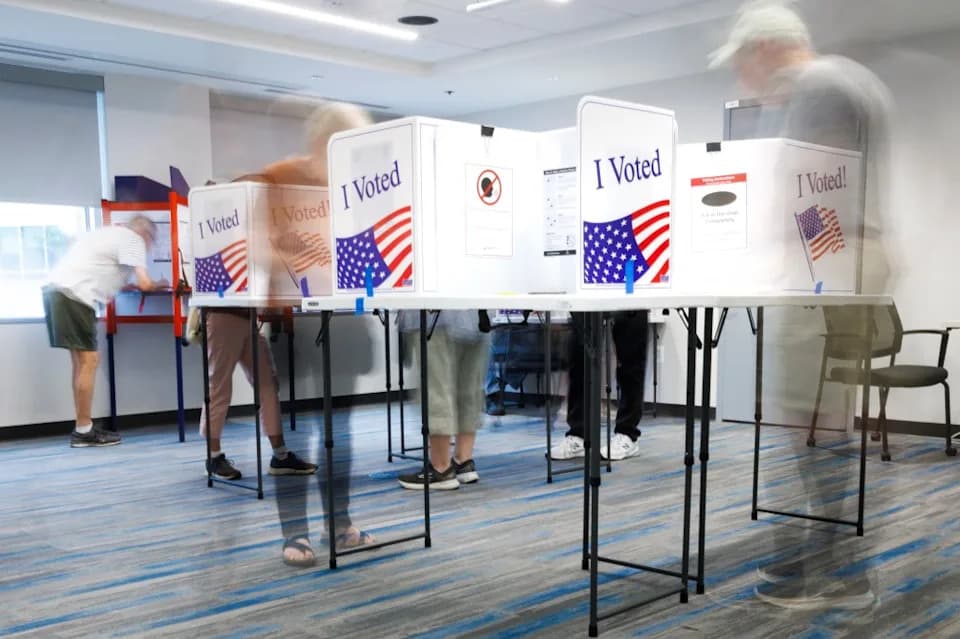
Voters cast their ballots inside the Arlington County Courthouse on September 18 in Arlington, Virginia.
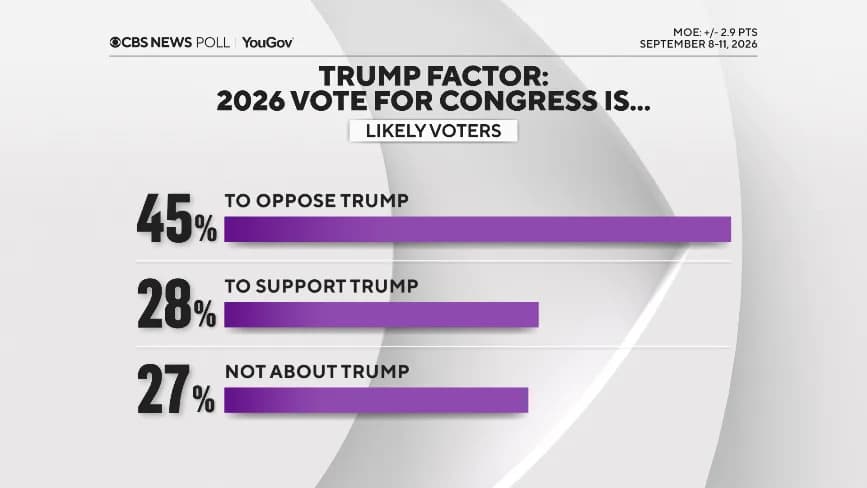
Less than a month before the midterm elections, Gallup's latest quarterly survey finds half of U.S. adults (50%) identify as Democrats or lean Democratic — the highest level recorded since 2009, during President Barack Obama's first term. By contrast, 39% of respondents said they are Republicans or Republican-leaning.
What the Poll Shows
Gallup's tracking indicates a steady rise in Democratic identification since late 2024, while Republican identification has declined. When independents are included, Democrats hold a five-point edge among that group (30% to 25%). Gallup interviewed a random sample of 3,000 U.S. adults across all 50 states and Washington, D.C., and reports a margin of error of ±2 percentage points.
Context and Caveats
High party identification is a welcome sign for Democrats, but experts and analysts caution that party ID alone does not guarantee electoral success. Historically, polls have understated Republican performance in key states and districts, producing surprises on Election Day. Translating favorable national sentiment into votes depends on turnout, candidate quality, local dynamics and whether leaners actually cast ballots for their party's nominees.
"The party lean category is a good indicator of vote intentions," said Stephen Ansolabehere, professor of government at Harvard University. "Generally, when it's a good year for a party the proportion of people who lean in the direction of the eventual winner goes up in October and November. Come January or February that category returns to its original levels."
Reactions From Parties
A Democratic National Committee spokesperson framed the poll as evidence that voters are rejecting Republicans' agenda and said Democrats will work to "reach every voter, expand the map, and win up and down the ballot this November."
Republican National Press Secretary Natalie Baldassarre argued national polls "always underestimate support for Republicans" and said GOP campaigns remain focused on countering "the far-left's extreme agenda."
Broader Indicators
Other measures also favor Democrats nationally: aggregated generic-ballot averages show a Democratic advantage, and election simulations such as RaceToTheWH give Democrats an 87% chance to win the House and a 73% chance in the Senate. RealClearPolling's updated generic ballot average shows an 8.3-point Democratic lead, a figure noted in later updates to the coverage.
Why It Matters
Observers point to the cost of living and economic concerns as central drivers of voter sentiment, comparing the current environment to 2009, when Democrats' Gallup numbers also peaked amid economic dissatisfaction. Still, the ultimate outcome of the midterms will depend on how national trends translate into state and district results.
Methodology: Gallup's quarterly survey polled 3,000 U.S. adults age 18 and older in all 50 states and D.C.; margin of error ±2 percentage points.
Updated note: This article reflects updated generic-ballot reporting (Democratic lead of 8.3 points) and includes expert commentary on the limits of national party-identification measures ahead of the midterms.
Help us improve.