Nigerian creatives are increasingly pursuing Guinness World Records to gain international recognition that they say is missing at home. High-profile recent efforts include a dancer attempting a continuous seven-day performance and a film premiere that drew 51,258 attendees, a global record. Observers link the trend to weak local investment, economic pressure and the broader desire for a portable, credible platform that can unlock opportunities abroad.
From Seven-Day Dances to 51,000-Seat Premieres: How Nigerian Creatives Use Guinness Records to Win Global Spotlight
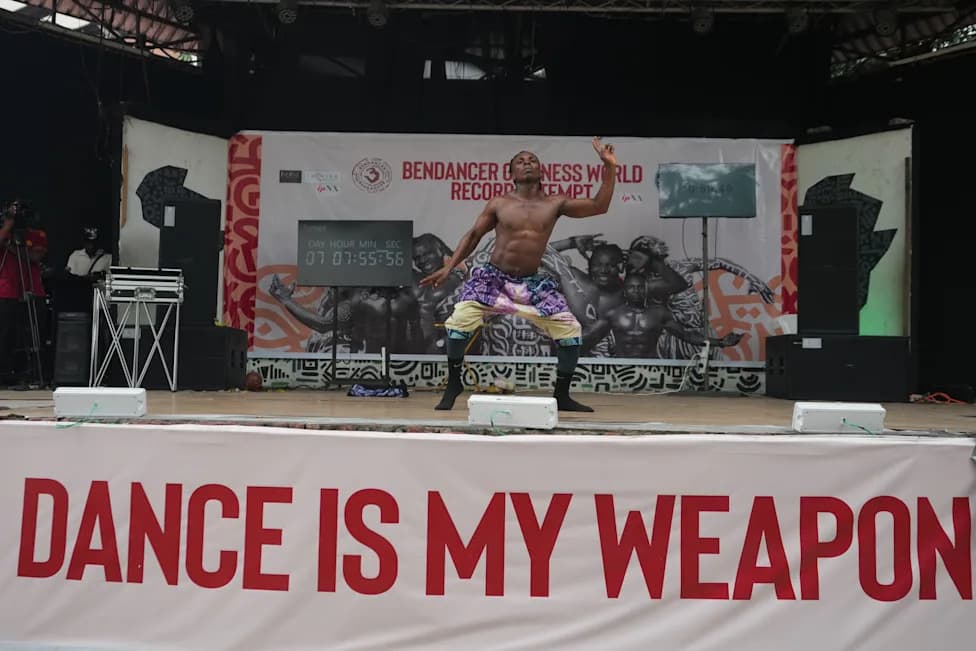
Benjamin Daniel, known as Ben Dancer, attempts dancing for 168 hours in a bid to set a Guinness World Record, at the freedom park in Lagos, Nigeria, Tuesday, Sept. 29, 2026. (AP Photo/Sunday Alamba)(AP Photo/Sunday Alamba)
Nigerian artists and entertainers are increasingly turning to Guinness World Records to secure international recognition that many say is hard to come by at home. Recent high-profile attempts include a dancer who performed continuously for seven days and a film premiere attended by 51,258 people — the largest movie premiere on record.
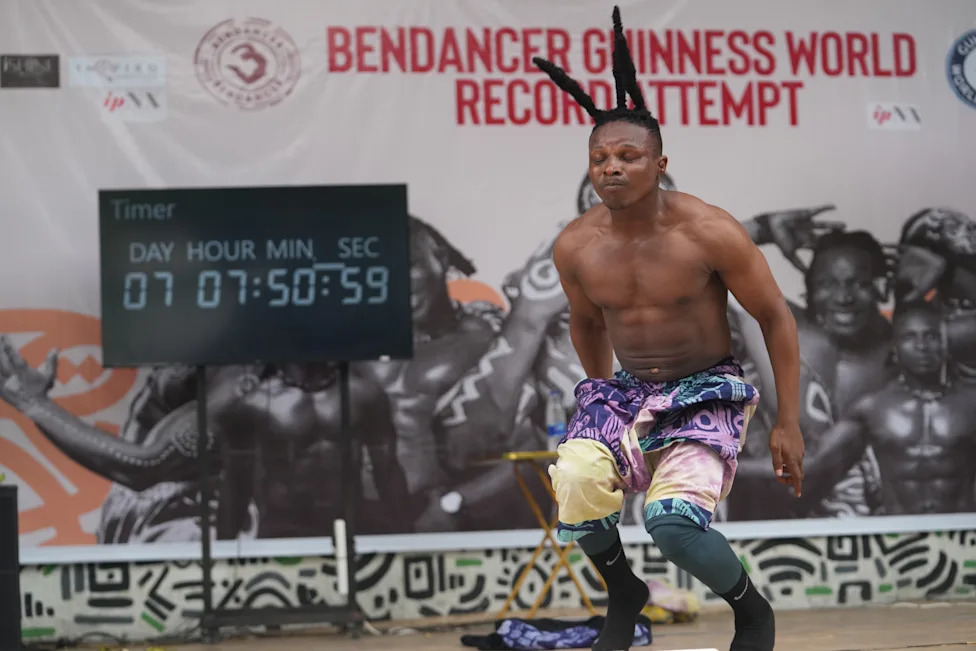
Benjamin Daniel, known as Ben Dancer, attempts dancing for 168 hours in a bid to set a Guinness World Record, at the freedom park in Lagos, Nigeria, Tuesday, Sept. 29, 2026. (AP Photo/Sunday Alamba)(AP Photo/Sunday Alamba)
A Growing Trend
The wave of record attempts gained renewed momentum after celebrity chef Hilda Baci captured global headlines in 2023 by cooking for 93 hours and 11 minutes, setting the world record for the longest cooking marathon. Since then, Nigerians have tried to set records across a wide spectrum of unusual and ambitious categories, from the longest crying session to clothes-washing and massage marathons.
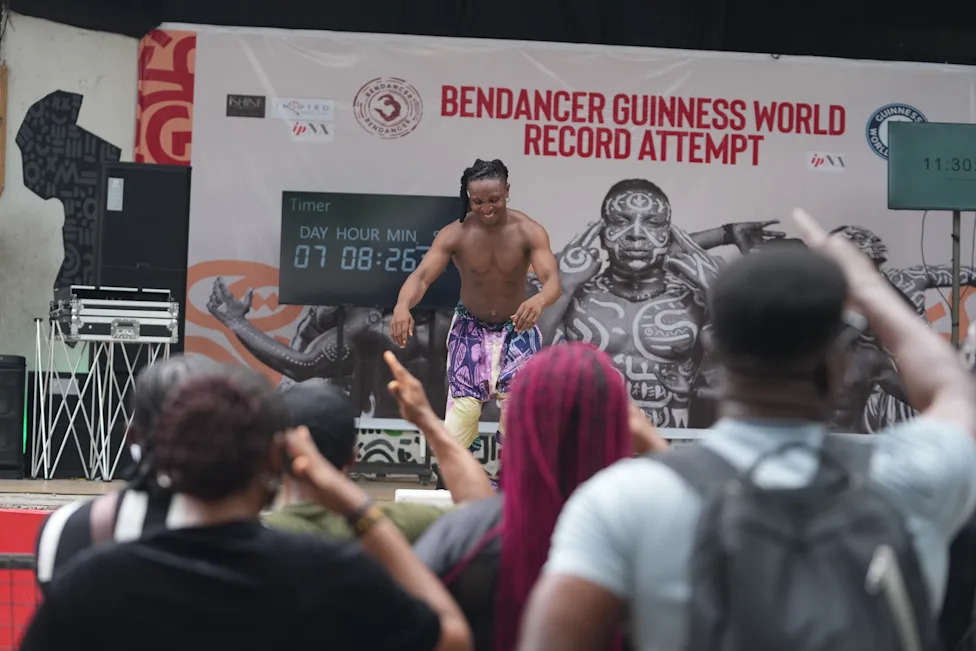
Benjamin Daniel, known as Ben Dancer, attempts dancing for 168 hours in a bid to set a Guinness World Record, at the freedom park in Lagos, Nigeria, Tuesday, Sept. 29, 2026. (AP Photo/Sunday Alamba)(AP Photo/Sunday Alamba)
Why Guinness?
Nigeria, home to about 220 million people and one of the world’s youngest populations, is widely seen as a regional powerhouse in entertainment and creative industries. Nevertheless, persistent underinvestment and limited government support mean many creators struggle to find recognition and commercial backing at home. For some, a Guinness title offers a fast, credible way to gain visibility and open doors internationally.

Benjamin Daniel, known as Ben Dancer, attempts dancing for 168 hours in a bid to set a Guinness World Record, at the freedom park in Lagos, Nigeria, Tuesday, Sept. 29, 2026. (AP Photo/Sunday Alamba)(AP Photo/Sunday Alamba)
Benjamin Daniel, the dancer attempting the seven-day record, said on his motivation: 'The people who are supposed to pay attention to us as a people are not doing it. So if the local people are not listening to us, let us run to the global.' Guinness World Records was in the process of verifying his claim at the time of reporting.
Filmmaker Nora Awolowo, whose movie Black Market set the record for the world’s largest movie premiere, said the recognition has changed how people respond to her work. 'Nobody can tell me anything is impossible,' she said. 'There is no room I walk into now that if I tell you what I have done with my film, you would not put respect on my name.'

Benjamin Daniel, known as Ben Dancer, attempts dancing for 168 hours in a bid to set a Guinness World Record, at the freedom park in Lagos, Nigeria, Tuesday, Sept. 29, 2026. (AP Photo/Sunday Alamba)(AP Photo/Sunday Alamba)
Numbers and Context
Guinness World Records told The Associated Press that 5,042 people in Nigeria applied for records between January 2022 and September 2026, resulting in 3,346 record attempts. That places Nigeria seventh among countries by applicant volume and eighth by number of attempts. The organization emphasized that every application is judged against the same global criteria and evidence requirements.
Analysts and industry observers say the prestige and portability of a Guinness title can compensate for weak institutional support at home, helping holders attract opportunities, sponsorships and international attention. Economic pressures, including a shrinking economy, high inflation and rising unemployment, have also driven many young Nigerians to seek opportunities abroad in a phenomenon locally known as 'japa' (to escape), which further motivates creators to pursue globally visible achievements.
Bottom line: For many Nigerian creatives, Guinness World Records represent more than a novelty — they are a strategic platform to translate local talent into global recognition and real-world opportunities.
Help us improve.