
Bangladesh's shift to largely merit-based public-sector hiring after the 2024 student uprising has coincided with a steep drop in women's representation in top civil service posts. Previously protected by a 10% women's quota within a broader 56% reservation framework, women's share of Class I recruits fell from as high as 35% to about 19% in the most recent round. Officials and experts warn the decline could weaken women's leadership and influence on policy unless targeted support — such as coaching, outreach and bias reduction — is introduced.
Quota Reforms Hit Women in Bangladesh: Female Share of Civil Service Posts Falls Sharply
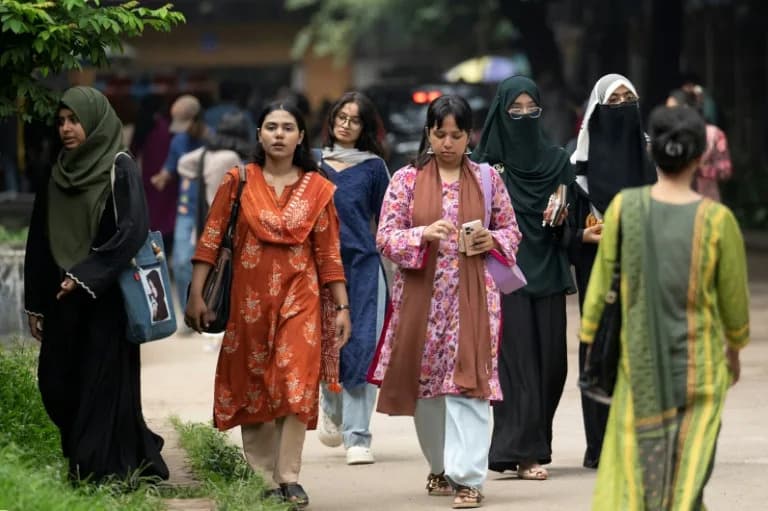
Dhaka University students walking across campus in the Bangladesh capital. Women are securing a shrinking share of public sector jobs in the Muslim-majority nation of 170 million people. (Salahuddin Ahmed)
Bangladesh's 2024 student-led uprising delivered a decisive change to the country's public-sector recruitment: a near-complete shift to merit-based hiring and the removal of a separate quota for women. While the reforms fulfilled protesters' demand to reduce patronage, they have had an unexpected consequence — a sharp decline in the proportion of women entering top civil service posts.
What Changed
Until 2018, quotas accounted for roughly 56% of Class I posts, the highest-ranking civil service positions. That framework included a 10% reservation for women, 30% for descendants of 1971 independence fighters, and 16% for candidates from underprivileged regions and those with disabilities. After student protests in 2018, then-prime minister Sheikh Hasina moved to scrap the quota system. A 2024 proposal to reinstate quotas sparked new student demonstrations that escalated into a wider uprising and resulted in Hasina's removal. Today about 93% of posts are filled on merit and around 7% remain reserved for freedom-fighter relatives and other small categories; there is no separate quota for women.
Measured Impact
The Bangladesh Public Service Commission (BPSC), which administers recruitment exams, sees roughly 300,000 applicants each year for approximately 2,500–3,000 Class I positions. Combining quota and merit appointments before 2018, women made up as much as 35% of recruits. In the most recent exam round, that share dropped to about 19%.
"For someone like me, with family support, a quota might not have been essential — but for an average woman it was," said 25-year-old Dhaka University graduate Tothapi Azad. "A job is a tool for women's empowerment. For rural women it can be a survival tactic, a shield to resist domestic violence."
Broader Effects
The decline in female representation is visible beyond the civil service. Police recruitment this year produced 267 women among 2,651 qualified constable candidates; only 6 of 184 new sub-inspectors were women, and no women qualified as sergeants compared with 96 men. Bangladesh also ended a policy that previously reserved 60% of primary teaching posts for women.
Senior officials and experts warn this trend will reduce women's presence in leadership and narrow the range of perspectives in policymaking. A senior female bureaucrat with two decades of experience noted that today at least 21 women lead districts — a figure she fears will decline sharply over the next decade.
Responses And Recommendations
The government elected in February continues to defend merit-based recruitment. Public administration minister Md Abdul Bari described the reform as "rational" in parliament, while a BPSC official said the commission "finds the outcome uncomfortable" but is limited to administering exams. Former bureaucrat AKM Abdul Awal Majumdar supported merit hiring while urging targeted coaching so women can compete effectively.
Experts and women's advocates emphasize practical responses that do not reintroduce quotas wholesale but do address barriers: targeted exam coaching, outreach in rural areas, mentorship programs, flexible recruitment practices, and measures to reduce bias in selection processes. Without such steps, analysts warn, a merit-only system operated in the current context risks entrenching existing inequalities.
Key numbers: Class I applicants ~300,000 per year; posts ~2,500–3,000; female recruit share fell from as high as 35% (pre-2018 with quotas) to ~19% in the latest round.
Help us improve.





















