An Australian who led AmCham Myanmar, Ye Khaung Kyaw (Danny), was released after more than 100 days in detention following court proceedings in Yangon. The case centers on allegations tied to a $300,000 contract with U.S. lobbying firm Mercury Public Affairs and involves former AmCham president Adam Castillo and ex-board member Munimul Islam. Documents obtained by the AP appear to contradict AmCham's public account, and authorities have not clarified whether charges were proven, dropped or led to deportation. Australia confirmed it provided consular assistance.
Australian Former AmCham Executive Freed After 100+ Days Amid Disputed $300K Lobbying Case
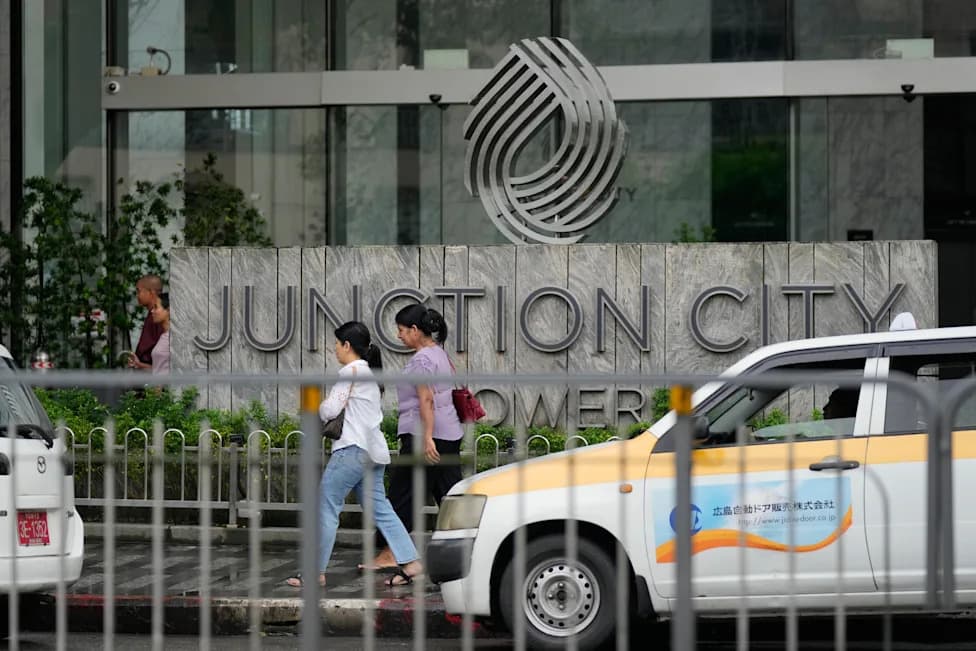
FILE - Pedestrians walk past entrance of Junction City Tower, where the American Chamber of Commerce in Myanmar has its office, on Tuesday, Sept. 15, 2026, in Yangon, Myanmar. (AP Photo, File)
An Australian business executive who previously led the American Chamber of Commerce in Myanmar has been released from custody after more than 100 days, a legal official said. The man, identified as Ye Khaung Kyaw (known as Danny), was freed following the conclusion of court proceedings in Yangon, though officials have not clarified the legal outcome.
Detention and Court Proceedings
The legal official, who spoke on condition of anonymity because he was not authorized to release information, said the Yangon court wrapped up the case on Tuesday. Acting Police Brig. Gen. Soe Lin Aung, a spokesperson for Myanmar's Home Affairs Ministry, confirmed that proceedings concluded but declined to say whether the charges resulted in conviction, dismissal, withdrawal or deportation.
Allegations and Who Is Involved
The current AmCham Myanmar board accused Ye Khaung Kyaw, former chamber president Adam Castillo and former board member Munimul Islam of breach of trust and misappropriation of association assets tied to a $300,000 contract with Washington-based lobbying firm Mercury Public Affairs. Castillo was detained in June alongside Ye Khaung Kyaw and was released and deported last week. Islam, who lives outside Myanmar, has not been detained.
Conflicting Documents
AmCham's May annual report alleged Castillo illegally collected funds in the association's name and said the board had not approved the agreement, received any money or services, or disclosed the arrangement to auditors. However, documents obtained by The Associated Press appear to contradict that account: a signed board resolution provided to AP showed the board authorized the lobbying initiative, approved hiring Mercury and agreed that Islam's company, Misfit Technologies, would act as a sponsor.
Current AmCham Executive Director Myat Phyu The described that resolution as a fabrication, though other records on the chamber's website suggested the board had been informed of the arrangement. Supporters of the three men say the allegations are baseless and point to documentary evidence in their defense.
Payments, Sanctions and Disclosure
An employee of Misfit, speaking anonymously for fear of professional retribution, said fees were routed through Misfit's U.S. office because U.S. sanctions made payments from within Myanmar nearly impossible. Mercury disclosed the payments to U.S. authorities under the U.S. Lobbying Disclosure Act, according to available records.
Context And Official Silence
Myanmar's military-backed government issued no public statement, and local court and police officials at the Pabedan township station in Yangon did not respond to requests for comment. Authorities in Myanmar — which remains embroiled in a civil war — rarely speak to international media.
Australia's Foreign Ministry confirmed it provided consular assistance to an Australian national in Myanmar but declined further comment, citing privacy obligations. With the court proceedings concluded and the legal outcome not publicly clarified, reporting on the case and related documents remains ongoing.
Help us improve.