Jameson Lopp’s interactive map places the UK third globally with 24 publicly documented physical attacks on crypto holders, behind France (68) and the United States (59). France experienced a sharp surge in 2026 tied in part to leaked personal data and multiple breaches. Independent firms report higher totals than Lopp’s dataset, and Chainalysis estimates criminals stole more than $30 million from violent crypto attacks in H1 2026. Experts warn that rising prices and exposed personal information are increasing physical-security risks for holders and their families.
Bitcoin Bull Run Fuels Violent Targeting Of Crypto Holders — UK Ranks Third Worldwide
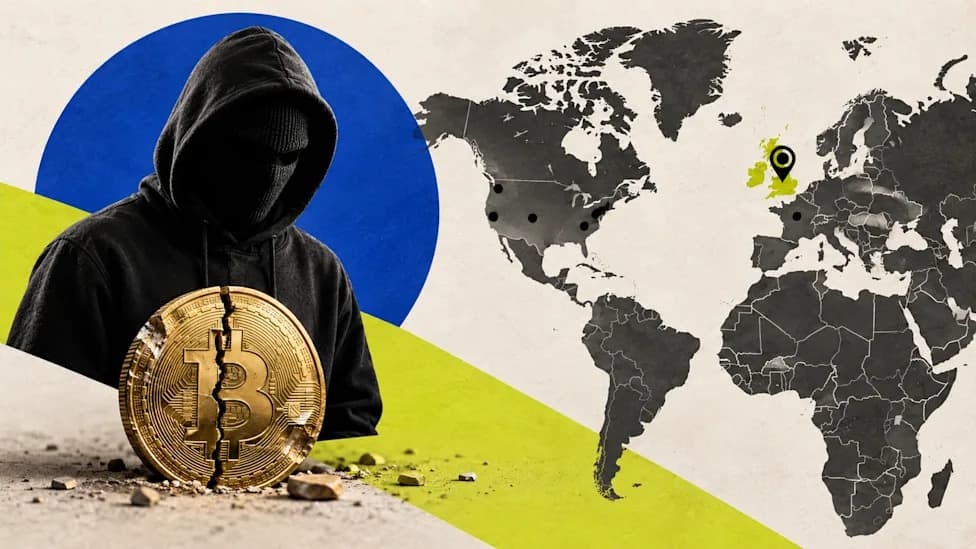
The UK has emerged as one of the world's biggest hotspots for physical attacks targeting crypto holders.
Overview: Bitcoin’s recent rally has coincided with a worrying rise in violent attacks against people believed to control substantial cryptocurrency holdings. An interactive map and database compiled by bitcoin security researcher Jameson Lopp highlights the scale of so-called “wrench attacks” — kidnappings, home invasions and other assaults aimed at forcing victims to surrender access to private keys and wallets.
The Data: Lopp published the interactive map on Sept. 21, transforming a long-running database that tracks publicly disclosed incidents going back to 2014. The geographical view places the United Kingdom third worldwide with 24 documented physical attacks linked to crypto, behind France (68) and the United States (59).
Notable Incident: The UK total includes a high-profile April 2026 raid in Maidenhead on the home of crypto executive Oliver von Landsberg-Sadie, where local reports and Lopp’s database say four intruders tied up family members and threatened them at knifepoint to coerce surrender of crypto access.
France Emerges As A 2026 Hotspot
Lopp recorded 41 attacks in France during the first nine months of 2026 — nearly three times the number in the same period of 2025. Other sources suggest even higher totals: French Interior Minister Laurent Nuñez reported authorities had documented 77 crypto-linked kidnappings, extortions or attempted extortions in the first half of 2026 versus 45 for all of 2025. Chainalysis and other analysts point to data leaks and breaches as key drivers of the surge.
Data Exposures And Contributing Factors: Chainalysis says a French tax official was accused of stealing and selling information on wealthy crypto owners (names, addresses, phone numbers, reported holdings and tax records). In January, crypto tax company Waltio disclosed a breach that reportedly exposed roughly 50,000 users’ data. Chainalysis further notes that France’s average of fewer than one known physical attack per month before 2025 rose to about 4.6 per month in the first half of 2026, and that over 40% of incidents targeted relatives or associates rather than the holder directly.
Broader Data And Trends: Personal-security firm Gart tracked 391 physical crypto attacks across 59 countries — roughly 9% more incidents than appear in Lopp’s dataset — underscoring that public databases likely undercount the true scope. Gart’s historical data also show periods when attack frequency broadly tracked Bitcoin price moves, sometimes with a lag: Bitcoin rose roughly 45% during Q3 2026 (as of late September), which can increase the perceived value of known or reported holdings.
Outcomes And Losses: Chainalysis found that only 26% of documented violent theft attempts resulted in a payment through late June 2026 (down from 49% in 2025), but still estimated criminals had stolen more than $30 million via violent crypto attacks in the first half of 2026.
Researcher Warning: Lopp cautions that his interactive map and database include only publicly disclosed cases, and the real number of attacks could be substantially higher.
What This Means For Crypto Holders
Rising crypto prices, exposed personal data and increased media attention can combine to make holders — and their families — targets for violent crime. The trend highlights the importance of strong personal and operational security for anyone known or believed to control significant digital assets.
Practical Steps (Expert Recommendations)
- Limit public exposure of personal and financial information and review privacy settings on social accounts and public records.
- Use well-audited self-custody practices: store seed phrases offline in secure, tamper-evident locations and minimize on-chain links between identity and high-value addresses.
- Consider professional personal-security measures if you or your relatives are publicly identified as having substantial crypto holdings.
Sources: Jameson Lopp (Bitcoin Wrench Attacks map/database), Chainalysis, French Interior Ministry statements, Gart, Waltio breach disclosures, public reporting on the Maidenhead incident.
Help us improve.