Pakistan has signed a limited procurement order and an MoU with Powerus, a US drone start‑up backed by Donald Trump’s sons. Analysts raised concerns because Powerus granted exclusive rights in India to manufacture its interceptor technology and lists an Israeli military veteran among its founders—sensitive links for Pakistan. The MoU is non‑binding and subject to US approvals; the coming months will show whether this is a one‑off political gesture or the start of meaningful procurement and local production.
Pakistan Signs Limited Drone Order With US Start‑Up Backed By Trump Sons, Raising India and Israel Ties Concerns
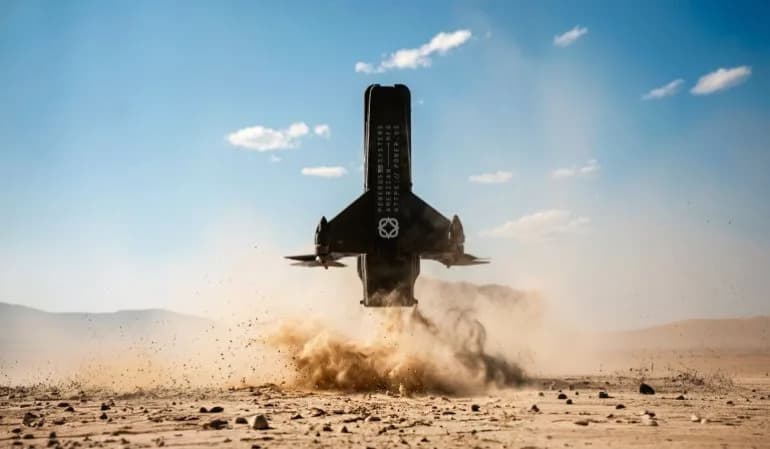
Powerus's Guardian Interceptor is a drone interceptor [Handout/Powerus]
On September 16, a delegation from Powerus, a US drone start‑up founded in 2025, met Pakistan’s military chief, Field Marshal Asim Munir, at the military headquarters in Rawalpindi. The company announced the next day that it had received a "limited procurement order" from Pakistan’s Ministry of Defence and signed a memorandum of understanding (MoU) with senior Pakistani defence officials.
The Pakistani military’s media arm, the Inter‑Services Public Relations (ISPR), said the talks covered cooperation on defence procurement, production and capacity building but did not mention the MoU. Powerus told media the MoU was with the Pakistan Army and that the procurement order came from the Ministry of Defence. Neither the monetary value nor the specific platforms involved have been disclosed.
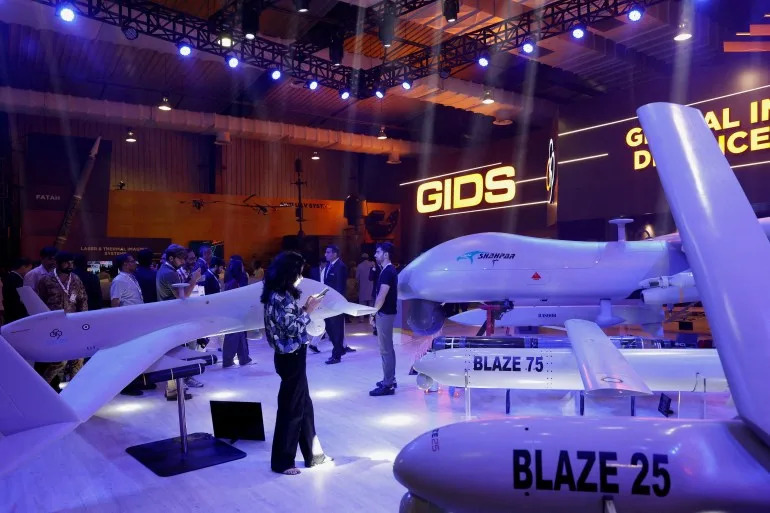
Shahpar drones, made by the Pakistani state-owned defence company Global Industrial & Defence Solutions, are displayed at the 2024 International Defence Exhibition and Seminar in Karachi, Pakistan [File Akhtar Soomro/Reuters]
Why Analysts Are Concerned
Analysts flagged two politically sensitive developments: Powerus granted an Indian defence manufacturer exclusive rights to produce and sell its Guardian‑1 interceptor technology in India less than three months earlier, and one of Powerus’s cofounders, Ziv Marom, is described on the company website as a veteran of the Israeli military. Pakistan does not recognise Israel, and ties to Indian partners complicate matters given longstanding Pakistan–India rivalry.
Powerus’s statement: The company stressed the MoU is not a definitive purchase agreement, creates no binding purchase obligation, and remains subject to US laws and government approvals.
Who Is Powerus?
Founded in Florida in 2025, Powerus is preparing to merge with Aureus Greenway Holdings, a Nasdaq‑listed company. Regulatory filings and media reports indicate an investment vehicle called American Ventures, associated with Donald Trump Jr and Eric Trump, is expected to hold a roughly 9.9% beneficial stake in the merged firm. Powerus has been reported to produce roughly 3,000 interceptor drones a month and recently won a US Air Force contract with a ceiling reportedly up to $90 million. Company spokespeople say the Trump sons are passive investors with no role in operations.
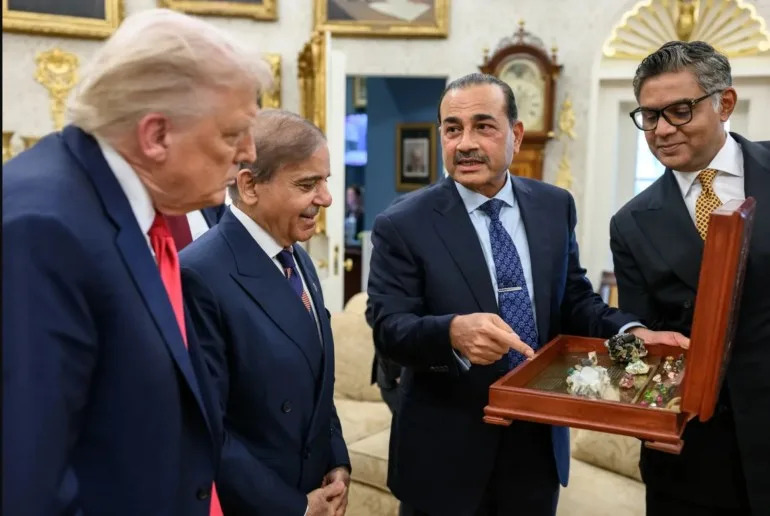
From left, US President Donald Trump examines a box of rare earth minerals and gemstones presented by Pakistani Prime Minister Shehbaz Sharif and Field Marshal Asim Munir in September last year at the White House [File: Handout/White House]
Capabilities, Risks, And Pakistan’s Options
Pakistan already fields a mix of domestic and foreign unmanned systems, including Turkish Bayraktar models, Chinese Wing Loong II drones and locally developed platforms such as the Shahpar‑II. SIPRI data shows China supplied a large share of Pakistan’s arms imports between 2021 and 2025.
Analysts and retired officials say Pakistan’s primary capability gap may not be airframe designs but electronics, systems integration and the ability to mass‑produce and induct systems quickly. They also warn of operational‑security risks when adversaries purchase from the same supplier, and that a company less than a year old with limited delivery history would typically face strict financial, technical and security vetting for strategic defence partnerships.
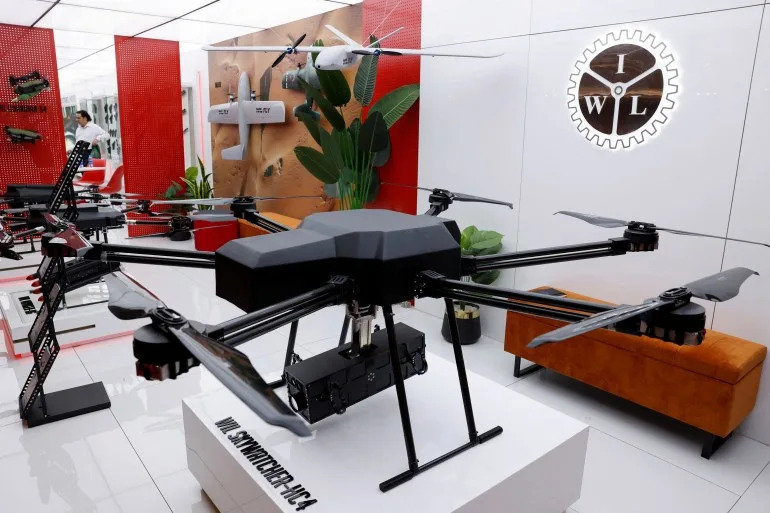
Drones are displayed during the International Defence Exhibition and Seminar in Karachi on November 21, 2024 [Akhtar Soomro/Reuters]
Supporters argue that access to US technology and potential investment could help Pakistan’s growing private drone sector and accelerate indigenisation if local manufacturing and technology‑transfer plans are concrete and well‑executed.
What To Watch
- Whether the Ministry of Defence signs follow‑on procurement deals or converts the MoU into binding contracts.
- Any detailed disclosure on the types, numbers and timelines for the systems involved.
- Plans for local production, technology transfer, and how Powerus intends to manage overlapping customers in India and Pakistan without compromising operational security.
For now, observers say the deal’s real significance will become clear only if it is followed by concrete procurement orders, local manufacturing commitments and visible integration into Pakistan’s broader counter‑UAS and air‑defence posture.
Help us improve.