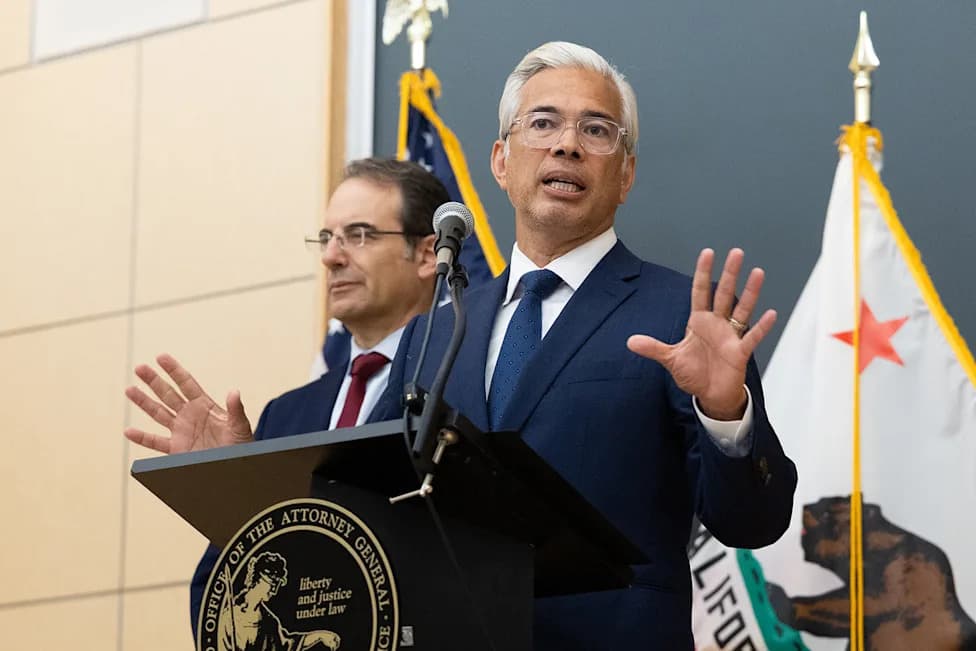
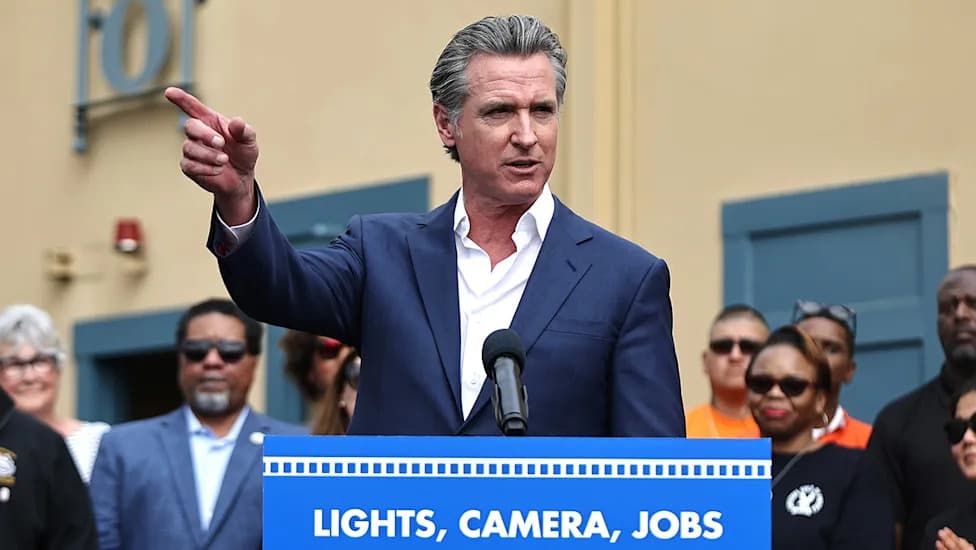
The settlement between California Attorney General Rob Bonta and Paramount Skydance is widely viewed as a de facto win for Paramount, allowing its ~$110 billion acquisition of Warner Bros. Discovery to proceed without structural changes. Key concessions included a 30-film annual production pledge, $1.5 billion in U.S. production investment over five years, and separate operation of cable units. Intense political pressure from state leaders and an LAEDC report warning of vast economic losses squeezed Bonta’s leverage, and a proposed "hold separate" workaround was discussed but never used.
Why Rob Bonta Backed Down on the Paramount Settlement — Politics, Economics and the Limits of Leverage
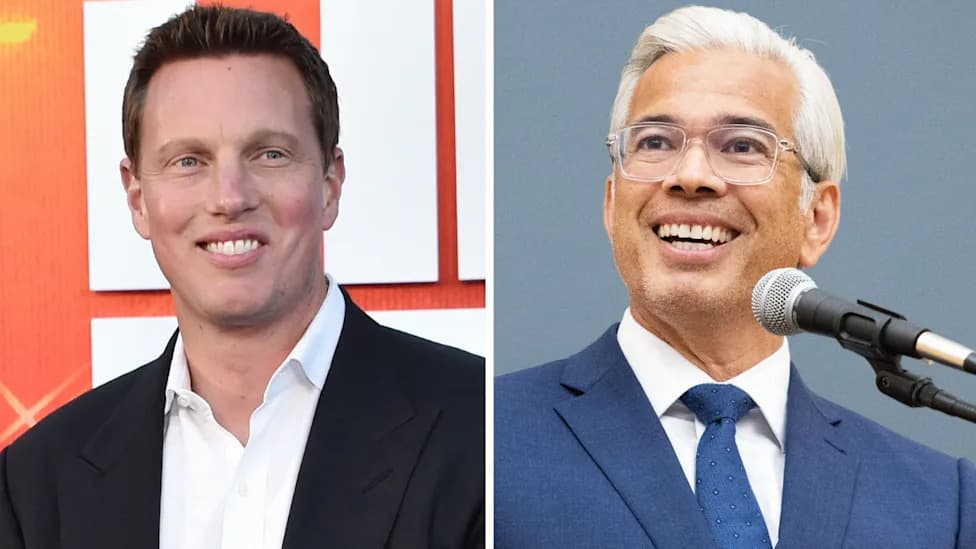
David Ellison and Rob Bonta (Credit: Getty Images)
A growing consensus holds that California Attorney General Rob Bonta effectively backed down in the settlement of the lawsuit brought by 12 state attorneys general against Paramount Skydance, allowing Paramount a largely unobstructed path to complete its roughly $110 billion acquisition of Warner Bros. Discovery.
Why The Settlement Looked Like A Win For Paramount
At its core, the settlement required no structural changes to the transaction. The consent decree’s main terms—an annual production pledge of 30 films blending tentpoles and independents, a $1.5 billion commitment to U.S. production over five years, and the separate operation of Paramount’s cable networks—were measures Paramount CEO David Ellison had indicated months earlier he would accept, including in a New York Times op-ed.
The proposed independent "oversight board" intended to safeguard editorial independence at CNN and CBS News also appears designed to be largely non-disruptive. It is difficult to envision a small panel of former journalists completely constraining a 24/7 newsroom. From Paramount’s perspective, the board mostly preserves current operations, although extreme scenarios—such as a presidential ban on a network—could generate tension in the boardroom.
Political And Economic Pressure Narrowed Bonta’s Options
Bonta repeatedly stated he sought to stop the merger outright rather than merely negotiating terms. That objective became far harder to pursue once Paramount signaled it was willing to relocate parts of its business outside California if necessary. Reports and leaks suggested executives were scouting housing and office space in Nashville and Texas, and observers pointed to Larry Ellison’s 2020 move of Oracle’s headquarters from Silicon Valley to Austin as precedent for relocation under regulatory pressure.
Negotiating leverage collapsed further after top state leaders urged a settlement. Governor Gavin Newsom, Los Angeles Mayor Karen Bass and gubernatorial candidate Xavier Becerra publicly pushed for a resolution. Without backing from key political allies and local stakeholders, Bonta’s bargaining room shrank dramatically.
The dynamic crystallized on Sept. 12, when a report from the Los Angeles Economic Development Corporation was "leaked" estimating that Paramount’s departure could cost California up to $21.2 billion in annual economic output, eliminate as many as 57,980 full-time jobs and reduce state and local tax revenues by approximately $1.17 billion. Those figures put immediate pressure on elected officials and industry groups to avoid a protracted fight that might jeopardize jobs and tax receipts.
Stakeholders Lined Up — For And Against A Fight
On one side, a broad coalition urged settlement: Hollywood guilds, studio executives (including Lionsgate CEO Jon Feltheimer), theater chains like AMC and Regal, and many of Bonta’s political allies. On the other side were vocal critics calling for continued litigation, including actors Mark Ruffalo and Jane Fonda, attorney Norm Eisen and Senator Elizabeth Warren.
Political reality mattered. Mayor Bass faced re-election, Becerra was campaigning for governor, and Newsom was positioning himself for a national run. None could comfortably tolerate the risk of a high-profile corporate exit on their watch.
The Tactical Options—and Why They Didn’t Prevail
One alternative under discussion was a "hold separate" arrangement that would keep Warner Bros. Discovery and Paramount Skydance legally separate while litigation continued, allowing the merger to proceed provisionally without triggering so-called ticking fees. That approach—used during the Department of Justice’s 2018 challenge to AT&T’s acquisition of Time Warner—can create a path to close while preserving remedies. Sources told me that option was on the table but ultimately unnecessary for Paramount.
As one Paramount source put it bluntly: "Bonta had no cards. At least he was smart enough to settle."
Faced with political pushback, economic risk, and the threat of corporate relocation, Bonta chose to extract the most meaningful concessions available and settle quickly rather than press for a trial that increasingly looked unlikely to stop the deal.
Note: This analysis is based on reporting and sourcing published originally on TheWrap.
Help us improve.