A Paraguayan study of 1,000+ university students and PISA 2025 findings show widespread classroom use of AI alongside weak core skills: only 10% of Paraguayan 15-year-olds reached basic math proficiency and 45% use AI chatbots weekly. Experts warn that adding technology without teacher training, clear policy and renewed emphasis on critical thinking risks deepening inequality. Properly guided AI can personalize learning, but education must prioritize judgment over faster access to answers.
AI Gives Students Answers — Latin America Must Teach Judgment and Critical Skills

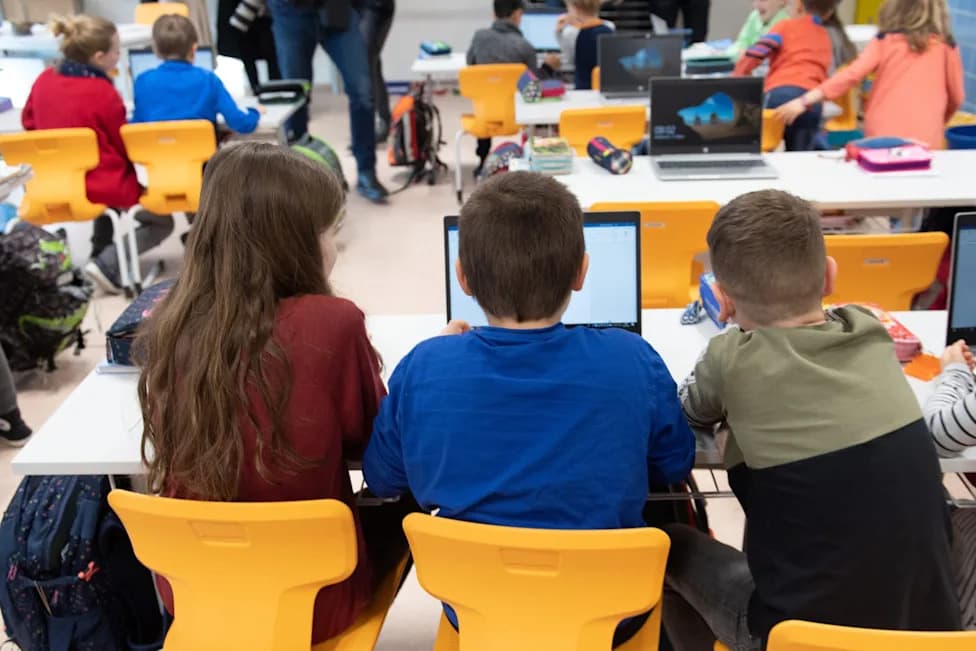
A study of more than 1,000 Paraguayan university students highlights a challenge Latin American educators are only beginning to confront. File Photo by Adam Vaughan/EPA
A study of more than 1,000 Paraguayan university students, published in Integración y Conocimiento, highlights a mounting challenge for educators across Latin America: students increasingly rely on artificial intelligence as an information source even as its use raises serious questions about originality, critical thinking and academic integrity.
AI Is Already in the Classroom — But Policy and Pedagogy Lag
The researchers, Derlis Ramón Cáceres Troche and Hugo Daniel Yahari, urge universities and schools to integrate AI tools critically and responsibly rather than let them substitute for students’ intellectual effort. Their findings expose a gap technology alone cannot fill: decades of emphasis on memorization in many regional classrooms have left students underprepared for a world that demands adaptability, independent reasoning and the ability to evaluate information.
Artificial intelligence can summarize texts, draft essays and answer most queries in seconds — and that capacity makes the mismatch between rote learning and real-world demands even clearer. Education is not merely about producing correct answers; its deeper purpose is to cultivate judgment: the ability to determine whether information is accurate, relevant and credible.
Data Underscore the Scale of the Challenge
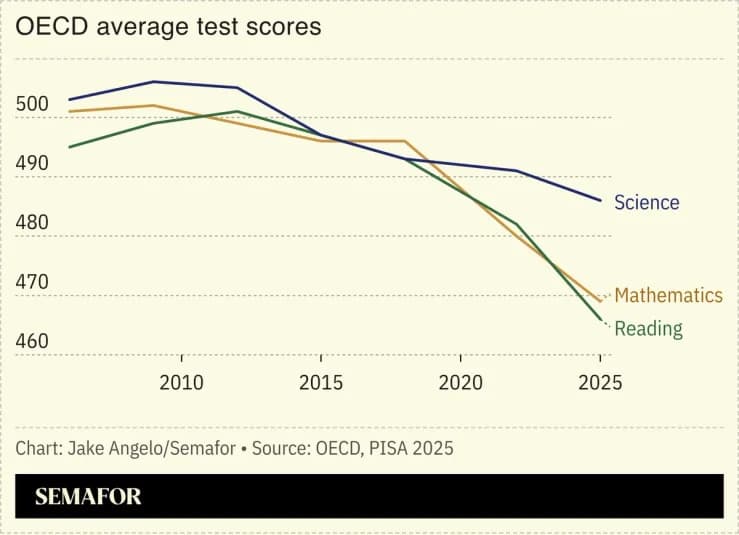
New data from the Organisation for Economic Co-operation and Development (PISA 2025, released Sept. 8) show Paraguayan 15-year-olds remain below the OECD average in mathematics, reading and science. Only 10% reached at least basic proficiency in mathematics, and average scores in reading and science declined from 2022.
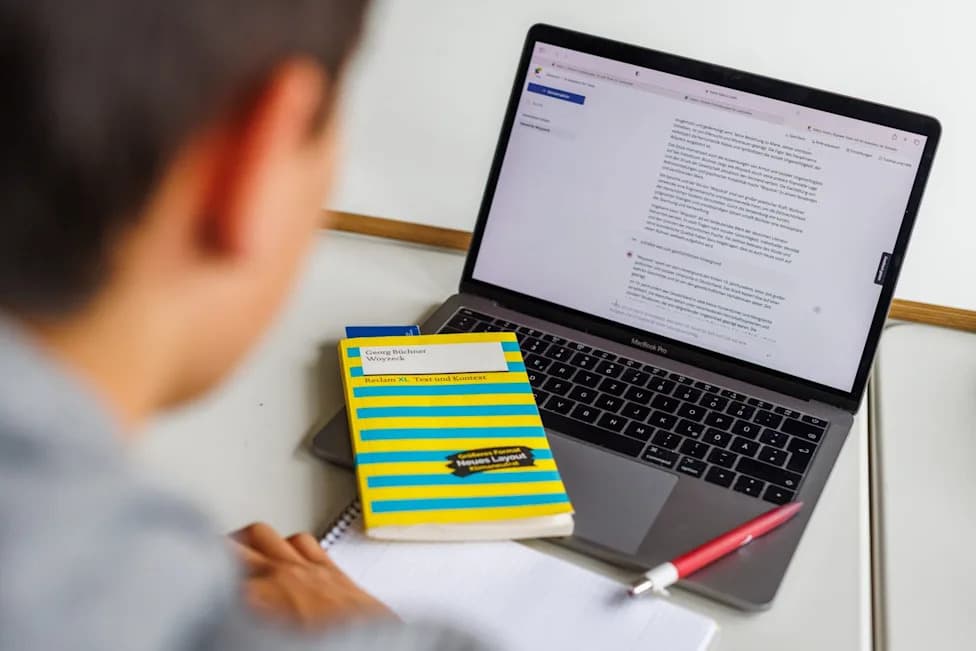
At the same time, AI is already part of students’ study habits: PISA 2025 reports that 45% of Paraguayan students use AI chatbots for schoolwork at least once a week; more than a third use AI for preliminary research or to summarize assigned texts, and 29% use AI to help draft written assignments.
Technology Without Judgment Risks Deepening Inequality
Simply adding devices or AI tools to classrooms will not close learning gaps. Students trained to memorize and reproduce expected responses may use AI to outsource thinking rather than to sharpen it. A student who submits an AI-written assignment can produce a polished text without understanding the subject; a student who accepts an AI-generated explanation uncritically gains information but misses the opportunity to reason.
“The question is no longer whether students will use AI, but whether they will be prepared to use it well.”
This preparation requires a stronger emphasis on critical thinking: assessing sources, separating facts from opinions, identifying bias and weighing competing interpretations. Those competencies were already essential in an era of social media and misinformation; AI makes them indispensable.
The Teacher’s Role Becomes More Important — Not Less
AI systems do not merely retrieve neutral facts; they organize and generate information through processes most students do not understand. Teachers will therefore need more than basic digital training. They require practical knowledge about how algorithmic systems work, where errors and bias arise, and how AI can shape research and assessment. Rather than diminishing educators’ importance, AI can heighten it: teachers challenge students, diagnose confusion and cultivate judgment in ways machines cannot replace.
In Paraguay, adoption of AI in classrooms has outpaced national policy. Education specialist Sofía Scheid warns the country still lacks a coherent national framework for how technology is introduced in schools, leaving adaptation dependent on scattered initiatives and the resources of individual institutions. This policy vacuum risks unequal outcomes: well-resourced schools may harness AI creatively, while weaker schools receive little more than a shortcut.
What Needs to Be Done
Investment in connectivity and devices remains essential, especially for communities without reliable access. But technology alone will not transform education. Paraguay and other countries in the region need sustained investment in teacher development, clearer curricula and national guidelines for responsible AI use. Only then can AI be harnessed to personalize learning, broaden access to knowledge and give teachers practical tools — without widening a new form of inequality based on how effectively technology is used.
Bottom line: Artificial intelligence can give students answers. Latin America must teach them judgment.
About the author: Romina Rivas Rojas, from Paraguay, holds a degree in Education Sciences from the National Institute of Higher Education "Dr. Raúl Peña" (INAES) and a specialization in University Teaching from Universidad Hispano Guaraní (UHG). She is a graduate of the Legacy of the Americas Academy of Advanced Studies. The views expressed are solely those of the author.
Help us improve.