St. Mary’s “glacier,” a perennial snowfield near James Peak in Colorado, was found gone in mid‑September after the state’s hottest summer on record in 2026. Eyewitnesses reported skiing the snowfield on Sept. 1 and finding it absent by Sept. 14–16, with local footage showing exposed rock and meltwater. The site has historical significance dating to the late 1800s and hosted a resort from the 1950s to 1986. NOAA and global glacier monitoring show record heat and long‑term ice loss are increasing the vulnerability of small mountain snowfields.
St. Mary's 'Glacier' Disappears: Long‑Standing Colorado Snowfield Vanishes After Record Heat
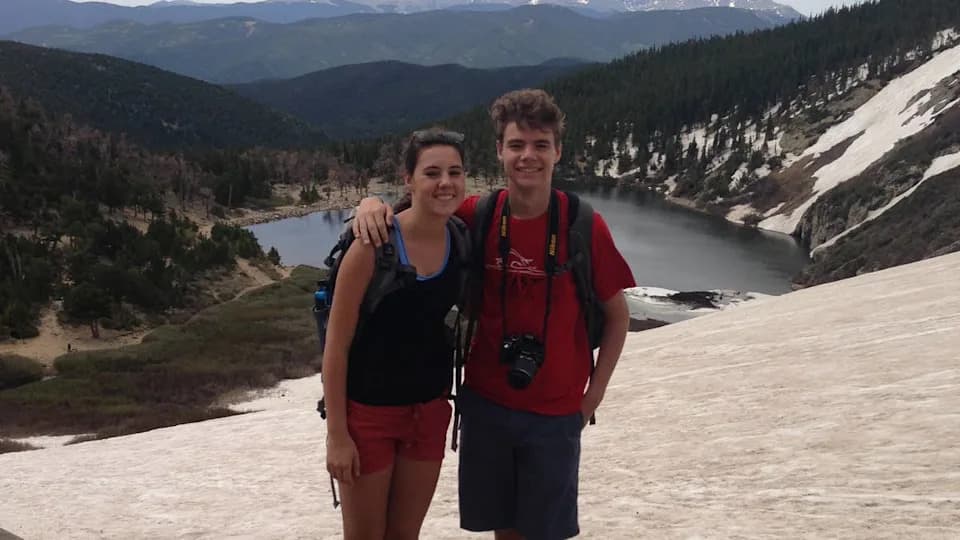
The author and her brother at St. Mary's in 2013.
St. Mary’s “glacier” — a perennial snowfield southeast of James Peak that has long drawn hikers and summer skiers — was found completely absent in mid‑September after Colorado’s hottest summer on record.
An Idaho Springs resident who visited the site on Monday, Sept. 14, reported the usual snowfield area bare except for a thin stream of meltwater, according to the Aspen Times. Another local who says he skied St. Mary’s more than 100 times over the past 30 years skied it on Sept. 1; when he returned on Sept. 16 the snowfield was gone. Local television footage from FOX31 shows exposed rock where the snowfield normally lies.
Historic Feature and Local Recreation
Although commonly called a glacier, St. Mary’s is a perennial snowfield that has persisted for centuries because of winter snowfall that typically replenished it. Historical newspaper records trace the site back to the late 1800s. From the 1950s until 1986 a resort operated at St. Mary’s with three lifts, a T‑Bar, a snack bar and a ski rental shop; a 2002 proposal to reopen the area as a snowboard resort was drafted but never realized.
Record Heat and Broader Climate Context
St. Mary’s has slowly shrunk through the 21st century as regional temperatures have trended warmer. NOAA climate data show 2026 was Colorado’s hottest summer in the 132 years of record, breaking marks set in 1936 and 2021. August 2026 stood out nationally: the average temperature across the contiguous United States was 75.6°F, with an average daytime maximum of 88.6°F. Denver — about an hour from St. Mary’s — recorded 65 days at or above 90°F in 2026, well above its long‑term average of about 45 such days.
While the snowfield will likely return if winter brings substantial snowfall on and below James Peak, ongoing warming makes it harder for small, long‑lived snowfields to reestablish. NOAA data and the World Glacier Monitoring Service document global ice loss: climate reference glaciers monitored since 1970 have lost ice mass equivalent to nearly 27.3 meters of liquid water through 2024.
“The snow that used to cling to this cirque through the summer simply isn’t there anymore,” a local skier told reporters after returning to the site in mid‑September.
Why This Matters
The disappearance of St. Mary’s serves as a vivid local example of how record heat and long‑term warming reshape mountain snow and ice that communities have relied on for recreation and tourism for generations. It underscores how even well‑known, long‑lived snow features can be vulnerable to short‑term extremes stacked on a background of rising temperatures.
This report is based on local eyewitness accounts and coverage by Powder (originally published Sept. 18, 2026), the Aspen Times and FOX31, and climate data from NOAA and the World Glacier Monitoring Service.
Help us improve.