Israeli security assessments say Syrian President Ahmed al‑Sharaa has diverted public funds and international aid into a covert military buildup aimed at expanding Syria’s regional reach. Analysts believe the timeline may hinge on a reduced US presence in the region. European and Gulf states are engaging Damascus for refugee and diplomatic reasons even as Israel intensifies intelligence and contingency planning. Officials warn a confrontation could be increasingly likely.
Israeli Security Warns: Syrian President Ahmed al-Sharaa Quietly Expands Military as Regional Tensions Rise
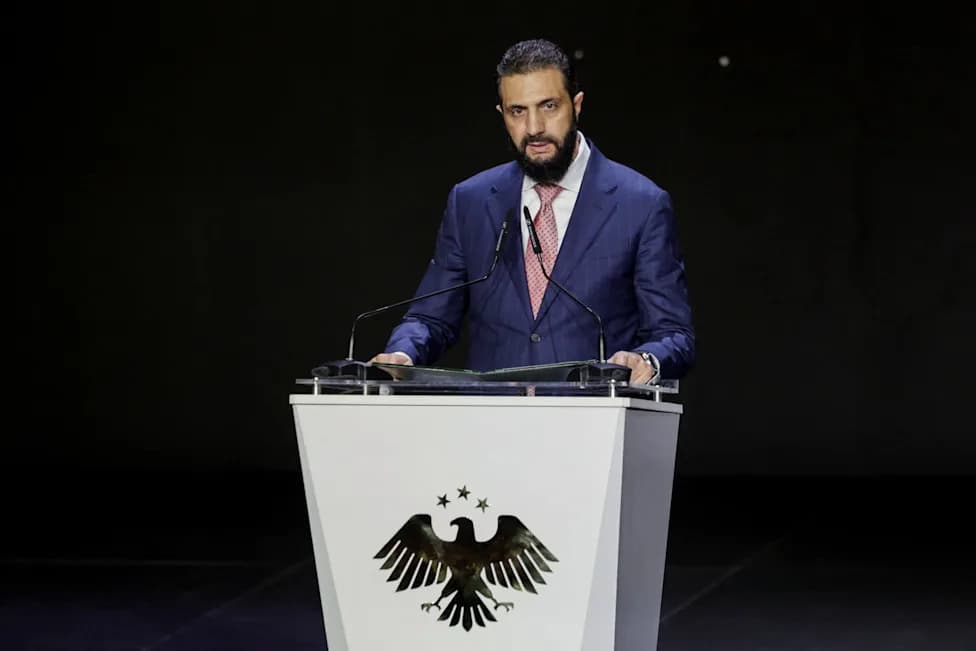
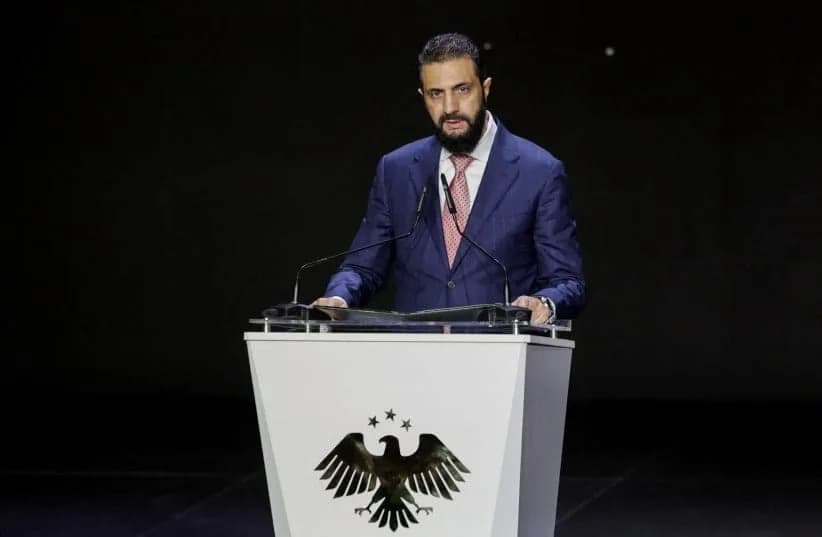
Syrian President Ahmed al-Sharaa speaks during the opening ceremony of the Damascus International Fair in Damascus, Syria, August 26, 2026. (photo credit: KHALIL ASHAWI / REUTERS)
Israeli security assessments warn that Syrian President Ahmed al-Sharaa has redirected significant national resources — from tax revenues to international aid — toward building a large standing army and acquiring advanced weapons systems rather than prioritising reconstruction or civilian welfare after 15 years of conflict. The expansion appears to be conducted discreetly, prompting concern among regional intelligence services.
What Israeli Assessments Say
According to evaluations by the Israel Defence Forces (IDF) and other Israeli security sources, al-Sharaa’s operational planning appears aimed at a future moment when he believes he could strike Hezbollah in Lebanon and pro‑Iranian Shi’ite militias in Iraq. Analysts say he may be waiting for a reduced US military presence in the region — especially in Iraq — which could limit Washington’s ability to deter or intervene.
Regional Diplomacy and Strategic Calculations
European nations, led by Germany, have been increasing aid and diplomatic engagement with Damascus to help stem refugee flows and create conditions for potential returns. Security officials say that once Syria is no longer widely classified as an active combat zone, European governments would find it politically easier to support repatriation initiatives.
At the same time, moderate Sunni states including Saudi Arabia and the United Arab Emirates are actively courting al-Sharaa — providing funds, honours and incentives intended to soften his agenda, distance him from extremist actors and encourage a more moderate policy course, despite reports of a jihadist past.
Relations with Turkey remain complicated. Israeli sources quote an official saying that al-Sharaa is unlikely to quickly cede territory or permit Turkish control of bases inside Syria — a dynamic that, in the official’s view, made a recent Israeli strike in Syria indirectly advantageous to Damascus.
“Ahmed al‑Sharaa seeks to build Syria, under his leadership, into a regional power with reach in multiple directions. When he chooses to act, he will be capable of directing military force against Israel,” an Israeli security official said.
Missed Opportunities and Israeli Response
Security sources argue that Israel missed an early opportunity to shape ground realities and dialogue with al‑Sharaa when he was still weak after taking office. Hesitation and competing priorities, they say, prevented progress on border arrangements and the status of the Golan Heights.
As a result, the IDF is being urged to intensify intelligence collection on Syrian military capabilities, personnel and force posture, and to develop operational contingency plans in case a large‑scale operation becomes necessary to counter a military buildup that could undermine Israel’s freedom of action or its qualitative military edge.
Outlook
Security officials conclude that the risk of a future confrontation between Israel and Syria has increased and may be only a matter of time, depending on how the buildup and regional dynamics evolve.
Help us improve.