A 2025 international survey of more than 1,600 self-identified physicists found broad disagreement on key cosmological issues. About 68% said the Big Bang does not necessarily mark the beginning of time, and only 51% supported the inflationary account of the universe's first instants. Opinions are also split on dark matter and quantum gravity, underscoring that these topics remain active frontiers for data and theory.
Survey Finds 68% Of Physicists Doubt The Big Bang Marks Time’s Absolute Beginning
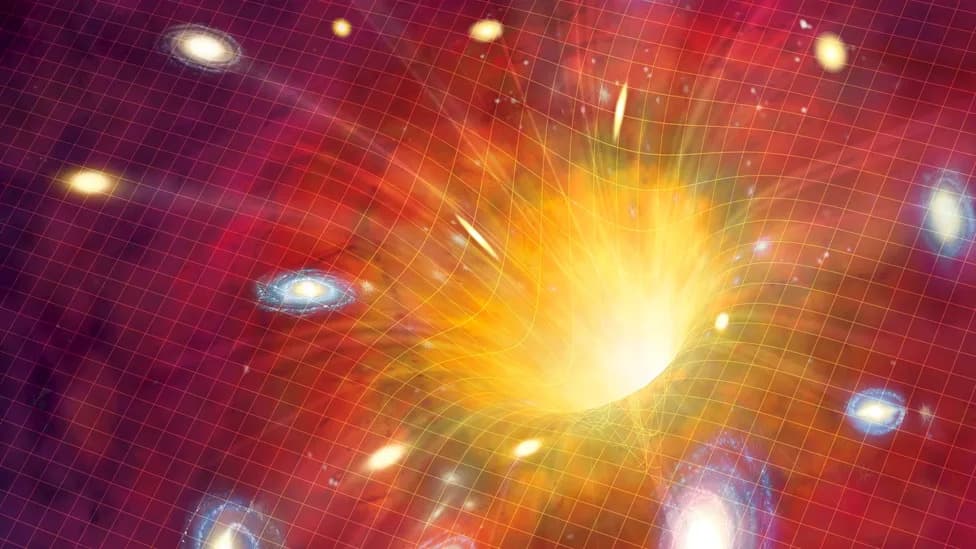
Part of the disagreement comes from how the big bang is presented in popular culture.
An international 2025 survey of more than 1,600 self-identified physicists reveals widespread disagreement about some of cosmology’s biggest questions. The headline finding: roughly two-thirds of respondents said the Big Bang need not represent the absolute beginning of time. Researchers say the split highlights an active field where data and theory are still evolving.
Survey And Method
The "Big Mysteries in Physics" questionnaire was issued as an open call and attracted responses from a broad range of participants; the authors then isolated answers from those who self-identified as physicists for focused analysis. The team reviewed responses from over 1,600 physicists and reported their main findings in Physics Magazine.
Big Bang And The Beginning Of Time
About 68% of physicists in the poll said they do not believe the Big Bang necessarily marks the beginning of time. Part of this difference comes from how the Big Bang is often portrayed in popular media: the standard Lambda Cold Dark Matter model describes how the universe evolved from a prior state that was extremely hot and dense, but it does not by itself prove an absolute temporal origin.
Inflation And The Early Universe
Only a slight majority—about 51%—agreed that the universe experienced the rapid exponential expansion known as inflation in the very earliest moments after the Big Bang. That slim majority underscores continuing debate about the precise dynamics of the universe's first fractions of a second.
Dark Matter: Particles, Modified Gravity, Or Both?
Responses on dark matter were fragmented. Approximately 17% of respondents favored an explanation in terms of one or more as-yet-undiscovered particles. Roughly 12% thought the phenomena could be accounted for by modifying gravity, and about 21% suggested the correct explanation might involve a combination of particle candidates, modified gravity, or other proposals. The spread of answers reflects the limited direct evidence about dark matter's true nature.
Quantum Gravity Remains Unsettled
On routes to quantum gravity, nearly 19% of physicists named string theory as the most promising framework, while about 12% favored loop quantum gravity. Another ~18% expressed skepticism that gravity can be integrated with quantum mechanics at all, illustrating how deeply foundational questions remain open.
"Consensus, or its absence, tells us where the evidence feels settled and where researchers still see room for radically different ideas," said Niayesh Afshordi, a University of Waterloo physicist and co-author of the study. "In this sense, lack of consensus can be a clue. It marks places where better data, sharper theory, or new connections between subfields may be needed."
Afshordi emphasized that scientific truth is not decided by vote: the survey maps where experts disagree and where further observations and theoretical progress are most needed. Far from signaling failure, the diversity of views signals an active frontier in fundamental physics.
Help us improve.