Thismia daemona, dubbed the “devil flower,” was discovered in May 2025 on the shaded forest floor of Thong Pha Phum National Park, western Thailand. The plant lacks chlorophyll and survives by stealing nutrients from soil fungi (mycoheterotrophy), emerging briefly to bloom. Fewer than 50 individuals were found in an area under 0.05 km², prompting a provisional assessment of Critically Endangered. The discovery extends the known range of the Geomitra subgroup and was confirmed by morphology and DNA analyses.
Scientists Describe a Real-Life “Devil Flower” in Thailand That Survives Without Sunlight
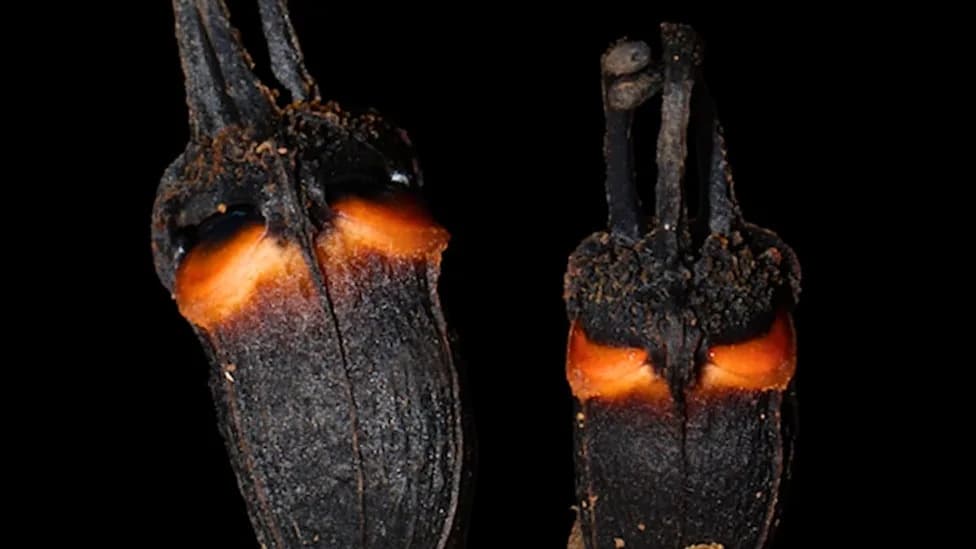
Thismia daemona. (N Taosiri/Seelanan et al., PhytoKeys, 2026)
A tiny, almost black plant discovered on the shaded floor of a Thai forest has been formally described as Thismia daemona, nicknamed the “devil flower.” Remarkable for its eerie appearance, the species also defies a fundamental plant rule: it survives without sunlight.
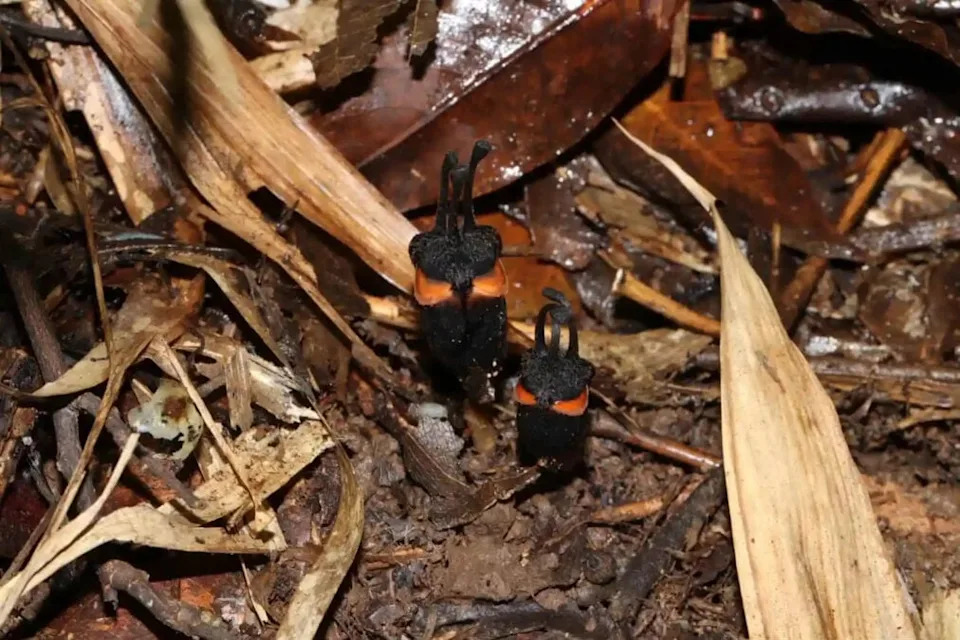
TwoT. daemonaplants in Thong Pha Phum National Park, western Thailand. (Neeranuch Taosiri/CC BY 4.0)
Discovery and Habitat
Researchers found the plants in May 2025 in Thong Pha Phum National Park in western Thailand at roughly 930–970 meters (about 3,000 feet) elevation. The specimens grew among fallen leaves and small bamboo in a seasonal mountain forest — a surprising location because most Thismia species are typically associated with lowland, constantly humid rainforests.
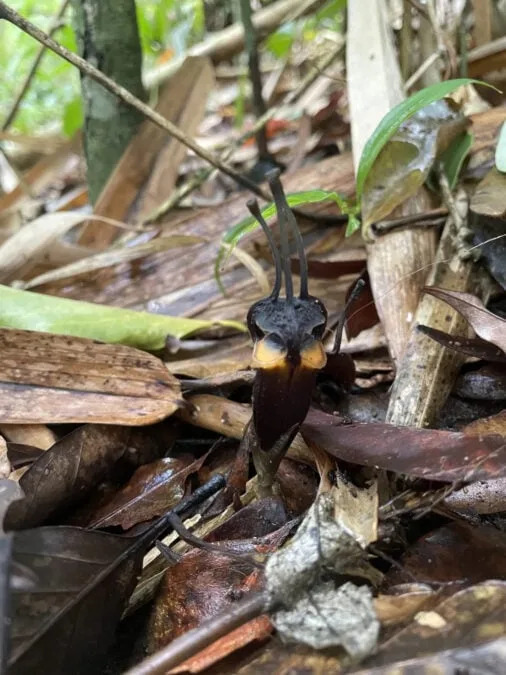
AT. daemonaflower growing among leaf litter in Thong Pha Phum National Park. (Tosak Seelanan/CC BY 4.0)
How It Lives Without Sunlight
Unlike most plants, T. daemona contains no chlorophyll and cannot photosynthesize. Instead, it is mycoheterotrophic: the plant obtains carbon and other nutrients by tapping into an underground fungal network. For most of its life it remains hidden beneath leaf litter and emerges only briefly to flower and set seed.
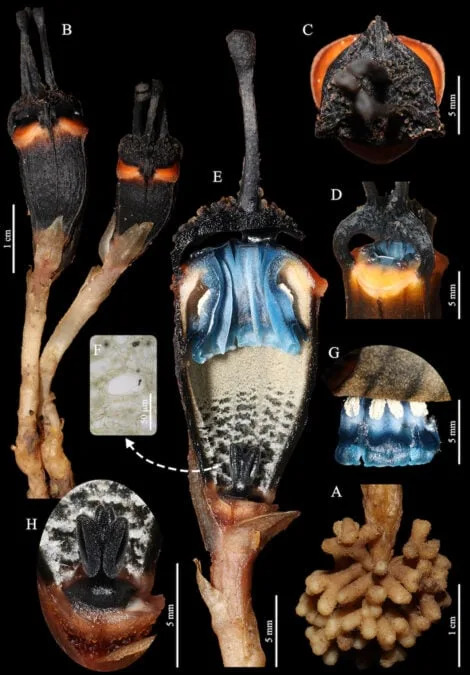
The roots, flower, and internal structures ofT. daemona. (N Taosiri, C Chuchuea/Seelanan et al.,PhytoKeys, 2026)
Appearance and Size
Including its flower, T. daemona reaches about 12.5 cm (5 in) tall. It has pale-brown, hairy roots resembling coral fragments and a near-black flower with fleshy reddish-orange sections, translucent blue stamens, and three slender horn-like projections above a dome-shaped structure—features that inspired the species name.

Subscribe to ScienceAlert's free fact-checked newsletter
Scientific Confirmation
Botanists from Chulalongkorn University and Prince of Songkla University described the species in a paper published in PhytoKeys. The team confirmed the discovery using microscopy, high-resolution photography and DNA analysis of five nuclear and mitochondrial regions. Their results indicate the closest known relative is Thismia betung-kerihunensis from Borneo, and place the new species in the subgroup Geomitra, extending that group's known range northward into Thailand.
Conservation Concerns
Only a single population is known, with fewer than 50 individual plants found in an area smaller than 0.05 km² (0.02 sq mi). Although the site lies within a protected national park, regular visitation increases the risk of trampling or disturbance to the fragile leaf-litter and fungal networks the species depends on. The researchers provisionally assessed T. daemona as Critically Endangered under IUCN criteria and urge local conservation, public awareness and community-led ecotourism to protect the microhabitat.
Why This Discovery Matters
Thismia daemona highlights how even well-visited protected areas can conceal previously unknown species. The find expands our understanding of Thismia distribution, fungal-plant relationships, and the diversity of life strategies plants use to survive in low-light environments.
Reference: The species description was published in PhytoKeys. Photos and specimen data were provided by the describing authors.
Help us improve.