
'Star Trek' grew from a 1966 TV show into a cultural force that inspired generations of space professionals and forged an unusual relationship with NASA. Gene Roddenberry's IDIC philosophy — "Infinite Diversity in Infinite Combinations" — helped normalize multicultural crews on screen and resonated with real-world changes at NASA, from Nichelle Nichols' recruitment work to the selection of Black and female astronaut candidates in 1978. While milestones such as the 2025 astronaut class and Artemis II reflect that legacy, policy rollbacks of DEIA programs have complicated institutional support for inclusivity.
How 'Star Trek' Helped Shape NASA's Culture — And Champion Diversity in Space
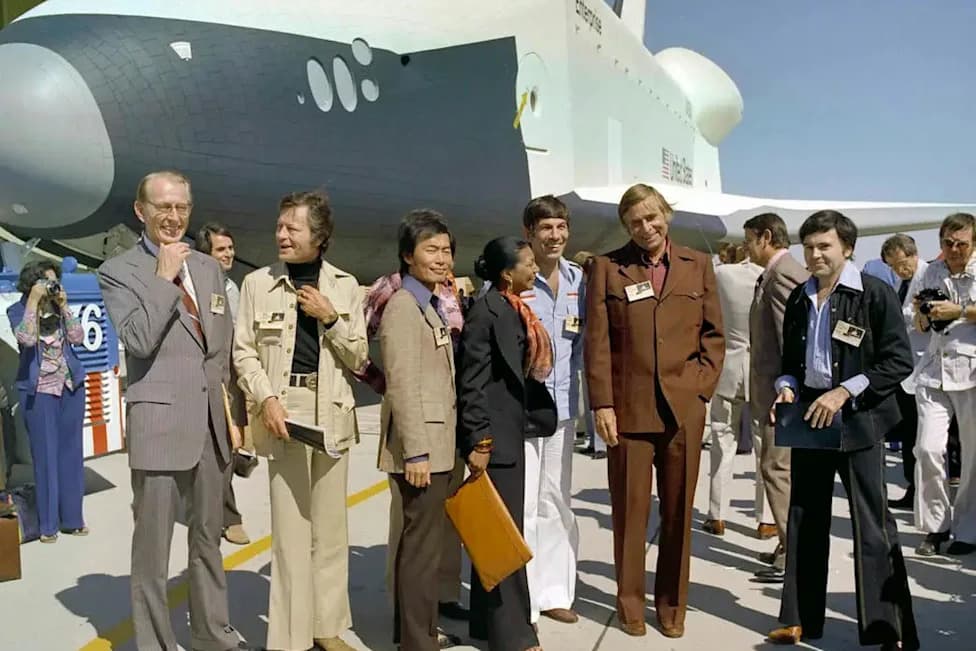
Gene Roddenberry, second from right, and Star Trek cast members visit the Space Shuttle Enterprise in 1976 with NASA Administrator James C. Fletcher, left.NASA
'Star Trek' began as a television series in 1966 and quickly grew into a cultural phenomenon whose influence reached far beyond entertainment. Over six decades, its optimistic vision of the future and commitment to inclusion have both reflected and shaped real-world space exploration.
Roddenberry, IDIC, and a Multicultural Vision
Gene Roddenberry coined the Vulcan motto IDIC — "Infinite Diversity in Infinite Combinations" — to express a belief that a healthy society embraces many different kinds of people working together. That philosophy informed casting decisions on the original Star Trek, which featured Americans alongside a Russian and gave positions of authority to Black, Japanese and female characters. Those choices modeled an inclusive future for viewers and for people already working in aerospace.
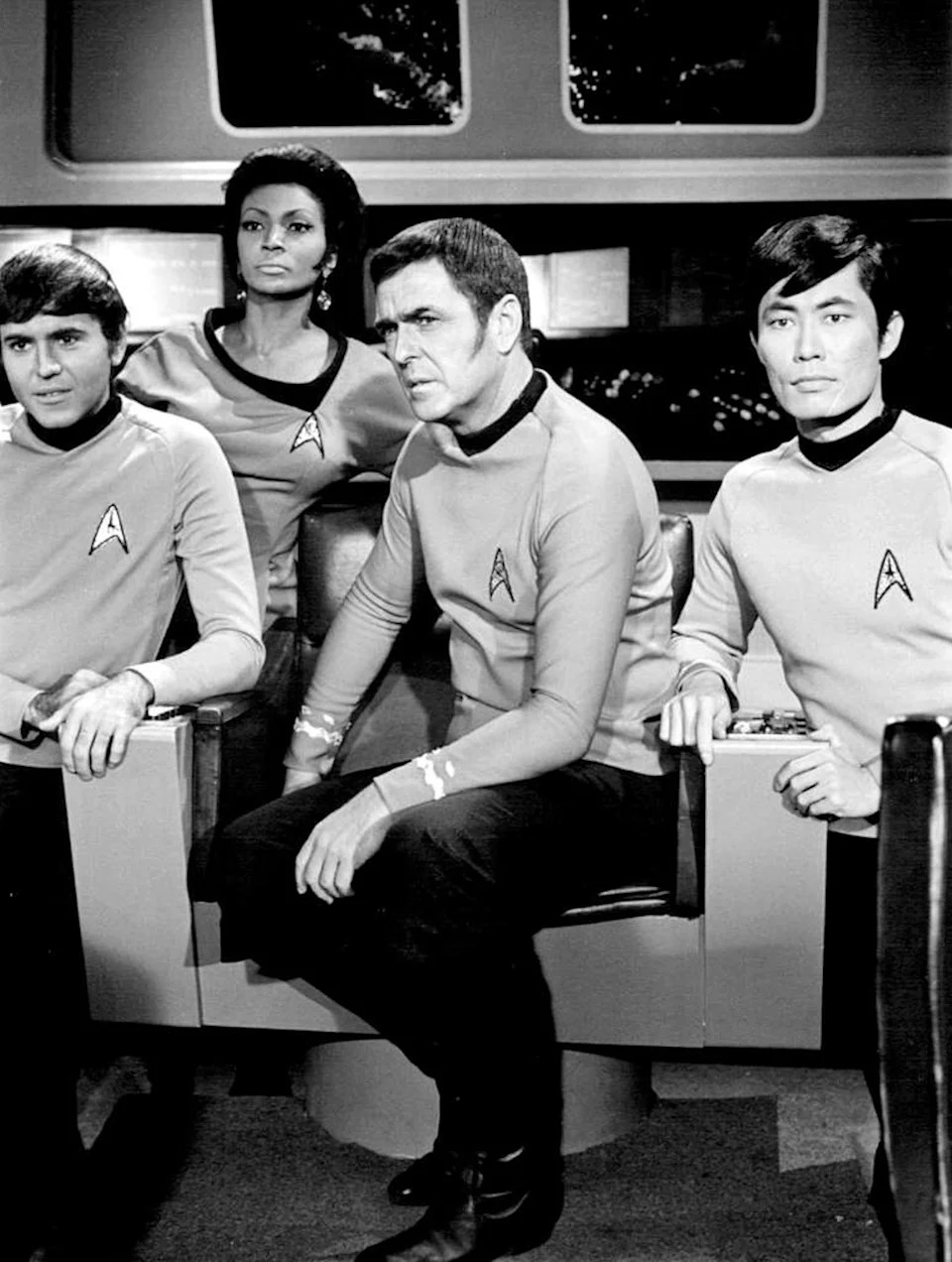
The cast of 'Star Trek: The Original Series' included a diverse crew of characters.Walters Art Museum
Early Collaboration With NASA
From the beginning, Roddenberry sought scientific grounding for his series. NASA provided planetary photographs, technical advice, stock footage and access to facilities that helped the show portray a plausible, hopeful future of spaceflight. That relationship lent credibility to the series and helped popularize the agency's mission.
Notable moment: In 1967 Leonard Nimoy — who played Mr. Spock — was a special guest at the National Space Club's Goddard Memorial Dinner, where NASA engineers, military members and officials gathered and sought him out after the event.
From Screen Inspiration to Real-World Recruitment
The franchise inspired many who later pursued careers in science and engineering. In 1977 actress Nichelle Nichols (Uhura) was hired to recruit for NASA as the agency expanded its astronaut corps to include scientists and mission specialists — opening spaceflight opportunities beyond pilots. The following year, in 1978, NASA selected its first Black and its first female astronaut candidates, a milestone that aligned with the inclusive ideal Roddenberry promoted.
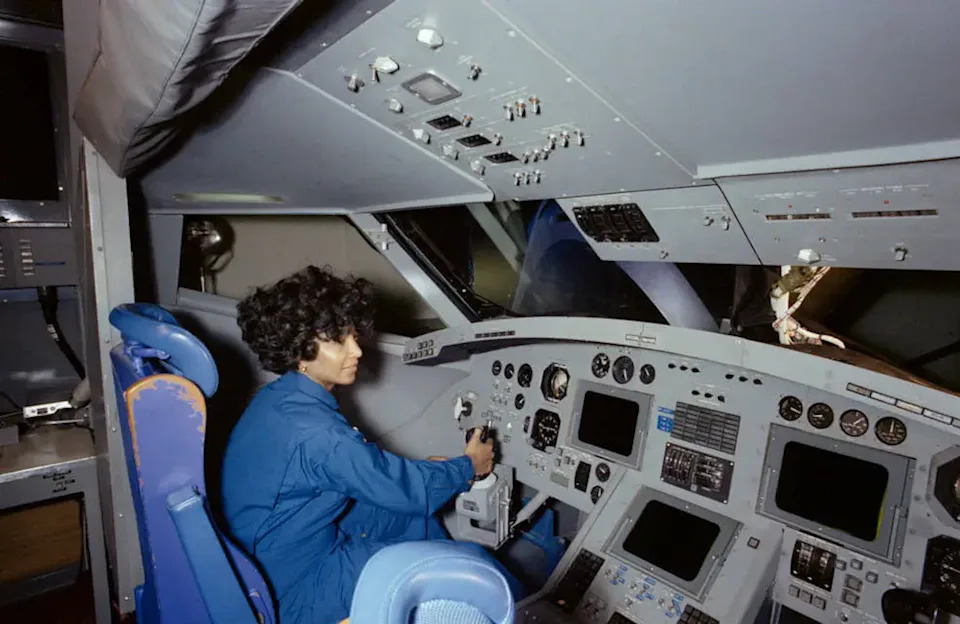
Nichelle Nichols sits in the space shuttle simulator at the Johnson Space Center in March 1977.NASA
Fan Influence and Institutional Echoes
Fans played a direct role in the relationship between the franchise and NASA. Enthusiasts urged the agency to name its first space shuttle Enterprise, and the agency acceded. Activists such as Bjo Trimble — credited with helping to save the original series from cancellation — remain iconic within fandom and continued to advocate for diversity and representation.
Modern Milestones and Setbacks
Elements of the Star Trek future have become reality: the 2025 astronaut class included more women than men for the first time, and Artemis II's crew featured the first woman, the first Black astronaut and the first Canadian on a lunar mission, echoing the franchise's vision of diverse crews. At the same time, policy changes during the Trump administration curtailed some of NASA's diversity, equity, inclusion and accessibility (DEIA) programs, complicating institutional support for that vision.
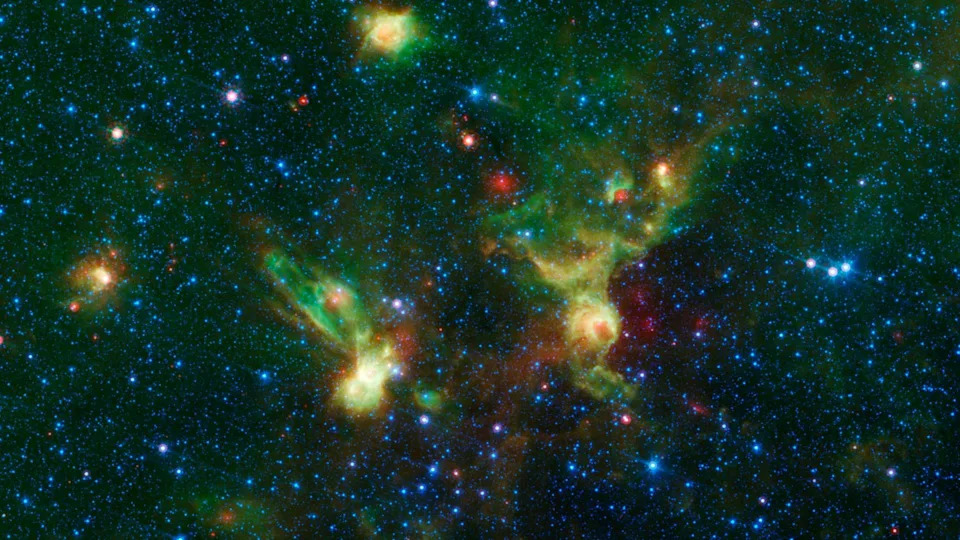
NASA's Spitzer Space Telescope captured a region of the galaxy that looks a little like the USS Enterprise, which NASA highlighted in a news release in 2016.NASA/JPL-Caltech
Legacy and Continuing Aspirations
As this franchise marks its 60th anniversary, much of its hopeful, inclusive imagination has become part of everyday spaceflight — yet other elements remain aspirational. In interviews for my book The Ultraview Effect, roughly one-quarter of space professionals named Star Trek as an influence on their careers, demonstrating the continuing power of fiction to shape scientific ambition.
Author note: This piece draws on research by Deana L. Weibel, Grand Valley State University. The author's husband, Glen E. Swanson, wrote Inspired Enterprise: How NASA, the Smithsonian, and the Aerospace Community Helped Launch Star Trek, which was used as a source.
Help us improve.





















