The Gwangju Biennale quietly renamed Taiwan’s exhibition from the "Taiwan Pavilion" to the "NTMoFA Pavilion," prompting accusations from participating artists and Taiwan’s Ministry of Culture that the change occurred without consent. The Biennale Foundation called the dispute an "administrative difference" and denied censorship. The incident recalls past cases where institutions and companies altered Taiwan references under pressure from Beijing and comes amid a shifting European stance that has recently been more supportive of Taiwan.
Gwangju Biennale Renames Taiwan Delegation 'NTMoFA Pavilion' — Artists Cry Censorship
Why is the Gwangju Biennale refusing to call Taiwan’s pavilion the 'Taiwan Pavilion'?
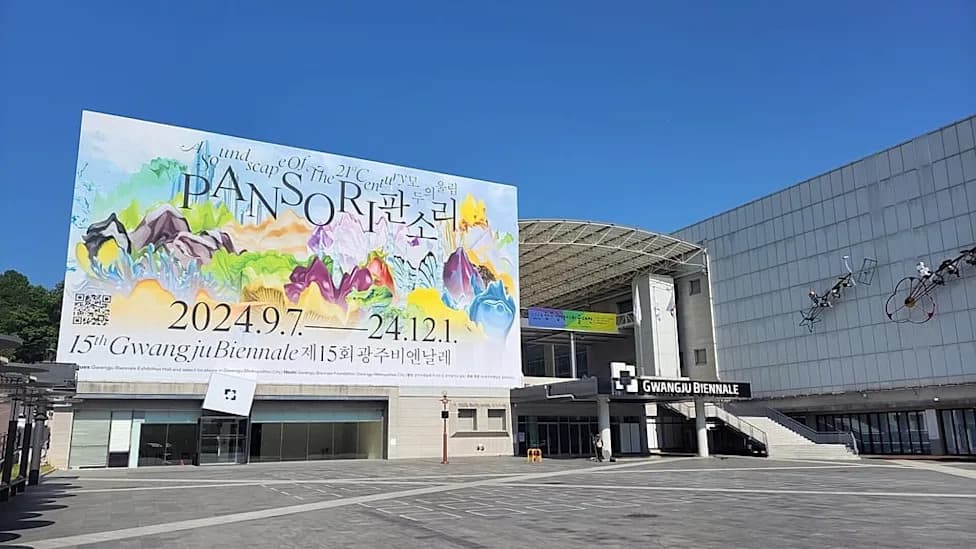
The Gwangju Biennale has sparked controversy after relabeling Taiwan’s exhibition from the "Taiwan Pavilion" to the "NTMoFA Pavilion," using the name of its organiser, the National Taiwan Museum of Fine Arts, rather than the country designation applied to other participants.
Artists and Ministry Say Name Was Changed Without Consent
Ten participating artists and curator Chen Hsiang-Wen said in an Instagram statement on 15 August that the project had been accepted as the "Taiwan Pavilion" in April and that the Biennale foundation later changed the label without their consent. They said the NTMoFA repeatedly objected and tried to negotiate with the organizers.
"We condemn a decision made in a political climate where diplomatic pressure and economic resources are used to censor artists," the statement said.
Official Responses
Taiwan's Ministry of Culture backed the artists, saying the proposal was approved as the "Taiwan Pavilion" on 2 April and that an agreement signed on 23 April referred to it by that name. According to the ministry, the pavilion continued to be identified as such until June, when the foundation began using "NTMoFA Pavilion."
The Gwangju Biennale Foundation rejected claims of political censorship. In a statement on 19 August it described the dispute as an "administrative difference," insisting the decision does not affect exhibition content or curatorial freedom.
Historical Context
The episode echoes earlier cases in which organizations and companies adjusted references to Taiwan under pressure from Beijing. In 2002 the São Paulo Biennial removed the word "Taiwan" after threats from China; Taiwanese artist Chang Chien-chi shut his installation in protest while other artists spelled out "TAIWAN" from donated letters. Taiwan lost its official national pavilion at the Venice Biennale in 2001 and has since participated via collateral events organized by the Taipei Fine Arts Museum.
Commercial responses have followed similar patterns. In 2018, Chinese authorities urged airlines to stop listing Taiwan as a country; several carriers revised their wording. That year the Marriott group apologised after a customer survey listed Taiwan, Tibet, Hong Kong and Macau as separate countries, and its Chinese website briefly suspended operations before adopting the label "Taiwan, China" in Chinese-language listings.
Shifting European Stance
Recent developments in Europe, however, suggest greater resistance to Beijing's demands. Last year the EU rejected Beijing’s interpretation of UN Resolution 2758 as recognition of Taiwan as part of China. In July, the European Parliament’s recommendation on East Asia mentioned Taiwan 44 times and described it as a "reliable key democratic partner" for the EU.
The dispute at Gwangju highlights the persistent tension at the intersection of art and geopolitics: whether cultural events should reflect state sensitivities or uphold the autonomy of participating artists and institutions. The Biennale’s framing decision may set a precedent for how other international cultural platforms navigate similar pressures.
Help us improve.