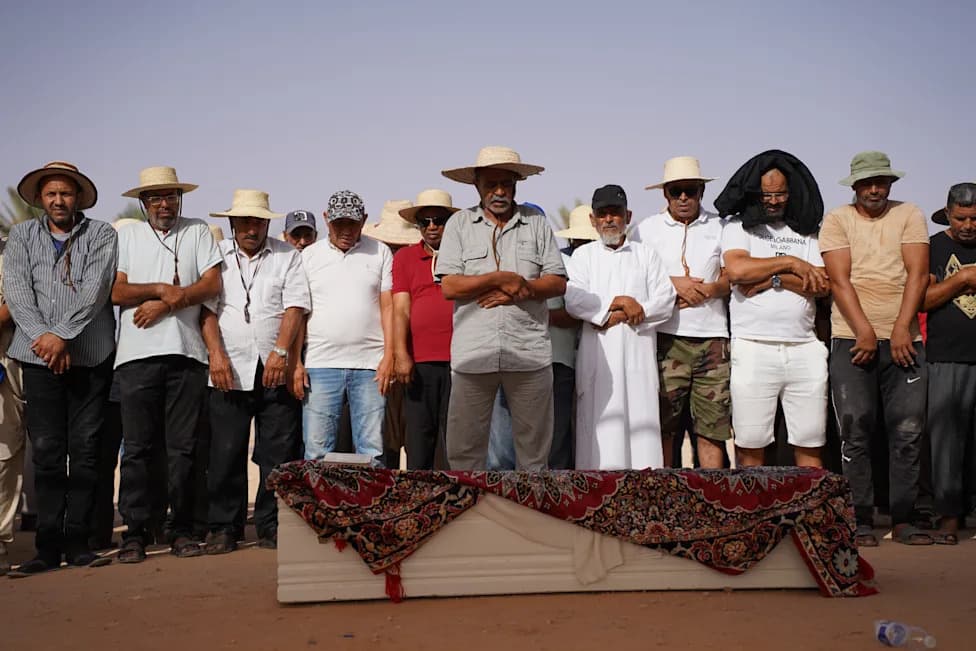
The Pima County medical examiner reported 19 migrant remains recovered along the Arizona–Mexico border last month — the highest monthly total since 2024 — bringing this year’s tally to 73, 14 more than at the same point last year. Advocates and scholars say restrictive asylum policies, decades of deterrence-focused enforcement and climate-driven heat are pushing migrants into more dangerous routes. Humane Borders and academics warn the true death toll is likely much higher because remains often go undiscovered in the desert.
Spike in Desert Deaths: 19 Migrant Remains Recovered Along Arizona–Mexico Border Last Month
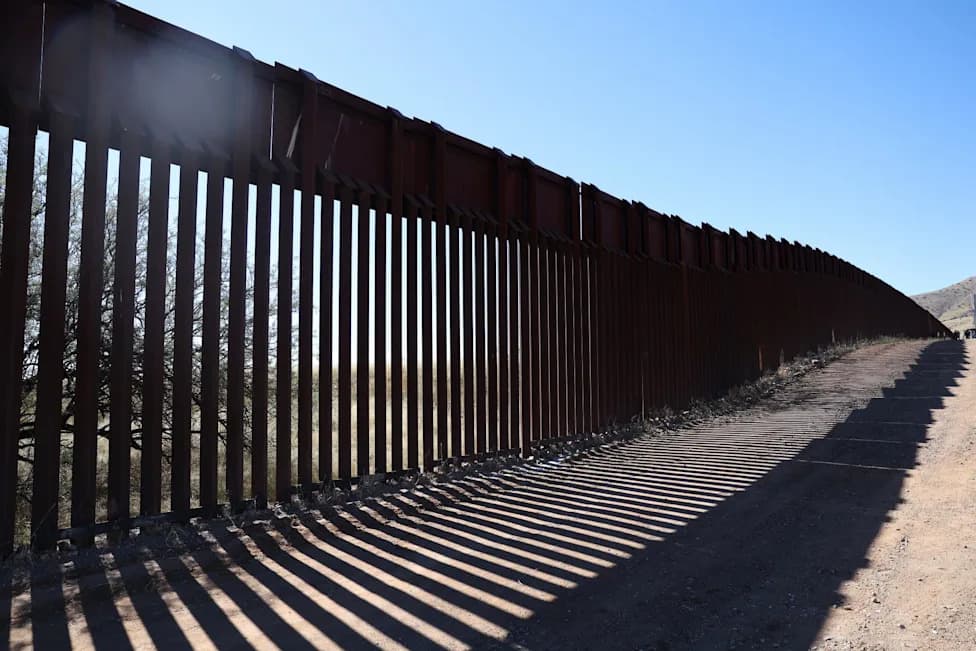
A section of the southern border wall in Sierra Vista, Arizona.Photograph: Kevin Dietsch/Getty Images
Newly released figures from the Pima County medical examiner show that the remains of 19 migrants, including children, were recovered along the Arizona–Mexico border last month. That monthly total is the highest recorded in the area since 2024 and raises the number of remains found this year to 73 — 14 more than at the same point last year.
Human Cost and Causes
Humanitarian groups and researchers say the increase reflects a mix of factors: restrictive U.S. asylum policies, long-standing deterrence strategies that push people into remote terrain, and climate-driven extremes that make desert crossings more lethal. The nonprofit Humane Borders, which helps rescue migrants suffering dehydration and exposure and tracks fatalities with county partners, reports at least 4,505 migrant deaths in the Arizona desert over the past 25 years — an average of roughly one death every other day.
The most frequent causes of death are dehydration and heat exposure. Migrants also die from hypothermia during cold nights or from blunt-force trauma sustained when collapsing and striking rocks or rough terrain.
Policy Context and Routes
Experts link the deadly journeys to border enforcement tactics dating back decades. Octavio Torres, executive director of Humane Borders, noted that policies aimed at deterring crossings at traditional entry points have pushed people into more hazardous routes: "Out of desperation, people think, 'How else can I get in?' And that's what has driven people into the Arizona desert for the last 32 years."
Critics say recent U.S. measures — including restrictions on asylum access, limitations on legal ports of entry, and changes to tools like the CBP One app — have contributed to a pattern in which fewer encounters are recorded at official crossings while migration continues through more dangerous corridors.
Undercounting and Discovery Challenges
Brad Jones, a Humane Borders board member and professor at the Global Migration Center, University of California, Davis, said the latest figures include a high number of "contemporaneous" deaths, meaning these are recent fatalities rather than older remains newly discovered. He emphasized how discoveries are often accidental — made by hikers or officers — and how the desert environment, scavengers and erosion can quickly obscure or destroy evidence.
"For every migrant's remains that you find, how many do you not find?" Jones asked, noting research estimates that the true number of migrant deaths could be up to four times the official total.
Why People Keep Coming
Amelia Frank-Vitale, an anthropology professor at Princeton, studies why people risk deadly paths such as the desert or the Darién Gap. Her work, including the book Leave If You Can: Migration and Violence in Bordered Worlds, shows many migrants feel they have no viable alternatives — even amid intense enforcement and public attention to immigration policies. Frank-Vitale argues the United States has not fully confronted how its foreign and domestic policies have contributed to instability that drives migration.
Advocates warn that without policy changes that expand safe, legal pathways and address root causes abroad, the desert will continue to be a lethal route for people seeking safety or better opportunity.
Key figures: 19 remains recovered last month; 73 remains found so far this year (14 more than the same period last year); at least 4,505 migrant deaths recorded in the Arizona desert over the last 25 years.
Help us improve.