
NASA and Katalyst Space Technologies have called off a planned rescue of the Swift Observatory after control and pointing problems afflicted Katalyst’s Link spacecraft. NASA paid $30 million for the attempt to raise the 2004-launched telescope into a safer orbit, but Link entered a tumble after its early-July launch and could not complete a rendezvous. Swift, currently orbiting about 216 miles (347 km) above Earth and descending roughly 5 miles (8 km) per month, is expected to drop to about 186 miles (299 km) by October and reenter later this year.
NASA’s Swift Telescope Will Plunge Back to Earth After Rescue Mission Is Abandoned

NASA's Swift telescope will plunge toward Earth after rescue mission called off
NASA and startup Katalyst Space Technologies announced that a planned rescue of the aging Swift Observatory will not proceed, leaving the gamma-ray telescope on a trajectory for atmospheric reentry later this year.
What Happened
More than a month after Katalyst launched its Link spacecraft to rendezvous with Swift, the company said Link will not attempt to capture and raise the telescope because the spacecraft developed unresolved control and pointing problems in orbit. NASA had contracted Katalyst and provided $30 million for the operation to boost Swift into a safer, longer-lasting orbit.
Why Swift Is Descending
Launched in 2004, Swift was designed for a two-year mission but has spent more than two decades tracking gamma-ray bursts and other cosmic explosions. The observatory lacks thrusters sufficient to counteract atmospheric drag. Periods of intense solar activity heat and expand the upper atmosphere, increasing drag on low-Earth orbit satellites and accelerating their orbital decay.
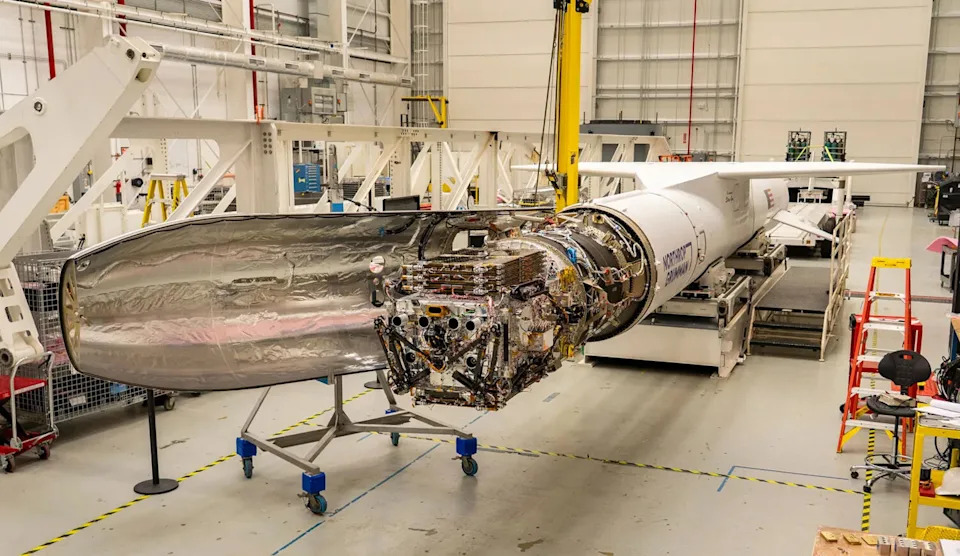
The LINK spacecraft, its solar panels folded for launch, is seen here after attachment to its Northrop Grumman Pegasus XL rocket. / Credit: NASA
Swift’s science instruments were powered down earlier this year to conserve remaining altitude. As of last week the satellite was orbiting about 216 miles (approximately 347 kilometers) above Earth. NASA predicts Swift’s orbit will decay to roughly 186 miles (about 299 kilometers) by October; it is currently losing altitude at roughly 5 miles (8 kilometers) per month. That descent rate will increase as the spacecraft enters denser layers of the upper atmosphere, ultimately causing a destructive reentry.
“This is not the outcome we were working toward, but it does not change why this mission was worth attempting,” NASA said in a statement.
Link Mission And Lessons Learned
Weeks after Link’s early-July liftoff, the rescue vehicle entered an uncontrolled spin. Flight controllers were able to reduce the tumble, but persistent issues with pointing and positioning prevented a safe capture. Katalyst said it will continue operating Link in proximity to Swift to demonstrate technologies and procedures that could support future on-orbit servicing and rescue missions.
“We took on this high-risk, high-reward challenge and are proud of the milestones we reached along the way,” Katalyst CEO Ghonhee Lee said. “We have already learned a tremendous amount.”
Broader Implications
The outcome also affects plans to assist other aging space assets. NASA had considered using a similar boost technique for the Hubble Space Telescope next if the Swift operation had succeeded. The 36-year-old Hubble has been losing altitude after recent solar activity and could reenter in the 2030s if no intervention occurs; officials have not yet indicated whether Hubble’s prospects have changed.
Swift’s long service has made it uniquely valuable for rapidly locating gamma-ray bursts and other transient phenomena. Its likely loss later this year will be felt by astronomers who rely on its fast alerts and follow-up capabilities.
Help us improve.





















