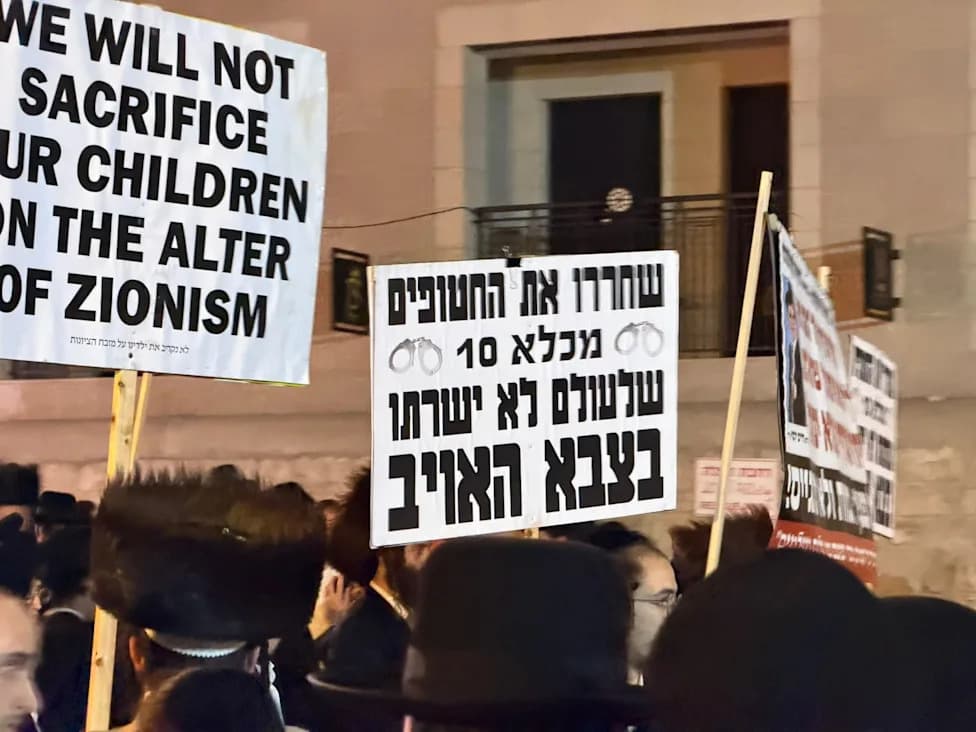
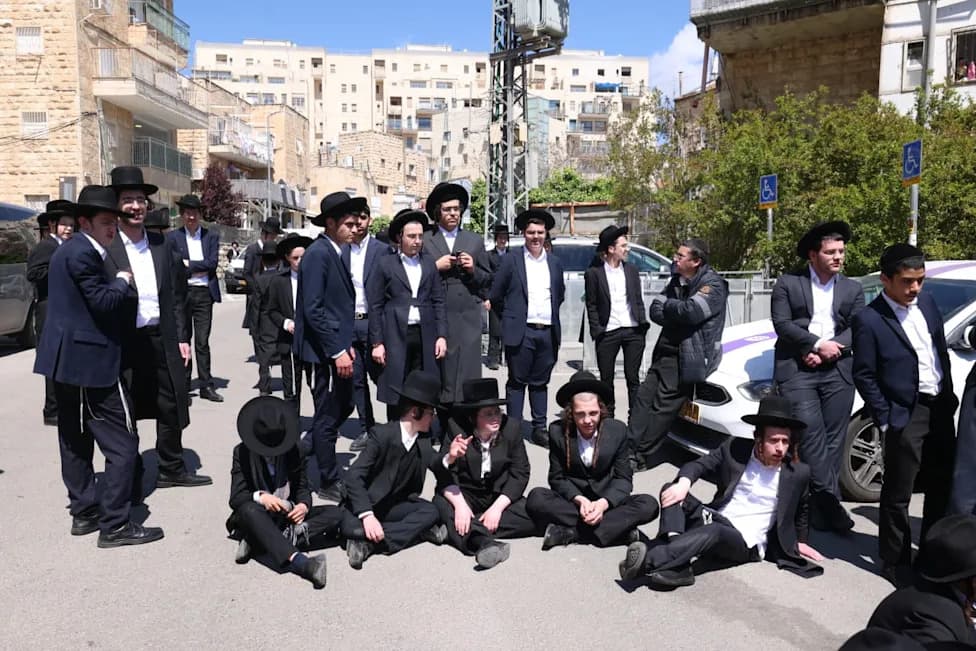
The ultra-Orthodox (Haredim) are an increasingly visible and politically influential group in Israel whose commitment to full-time Torah study underpins broad draft exemptions. As the Haredi population grows, proposed changes to conscription rules have sparked mass protests and intensified tensions amid nearly three years of war and looming elections. Critics argue exemptions are unsustainable given demographic trends and heavy military losses; supporters contend study is a sacred communal duty. The dispute now tests Israel's balance between religious freedom, civic obligation and national security.
Israel's Draft Debate: Growing Haredi Influence Tests National Unity
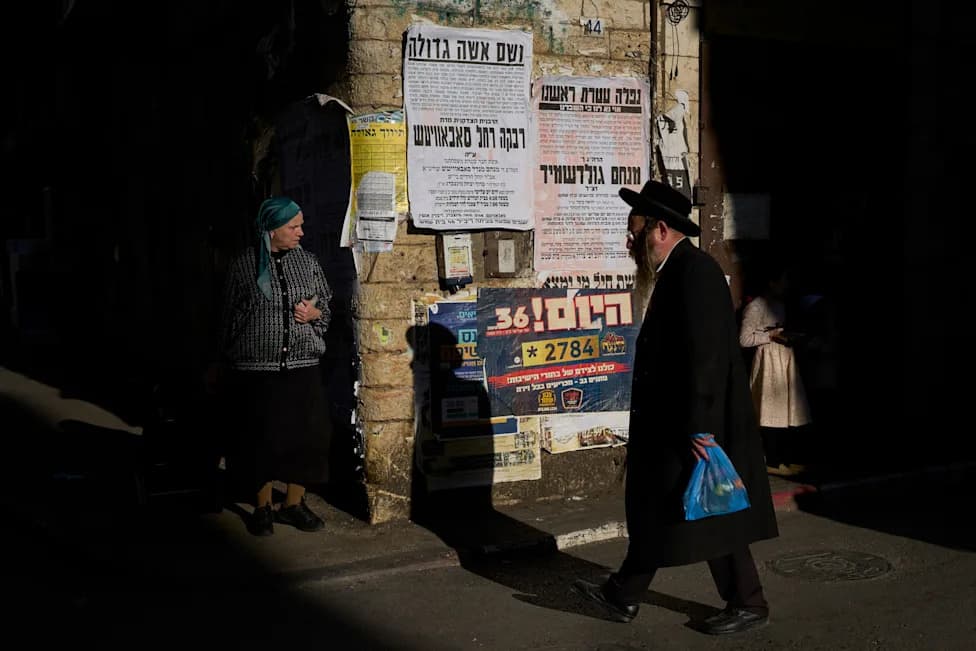
Ultra-Orthodox Jews walk past pashkevilim, posters used to publicize news and important messages in the ultra-Orthodox community, in the Mea Shearim neighborhood of Jerusalem, Wednesday, July 8, 2026. (AP Photo/Ohad Zwigenberg)(AP Photo/Ohad Zwigenberg)
Ultra-Orthodox Jewish communities — known in Hebrew as Haredim — have become an increasingly visible and influential presence in Israeli life. Their distinctive dress, large families and deep commitment to full-time Torah study shape daily life in many neighborhoods and have moved questions of faith and civic duty to the center of national debate.
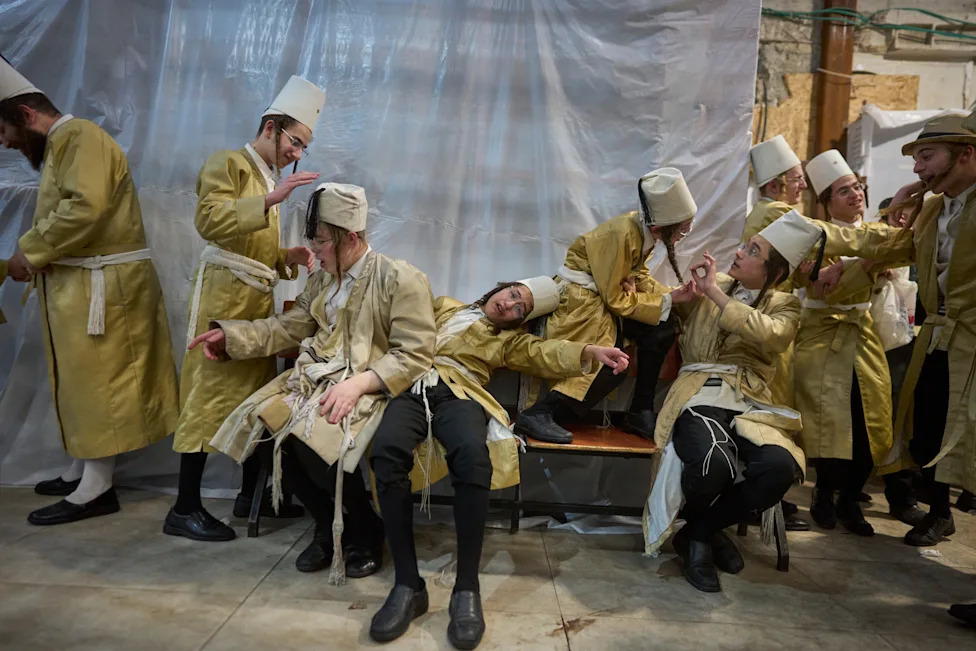
Ultra-Orthodox Jewish men celebrate the festival of Purim in Jerusalem, Wednesday, March 4, 2026. (AP Photo/Ohad Zwigenberg)(AP Photo/Ohad Zwigenberg)
Why the Draft Is Contentious
At the heart of the dispute is a long-standing exemption that allows many ultra-Orthodox men to defer military service in order to pursue full-time religious study. Originally intended for a small number of scholars after the Holocaust, that exemption expanded over decades. Critics say the policy is now unsustainable as the Haredi population grows and political influence increases.
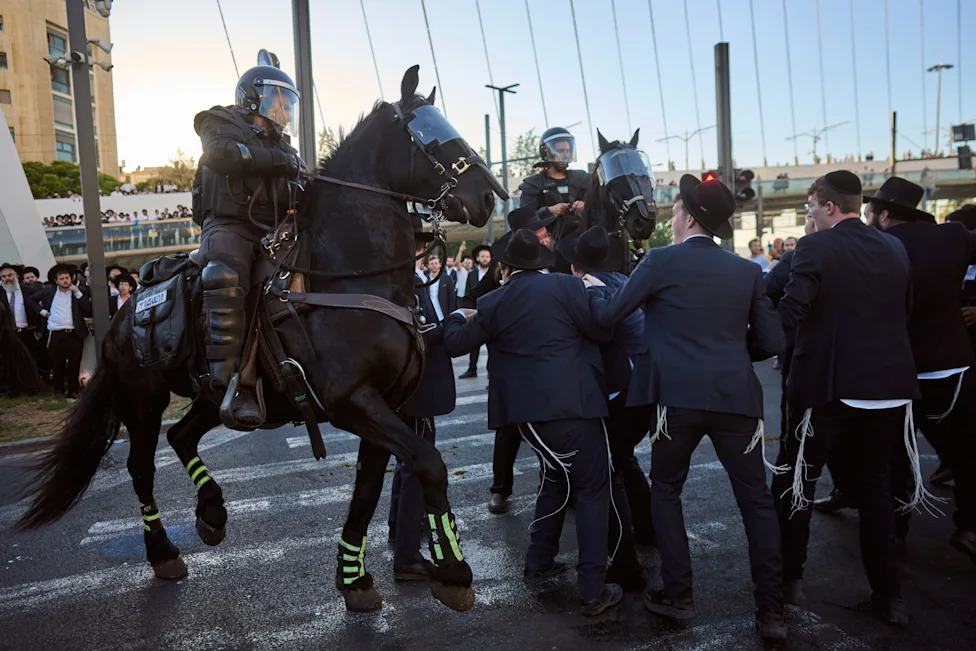
Israeli mounted police disperse Ultra-Orthodox Jews blocking a road during a protest against the army draft in Jerusalem, Monday, June 1, 2026. (AP Photo/Ohad Zwigenberg)(AP Photo/Ohad Zwigenberg)
Politics, Protests and Wartime Pressure
Mass demonstrations have erupted over proposed changes to these exemptions as Israel approaches nearly three years of war on multiple fronts and prepares for national elections in which Haredi parties could play kingmaker. The issue is no longer only religious: it touches on the economy, taxes, welfare and who bears the burden of national defense.
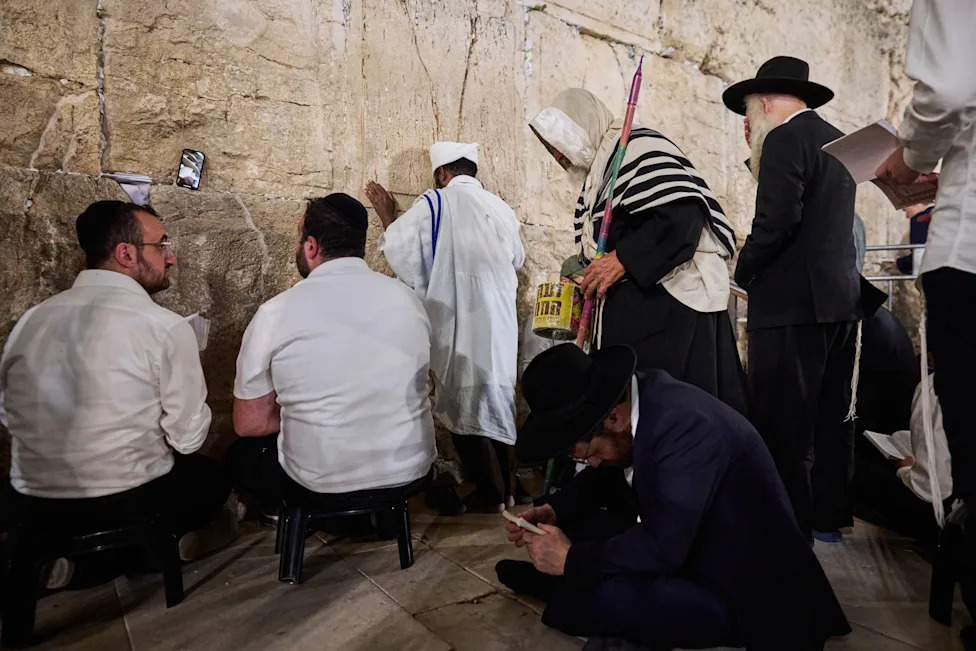
Ultra-orthodox Jewish men pray during the mourning ritual of Tisha B'Av at the Western Wall, Judaism's holiest site, in Jerusalem's Old City, Wednesday, July 22, 2026. (AP Photo/Ohad Zwigenberg)(AP Photo/Ohad Zwigenberg)
"The question is, who's paying the price for your choice of life?" said Shlomit Ravitsky Tur-Paz of the Israel Democracy Institute, summarizing a widespread public concern.
Voices From the Community
For many Haredim, Torah study is a sacred obligation that must come first. "Everything comes from the one above," said Etl Lovy, a 22-year-old yeshiva student describing his daily routine of prayer and Talmud study. Rabbi Beryl Gershenfeld and others emphasize the profound spiritual purpose of such study.
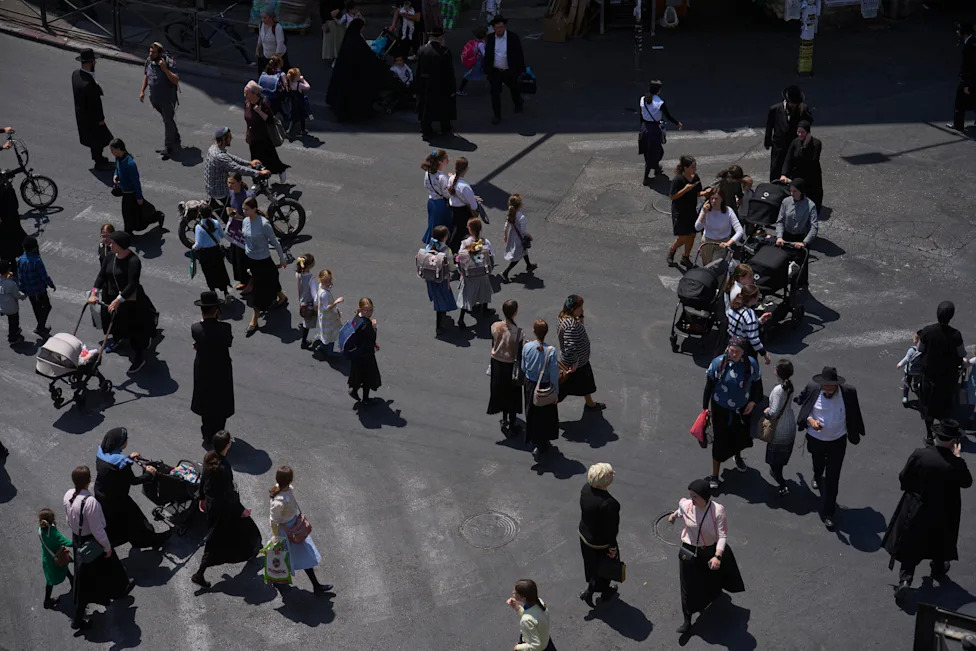
Ultra-Orthodox Jews cross a street in the Mea Shearim neighborhood of Jerusalem, Tuesday, Aug. 18, 2026. (AP Photo/Ohad Zwigenberg)(AP Photo/Ohad Zwigenberg)
Yet individual choices vary. Judith Rosenblum, a mother of eight, worries secular culture threatens her community’s way of life — but she also expressed pride that three of her sons volunteered for military service after the Oct. 7, 2023, Hamas attacks.
Numbers, Stakes and National Security
Fewer than 10% of Haredi men of conscription age enlist, according to a parliamentary committee, and those who serve often join specially tailored units that accommodate religious practice. Analysts estimate Haredim could comprise about 25% of Israel’s population by 2050 and roughly 40% of the draft-eligible cohort, heightening concerns about future military and fiscal burdens.
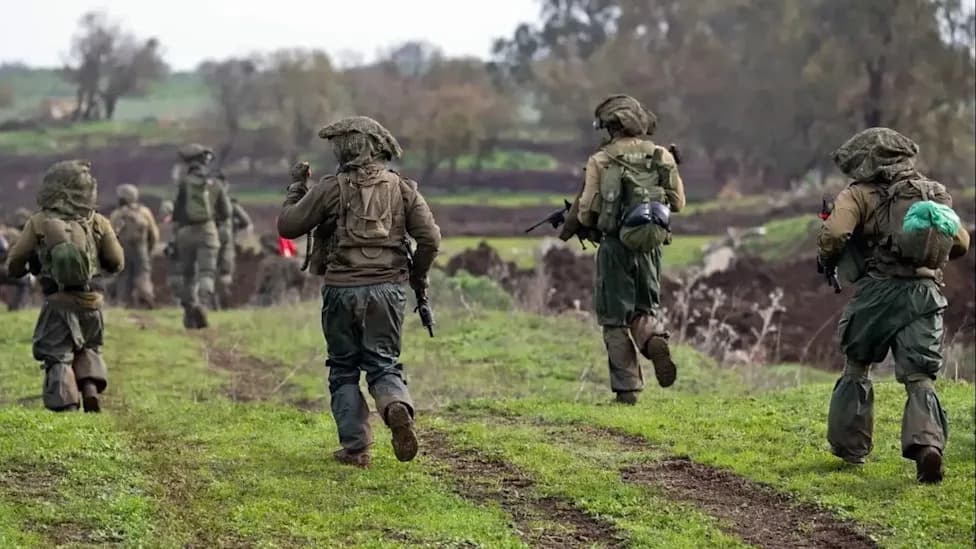
Since the Oct. 7, 2023 attacks, roughly 1,000 Israeli troops have been killed fighting Hamas in Gaza and Hezbollah in Lebanon — a loss that has intensified public scrutiny of unequal draft burdens. Israeli army chief of staff Lt. Gen. Eyal Zamir called legal protections that shield ultra-Orthodox draft evasion "inconceivable" while soldiers face "unprecedented sacrifice."
Seeking Balance
Ultra-Orthodox leaders insist exemptions protect the community’s religious fabric and avoid "diluting" piety during formative years. Opponents argue the exemption cannot remain unchanged amid prolonged security challenges and demographic shifts. The debate now lies at the intersection of religion, democracy and national survival, with potential policy changes likely to shape Israeli society for decades.
Associated Press religion coverage receives support through the AP's collaboration with The Conversation US, funded by Lilly Endowment Inc. The AP is solely responsible for this content.
Help us improve.