
Opening statements in the federal trial against Meta began in Oakland as parents and advocates gathered with a banner listing nearly 600 young people who died after social-media-related harms. Attorneys general from California, Colorado, Kentucky and New Jersey accuse Meta of designing Instagram and Facebook in ways that endangered minors and of concealing those risks; Meta denies the claims. Families hope internal documents revealed in court will clarify what the company knew and push for safer platform design.
Families Call Meta Trial a Turning Point for Online Child Safety
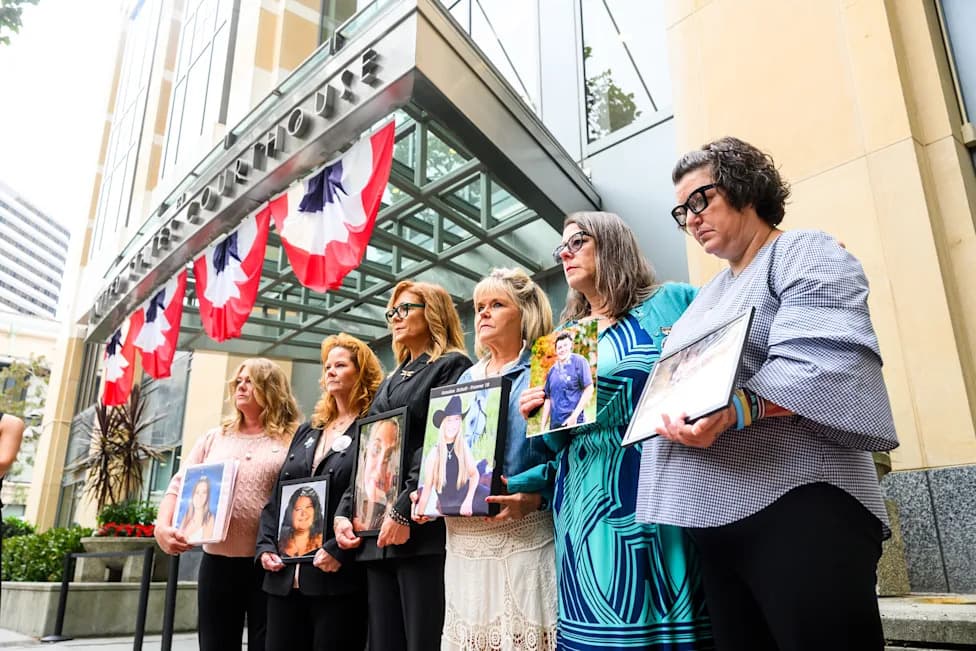
Parents hold pictures of their deceased children during a protest against social media platforms outside the Ronald V. Dellums Federal Building and U.S. Courthouse on Tuesday, Aug. 18, 2026, in Oakland, Calif. (AP Photo/Noah Berger)(AP Photo/Noah Berger)
Opening statements began Tuesday in a federal trial against Meta Platforms in Oakland, California, as parents and advocates gathered outside the courthouse holding a long banner listing nearly 600 children and young adults who died after experiencing social-media-related harms.
The names were written in black ink and included cases tied to suicide after cyberbullying or coercion, and other tragedies that families link to online platforms. Among the names were Giovanni, 11; Bubba, 13; and Englyn, 14. Parents described the banner as "just the tip of the iceberg" of harms they say stem from design choices by social platforms.
What the Lawsuit Alleges
Attorneys general from California, Colorado, Kentucky and New Jersey are seeking billions of dollars in damages, arguing that Meta made design decisions for Instagram and Facebook that put young people at risk and that the company knew about these dangers while misrepresenting platform safety to the public.
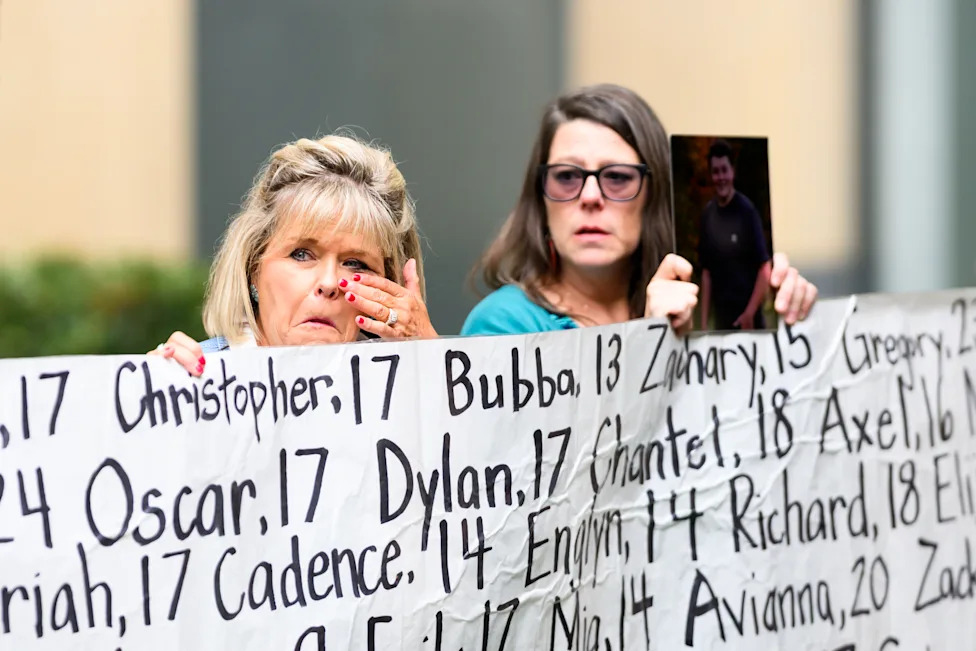
Lori Schott, whose daughter Annalee Schott died at age 18, holds a banner with names of young people who advocates say died as a result of social media outside the Ronald V. Dellums Federal Building and U.S. Courthouse on Tuesday, Aug. 18, 2026, in Oakland, Calif. (AP Photo/Noah Berger)(AP Photo/Noah Berger)
Lennon Torres, an advocate with the Heat Initiative, said: "Behind us, justice is going to be served. The courtroom doors are open, and it is time that the public see what the executives at Meta have known all along: that their products are designed to addict and to harm children."
Families Seek Evidence and Accountability
Many families said their presence at the trial reflects years of advocacy, testimony at congressional hearings and earlier litigation. They hope internal Meta documents disclosed in court will reveal what the company knew about risks to minors and how it responded.
Amy Neville, whose 14-year-old son Alexander died from a fentanyl overdose after being deceived by a drug dealer on Snapchat, said the case reflects a broader shift in public opinion. "If we can keep holding them accountable over and over, something has to give," she said. "I don't want us to stop doing this until they've made their products safe by design."
John DeMay, whose 17-year-old son Jordan died by suicide after a sextortion scheme on Instagram, said families are closely watching for evidence that will make the risks visible to other parents and the public.
Meta's Response and Stakes
Meta denies the allegations and says the trial will show the safety work it has implemented on Facebook and Instagram. The company is appealing two major rulings it lost earlier this year related to harms to children and teens.
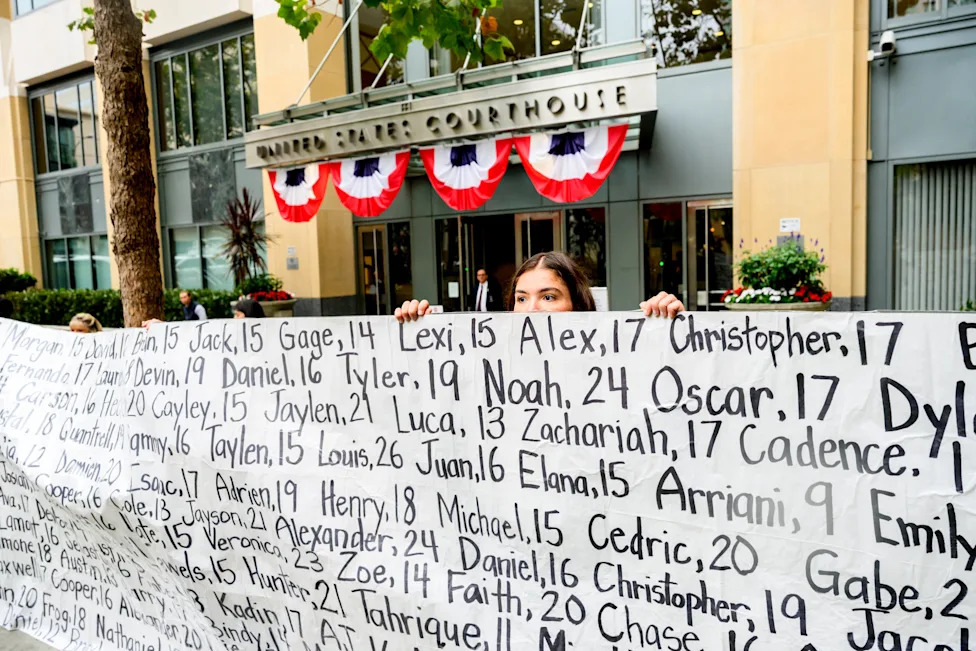
Olivia Konar holds a banner with names of young people who advocates say died as a result of social media outside the Ronald V. Dellums Federal Building and U.S. Courthouse on Tuesday, Aug. 18, 2026, in Oakland, Calif. Her sister Coco Konar died in 2022 when she was 17. (AP Photo/Noah Berger)(AP Photo/Noah Berger)
The outcome of this case could affect Meta's finances and influence how its platforms are designed and moderated. For many parents, the primary goal is to make internal documents and company practices part of the public record so legislators, regulators and families can press for safer product design.
Lori Schott of Colorado recalled that state investigators reviewed the social feeds and journals of her daughter Annalee, who died by suicide at 18, noting entries about feeling ugly and comparing herself to others online. Addressing Meta leadership outside the courthouse, Schott said, "Power does not excuse harm. Profits do not erase the responsibility of Big Tech."
Outside the courtroom, many parents expressed cautious hope that the litigation could prompt meaningful reform. Erin Popolo, whose daughter Emily Murillo died by suicide after intense cyberbullying, said she believes the trial could make history.
Associated Press journalist Terry Chea contributed to this report.
Help us improve.





















