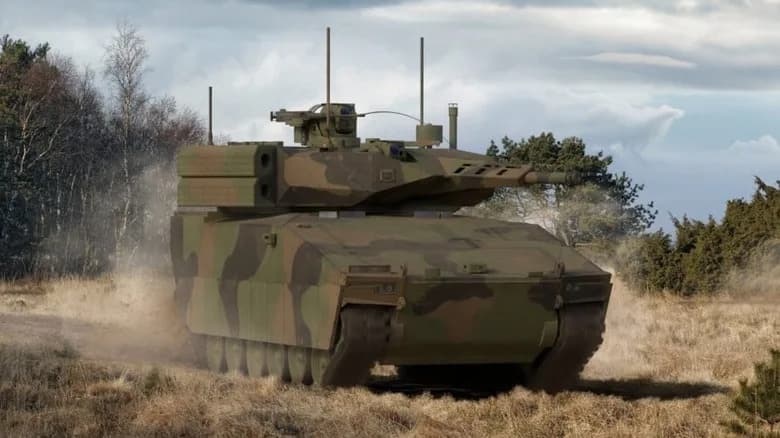
Taiwan used CM-11 Brave Tiger tanks in fixed bunkers during a Han Kuang river-defense drill to help secure the Tamsui River, a direct route into central Taipei. The CM-11 is a hybrid tank built from 1960s–1970s U.S. components and is best suited to static defense, chokepoint denial, and engineering support. Taipei fields roughly 450 CM-11s while China has about 6,000 tanks; Taipei has also acquired 108 M1A2T Abrams as its modern armored core.
Taiwan Deploys Aging CM-11 'Brave Tiger' Tanks In Fixed Positions To Guard The Tamsui River
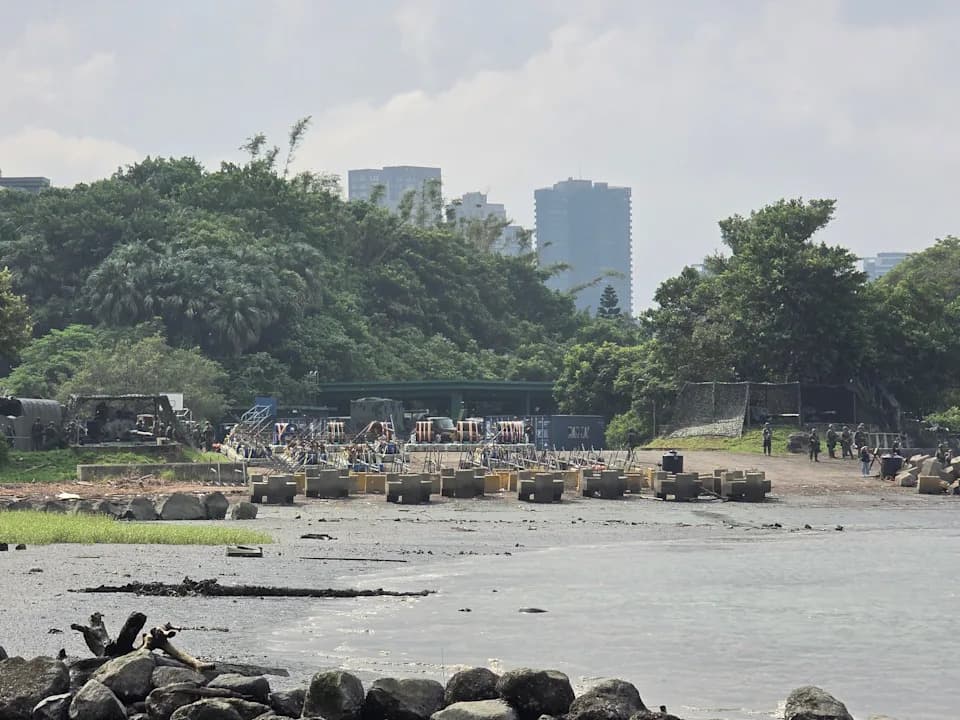
Three CM-11 Brave Tiger tanks are stationed in fixed positions along the Tamsui River.Matthew Loh for Business Insider
Taiwan staged a river-defense segment of its annual Han Kuang exercise using CM-11 Brave Tiger tanks positioned in fortified bunkers along the eastern bank of the Tamsui River. The drill highlighted how Taipei is adapting legacy armored vehicles to defend a vital approach to the capital.
What Happened
During a morning exercise, troops crossed the Tamsui on an American-made M3 amphibious bridging vehicle, launching pontoons and emplacing explosive barrel charges. At the shoreline, at least three CM-11 tanks—kept in fixed positions less than three miles from the river mouth—provided overwatch and potential fire support while engineers prepared defensive obstacles.
About the CM-11 Brave Tiger
The CM-11 is a hybrid main battle tank fielded by Taiwan in 1990 and assembled from Cold War–era U.S. components. Each vehicle pairs an M60A3 chassis (1970s) with a turret derived from the M48A3 Patton (1960s). Its primary armament is a 105-mm M68A1 gun, and parts of its fire-control system are drawn from the M1 Abrams. While mechanically capable, the platform’s protection and electronics are dated compared with modern tanks.
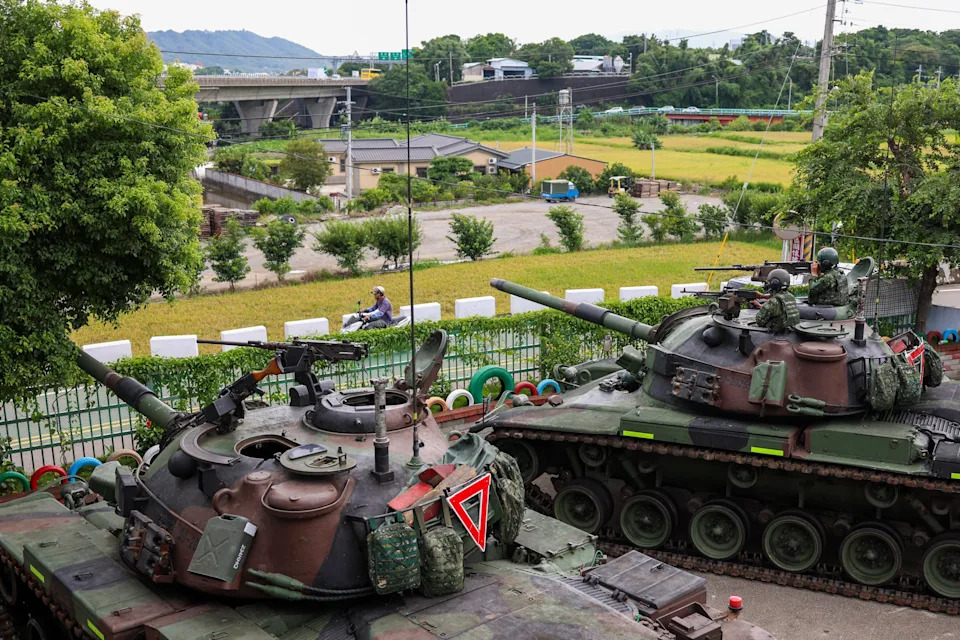
Taiwan's CM-11 Brave Tigers have been a mainstay of its Han Kuang exercises. This photo was taken in 2025.Daniel Ceng/Anadolu via Getty Images
Why Taiwan Uses Them This Way
The Tamsui River is roughly 0.75 miles (about 1.2 km) across at the defended sector, and the CM-11's direct-fire reach—around 1.25 miles (roughly 2 km)—is sufficient to cover that span. Analysts and local veterans say older tanks like the CM-11 are better employed in prepared, static roles—holding chokepoints, ambushing landing craft, or supporting engineers laying mines—rather than in mobile tank-on-tank engagements against a numerically larger and better-supported adversary.
Ben Lewis, founder of PLATracker: 'For tanks that are as old as the CM-11, using them for support to engineering units and in static positions is logical.'
Bigger Picture
Taiwan fields about 450 CM-11 Brave Tigers, compared with roughly 6,000 tanks in China's inventory (including many light models suited to amphibious transport). To modernize, Taipei has also received 108 M1A2T Abrams tanks, which form the more advanced core of its armored force. Using older tanks as static artillery or support platforms has precedents elsewhere; for example, armed forces in Ukraine have concealed older tanks to provide indirect or standoff fire rather than force-on-force tank battles.
Business Insider reported the deployment and quoted analysts on the rationale for static employment of legacy armor. Taiwan's defense ministry was contacted for comment.
Help us improve.