
Sargassum — a native brown macroalga — is arriving ashore in record volumes as the Great Atlantic Sargassum Belt (GASB) expands across the tropical Atlantic. Biomass reached 37.5 million tons in 2025, and by May 2026 roughly 28.9 million metric tons were recorded, concentrated east of the Leeward Islands and between Puerto Rico and South America. Decomposing mats release hydrogen sulfide, irritate eyes and lungs, carry stinging organisms, disrupt surfing and recreation, and impose large cleanup and economic costs on coastal communities.
Great Atlantic Sargassum Belt Nears New Record — Beaches, Health and Surfing at Risk
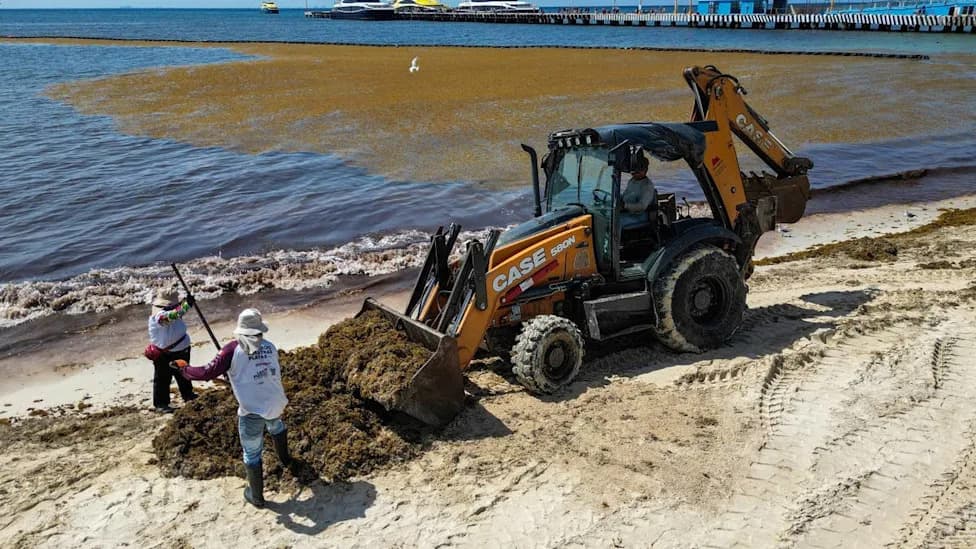
Atlantic’s Sargassum Problem Is Reaching Record Levels
Coasts across the tropical Atlantic are coping with unprecedented blooms of sargassum seaweed that are washing ashore in record volumes, fouling beaches, irritating eyes and lungs, driving up cleanup bills and creating hazards for surfers and other ocean users.
“Getting too close to and spending too much time along the shoreline means burning my eyes and lungs, and per my local physician, perhaps untold lasting damage,” wrote Surfer correspondent Owen James Burke from the Lesser Antilles in May, describing the growing coastal nuisance.
What Is Sargassum—and Why It Matters
Sargassum is a free‑floating brown macroalga native to the Atlantic. In the open ocean—most famously in the Sargasso Sea—large rafts of sargassum provide valuable habitat and nursery grounds for mahi mahi, sea turtles and many other species. But when these mats are driven ashore they quickly decompose and become a serious coastal problem.
Health, Environmental and Recreational Impacts
Decomposing sargassum releases gases such as hydrogen sulfide, which smells like rotten eggs and can irritate or damage eyes and airways in sensitive people. Thick mats at sea also impede swimmers and paddlers and can snag or slow surfers; local riders report routinely paddling through dense patches or even face‑planting into mats. Washed‑up mats often harbor small stinging or irritating organisms (similar to jellyfish larvae or "sea lice"), adding another layer of nuisance and risk.
Scale: The Great Atlantic Sargassum Belt
Scientists refer to the problem as the Great Atlantic Sargassum Belt (GASB), an interconnected and expanding mass of seaweed that has been forming since about 2011 and now spans the tropical Atlantic from West Africa to the Gulf of Mexico. Biomass reached a record 37.5 million tons in 2025, and by the end of May 2026 an estimated 28.9 million metric tons had been recorded across the basin, with the largest concentrations east of the Leeward Islands and substantial coverage between Puerto Rico and the northern coast of South America.
The University of South Florida’s Optical Oceanography Lab officially classified 2026 as a “major sargassum year,” with a real possibility that 2026 will surpass 2025 as the largest on record.
Economic Burden and Local Response
Removing sargassum is expensive and labor‑intensive. In Miami, for example, roughly $9 million of the city’s $11 million annual beach maintenance budget goes to sargassum cleanup. A Woods Hole Oceanographic Institution study estimated that Florida could be losing roughly $5 billion a year in tourism and related economic activity because of sargassum impacts.
What Residents and Visitors Can Do
- Check sargassum trackers and local beach reports before booking or heading to shore. - Favor protected west‑facing beaches when possible; trade‑wind‑exposed east coasts are more likely to encounter the belt head‑on. - Bring basic protective gear (sunglasses, masks for those with respiratory sensitivity) and avoid prolonged exposure to decomposing mats. - Support and follow local advisories about beach closures and cleanup operations.
Researchers say the underlying drivers—changes in ocean circulation, nutrients and climate—mean the GASB is unlikely to disappear soon, and coastal communities should plan for ongoing seasons of heavy sargassum arrival.
Originally published by Surfer on Aug 17, 2026 (News section).
Help us improve.





















