
Summary: Todd Blanche’s confirmation as the nation’s top law enforcement official has alarmed reproductive-health advocates after a now-deleted recording described coordinating the DOJ and FDA to limit abortion access nationwide. The National Abortion Federation highlights a 113% rise in threats against clinics, a jump in clinic blockades, and controversial pardons and DOJ payments to clinic blockers as signs enforcement could be weaponized. NAF has issued policy defending abortion access throughout pregnancy and is litigating to block DOJ payouts it says incentivize violence.
Todd Blanche’s Confirmation Sparks Alarm Over Potential DOJ–FDA Campaign to Curb Abortion Access
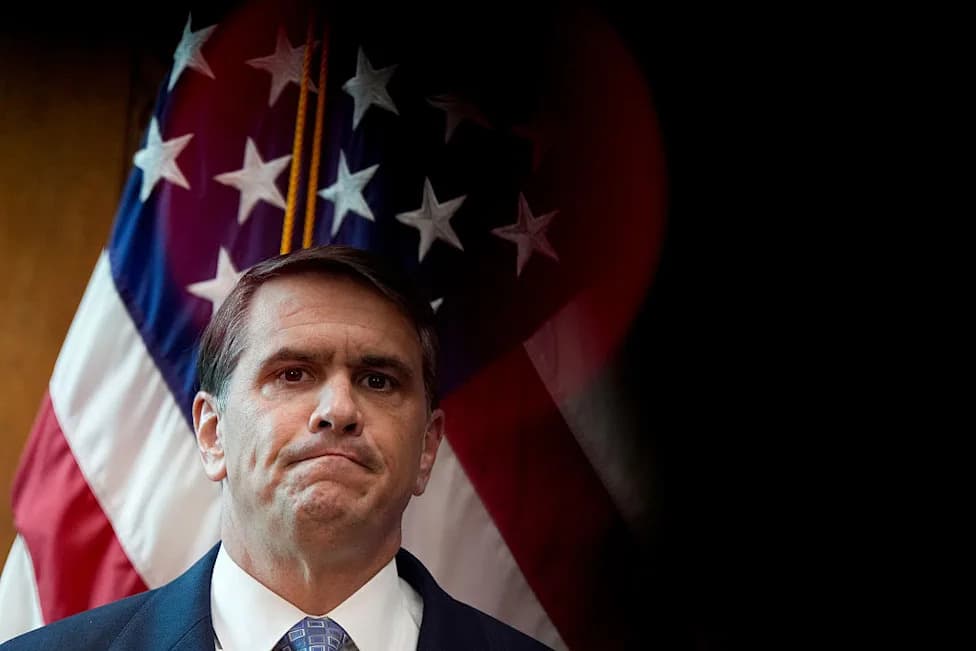
Attorney General Todd Blanche during a news conference at the Department of Justice in Washington, DC, US, on Wednesday, Aug. 12, 2026. —Elizabeth Frantz—Bloomberg/Getty Images
In the predawn hours of Saturday, Aug. 8, the Senate confirmed Todd Blanche as the nation’s top law enforcement official. But long before that vote, comments Blanche made during the confirmation process—and in a now-deleted audio recording with the White House Faith Office—prompted widespread concern among reproductive-health advocates.
In the recording, Blanche outlined a strategy to coordinate multiple federal agencies, including the Department of Justice (DOJ) and the Food and Drug Administration (FDA), to restrict abortion access across all 50 states. Critics say the plan blurs the usual separation between agencies that are expected to operate independently to protect public health and those that enforce the law.
Why the National Abortion Federation Is Concerned
The National Abortion Federation (NAF), which sets clinical standards for abortion care and supports clinic safety nationwide, warns that weakening federal checks and balances can have dangerous consequences. Under current law, enforcement is the primary federal mechanism for deterring violent or disruptive conduct at clinics. The Freedom of Access to Clinic Entrances (FACE) Act makes such activities illegal, but its protections depend heavily on who controls enforcement priorities.
Under the Trump administration, critics note troubling patterns: pardons issued to people convicted under the FACE Act and controversial DOJ payouts. NAF points to a recent case in which Paul Vaughn received a pardon from President Trump and was later paid $1 million by the DOJ after organizing a blockade at a clinic operated by a NAF member in Tennessee. NAF has sued the DOJ to stop similar payments and to challenge the message such actions send to would-be attackers.
Rising Threats and Targeted Enforcement
NAF’s latest Violence and Disruption report documents a 113% increase in threats of death or harm directed at clinics and providers since Trump took office. The report also notes that reported clinic blockades have risen from one to six incidents. Even if laws like FACE provide limited protection, NAF argues the federal government at times is failing to meet those basic standards—and that the appearance of official tolerance or reward could encourage further violence.
Blanche’s comment that he would work “hand in hand with the FDA” to curtail abortion access intensified those concerns. Clinical practice and medication regulation should rest on peer-reviewed research, clinical evidence, and patient experience—principles NAF says are endangered when law enforcement and political priorities influence regulatory decisions.
Implications for Medication Abortion and Telehealth
Evidence supported the expansion of telehealth access for abortion medications, widening care options in a hostile policy environment. Opponents have responded by changing regulatory expectations and launching legal and political attacks aimed at moving the goalposts despite documented safety and efficacy. If the DOJ and FDA were to coordinate enforcement or regulation specifically to restrict abortion, it could chill clinical innovation and limit access where telehealth and medication abortion are currently available.
Policy Response and Wider Stakes
On the fourth anniversary of the Dobbs decision, NAF published a policy statement affirming support for abortion access throughout pregnancy and pledging opposition to viability- or gestational-based limits. The organization frames this stance as both a moral and strategic response to what it calls an increasing fusion of policing and anti-science approaches in reproductive health care. NAF contends that removing legal ambiguities that invite enforcement is essential to protect patients and providers.
Advocates also worry about broader policy plans such as those outlined in Project 2025, which have proposed recognizing fetuses or embryos as legal persons. NAF predicts Blanche could use the Department’s authority to advance fetal personhood concepts, intensifying legal conflicts between pregnant people and the state and further restricting access.
In sum, Blanche’s confirmation signals to many reproductive-health defenders that proactive legal and policy measures will be needed to safeguard abortion access—particularly for marginalized communities that already face higher levels of policing and surveillance.
Help us improve.





















