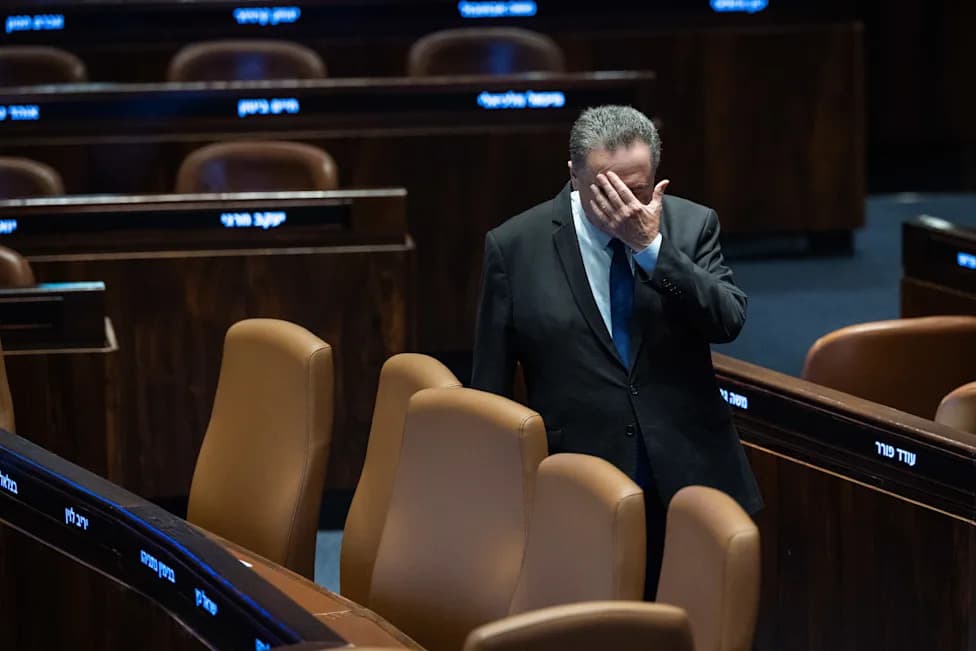
Jared Kushner met with Israeli Prime Minister Benjamin Netanyahu after Netanyahu rejected a 15-point U.S.-backed road map meant to advance a Gaza truce. Hamas says it has accepted the plan, which calls for disarmament, while Israel insists full disarmament must precede any withdrawal. The talks follow Kushner's more-than-two-hour meeting with Hamas leader Khalil al-Hayya in Egypt and included mediators from Egypt, Qatar and Turkey. Regional states including Saudi Arabia and the UAE condemned Israel's rejection and urged immediate action to prevent obstruction.
Kushner Presses Netanyahu on Gaza Truce Road Map After Talks With Hamas
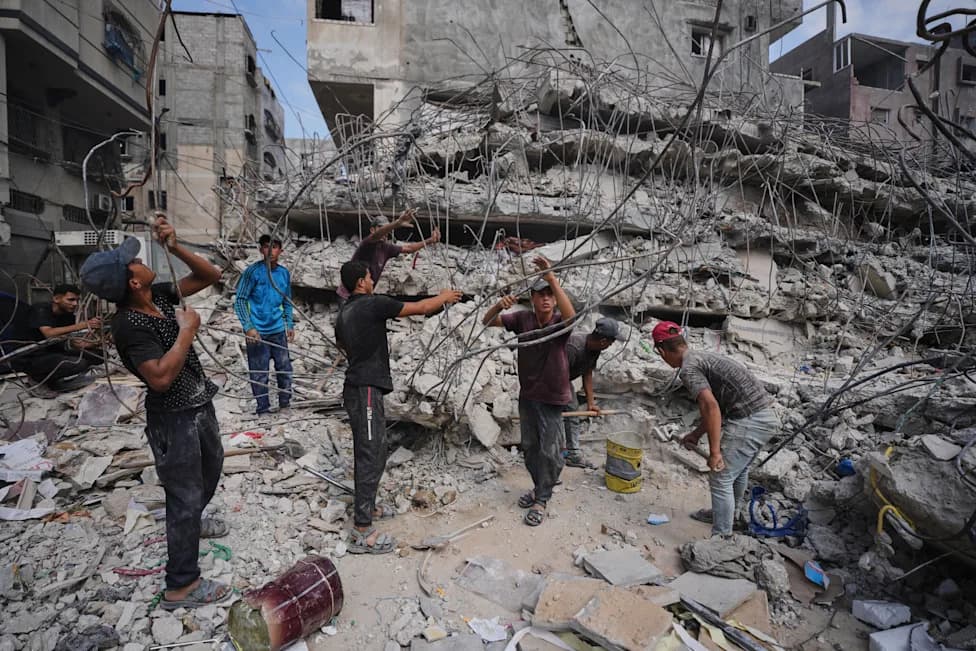
Palestinians remove iron from the rubble of buildings destroyed by Israeli airstrikes during the war with Hamas, repair and recycle it for construction, building tents or selling it, in Gaza City, Sunday, Aug. 16, 2026. (AP Photo/Jehad Alshrafi)(AP Photo/Jehad Alshrafi)
Jerusalem — Middle East negotiator and former White House adviser Jared Kushner met Monday with Israeli Prime Minister Benjamin Netanyahu after Netanyahu rejected a 15-point, U.S.-backed road map intended to advance a truce in Gaza.
What the Road Map Would Do
The United States is seeking Israel's approval of the plan, which carries high stakes: the safety and livelihoods of roughly 2 million Palestinians in Gaza, the rebuilding of the heavily damaged enclave, and the question of who will exercise long-term control of the territory.
Positions From Both Sides
Hamas says it has accepted the road map, which includes provisions for disarmament, and has urged mediators and the U.S.-created Board of Peace to press Israel to sign on. Israel maintains that any withdrawal required by the plan must be preceded by Hamas's full disarmament.
Israeli forces now control about 60% of the Gaza Strip. In May, Netanyahu signaled plans to push control to roughly 70%, saying Israel would 'tighten the grip' on Hamas 'from every direction.'
Meetings and Mediators
Also present at the meeting with Netanyahu were former British prime minister Tony Blair and Board of Peace director Nickolay Mladenov, according to a person familiar with the arrangements and a diplomatic official who spoke on condition of anonymity about a closed-door session.
The meeting followed Kushner's more-than-two-hour talks in Egypt on Sunday with Hamas leader Khalil al-Hayya, which regional and Hamas officials described as focused on disarmament. Mediators from Egypt, Qatar and Turkey were also involved, according to officials who spoke anonymously because they were not authorized to brief reporters.
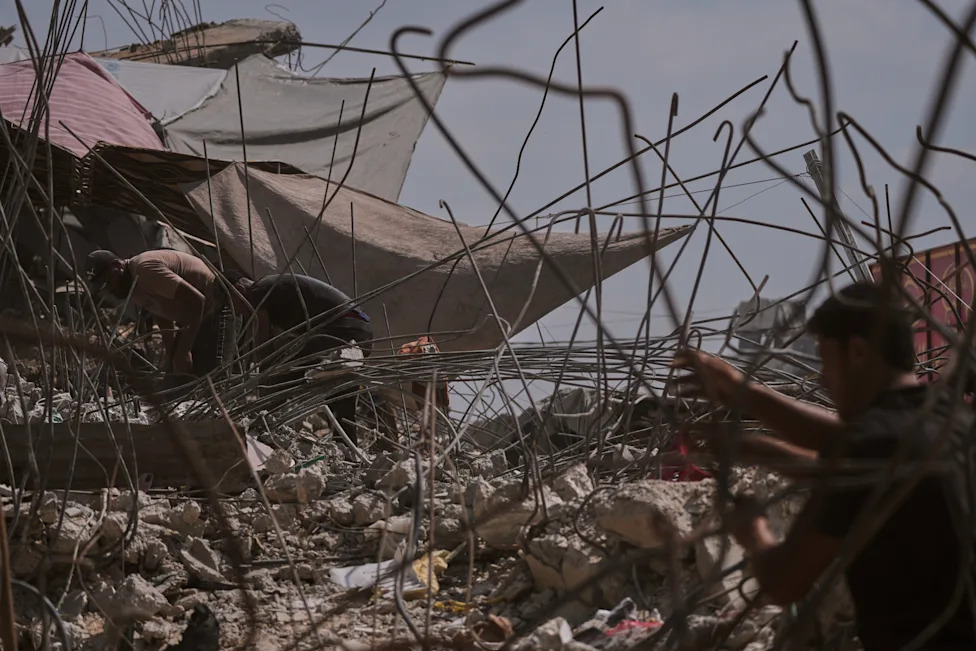
Palestinians remove iron from the rubble of buildings destroyed by Israeli airstrikes during the war with Hamas, repair and recycle it for construction, building tents or selling it, in Gaza City, Sunday, Aug. 16, 2026. (AP Photo/Jehad Alshrafi)(AP Photo/Jehad Alshrafi)
Key Sticking Points
Hamas officials say the group insisted Israel halt attacks in Gaza and withdraw to the so-called 'yellow line' that divides the territory before implementation begins. The 'yellow line' was never precisely defined in public negotiations, and Israeli forces have pushed beyond it in recent operations.
Under the road map, Hamas would transfer weapons to a Palestinian technocratic committee charged with overseeing daily administration in Gaza; that committee has not yet entered the strip. Hamas has linked surrendering its heaviest weapons to progress toward Palestinian statehood, while the current Israeli government rejects the road map's stated 'credible pathway' toward Palestinian self-determination.
Regional Response and Next Steps
Several regional powers, including Saudi Arabia and the United Arab Emirates, issued a joint statement condemning Israel's rejection of the plan and saying, 'Israel now bears responsibility for obstructing the efforts to bring peace in Gaza.' Other signatories included Jordan, Pakistan, Indonesia and the ceasefire mediators. Foreign ministers urged the Board of Peace and the United States to take 'immediate and concrete measures' to prevent any party from blocking implementation.
Until the road map is agreed, other elements of a ceasefire — notably reconstruction and deployment of international forces intended to separate Israeli troops from committee-managed areas — remain stalled.
Political Context
Netanyahu faces a pivotal election on Oct. 27 as he seeks to retain power with a coalition that includes ministers advocating a hard line on Gaza. It is unclear whether he will take decisive steps on the ceasefire before the vote. Also approaching is the anniversary of the Oct. 7, 2023 Hamas-led attack that precipitated the current war.
Reporting: Frankel reported from Jerusalem and Magdy from Cairo. Collin Binkley in Washington and Sylvia Hui in London contributed to this report. Several officials quoted spoke on condition of anonymity because they were not authorized to speak to reporters.
Help us improve.